Stretching around home workouts is one of the most misunderstood parts of training. Some people hold long static stretches before lifting, others skip recovery completely. The truth sits in the middle: when and how you stretch depends on whether you’re about to train or you’ve just finished. This realistic guide shows you how to combine mobility drills, light dynamic stretching and simple “walk it off” strategies so you can recover better without turning your session into a two‑hour event.
Before your workout: wake up, don’t wind down
Before a home workout, your goal is to activate muscles and increase blood flow, not to relax tissues. Long static stretches held for 30–60 seconds can temporarily reduce strength and power. Instead, focus on a 5–10 minute sequence of dynamic stretches and joint circles that mimic your session. For example, before squats do bodyweight squats, leg swings and hip circles; before push‑ups or dumbbell presses use arm circles, wall slides and scapular push‑ups. You’re teaching the body: “this is the range we’ll use under load,” which improves performance and reduces the risk of tweaks.
After your workout: now is the time for longer stretches
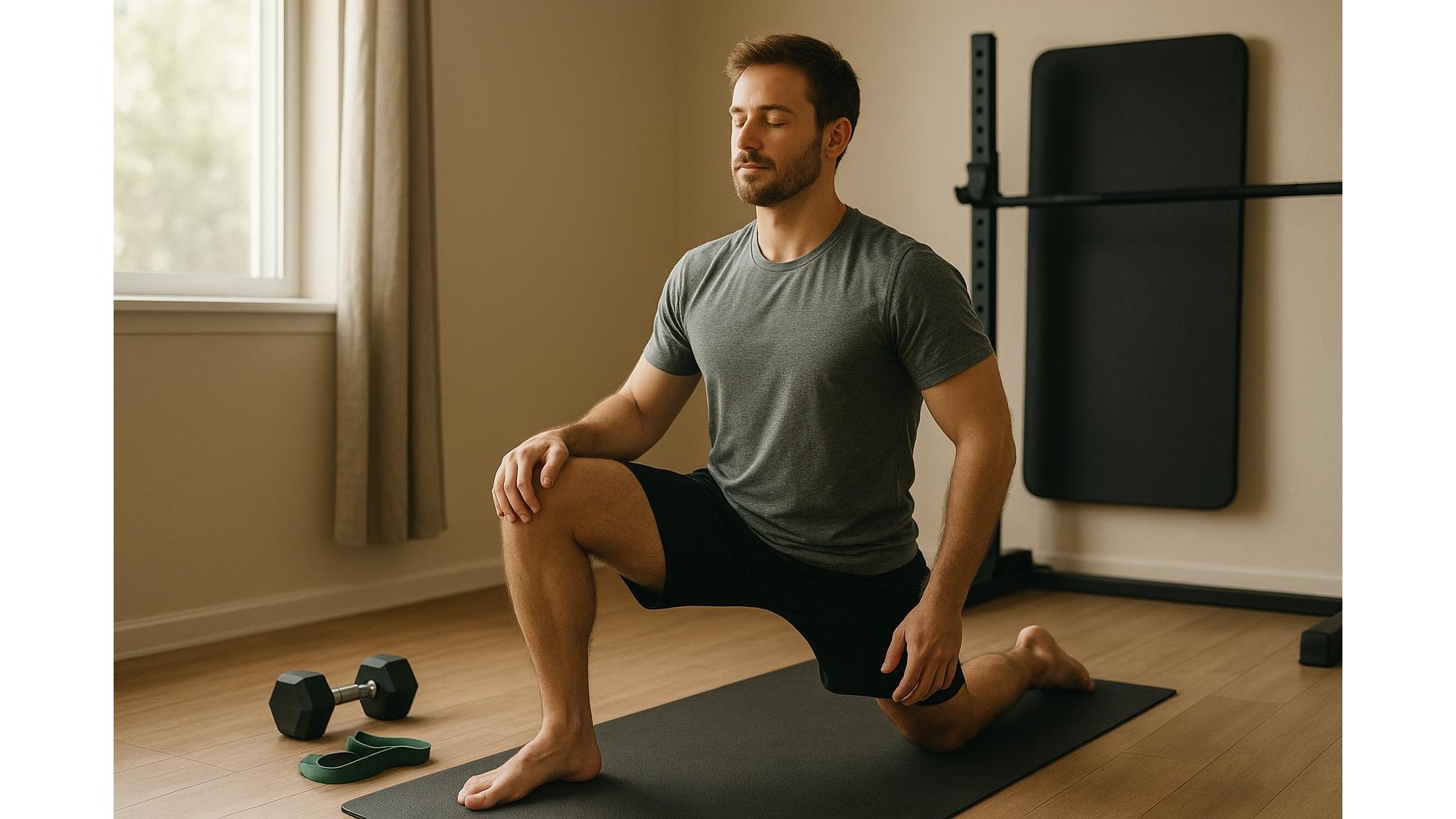
Once your home session is done and your heart rate is coming down, you can shift into static stretching. Muscles are warm, connective tissue is more compliant and your nervous system is ready to relax. Spend 8–12 minutes holding key stretches for 20–40 seconds each, focusing on areas you just trained: quads and hip flexors after squats or lunges, chest and lats after pushing and pulling, glutes and hamstrings after deadlifts or swings. This won’t magically erase soreness, but it helps maintain range of motion and can make tight spots feel less cranky over the next 24–48 hours, especially if you sit a lot for work.
How to use mobility on your non‑training days
On days without structured training, many home lifters either do nothing or over‑complicate recovery. A simple, sustainable plan works best. Pick 5–8 minutes of mobility exercises you repeat most days: cat‑camel for your spine, deep squat holds while gently shifting weight, thoracic rotations on all fours, ankle rocks toward the wall. Think of this as brushing your teeth for your joints. You’re not chasing sweat or soreness; you’re building a habit that keeps common problem areas—hips, upper back, ankles—moving well so your next session feels smoother and your technique stays sharp.
Walking it off: the underrated recovery tool
Not every ache needs an aggressive stretch routine. Often, the best recovery strategy after a hard home workout is to simply walk it off. Light walking improves circulation, clears metabolic by‑products and gently moves joints through range without extra stress. If your legs are heavy after squats, a 10–20 minute easy walk later in the day can reduce stiffness more effectively than forcing deep stretches on already fatigued muscles. Combine this with basic habits—hydration, protein‑rich meals, and regular sleep—and you’ll recover better than with any fancy device. Movement snacks beat marathon stretching sessions you’ll never stick to.
Plug‑and‑play routines you can actually keep
To make recovery realistic, pair each home workout with a short, repeatable plan. Before training, use a 5‑minute warm‑up: 1 minute of light cardio (marching on the spot or step‑ups), then 2–3 dynamic movements for the main joints you’ll use. After training, choose 4–6 static stretches for the muscles you feel most, holding each for 20–30 seconds while breathing slowly through your nose. On rest days, add one 5–10 minute mobility block plus an easy walk. None of this requires special gear or extra willpower, but over weeks it adds up to fewer “tight” days, better positions in your lifts and more consistent progress from your home gym.
A smart recovery plan doesn’t ask whether you should stretch before or after workouts; it matches the type of stretching to the moment. Use dynamic mobility to prime your body before training, static stretching and light movement to unwind after, and simple walking plus short mobility snacks on off days. By keeping each piece short and focused, you build a routine you can maintain for months, not just a few motivated weeks, and your home workouts—and results—will feel better for it.