Building a home gym is not just about weights and cardio machines. Smart lifters also invest in self-massage tools to stay mobile, reduce soreness and prevent injury. Simple accessories like massage balls, massage sticks and foam rollers can help you release tight muscles, support recovery and keep training consistently. This guide explains how to choose and use these basic tools safely, so they complement your workouts instead of causing new problems.
Table of contents
Why self-massage tools belong in every home gym
After intense training, muscles often feel stiff, heavy or restricted. Over time, this can limit your range of motion and increase injury risk. Adding a few minutes of self-myofascial release with balls, sticks and rollers helps improve blood flow, reduce muscle tension and restore more natural movement. Unlike a one-off professional massage, these tools allow you to work on your body every day at home, before or after workouts. The key is to apply moderate pressure, breathe deeply and avoid painful forcing – if you are holding your breath or tensing up, the pressure is too high.
How to use massage balls safely
Massage balls are ideal for targeting small areas like glutes, hips, chest, feet and the space between shoulder blades. Place the ball between your body and a wall or the floor and gently roll over tight spots for 30–60 seconds. Focus on relaxed breathing and slow movements, not aggressive digging. Avoid putting direct pressure on bony structures or on the spine itself; instead, stay on the muscles beside the spine. For sensitive users, start against a wall (less bodyweight) rather than on the floor. Use balls after strength sessions to relieve hotspots, or in the evening to loosen areas that feel locked from desk work.
How to use massage sticks on legs and arms
Massage sticks are great for the quadriceps, hamstrings, calves and forearms. Sit or stand in a comfortable position and roll the stick along the muscle fibres with a slow, smooth motion. Start with light to moderate pressure and gradually increase if it feels tolerable and productive, never bruising. Spend about 1–2 minutes per muscle group, scanning for tight bands and pausing briefly on them while you breathe. Avoid rolling directly over joints or very inflamed areas. Massage sticks work especially well as a post-run or post-leg-day routine, helping flush metabolites and easing that heavy-leg feeling so you recover faster for the next session.
How to use foam rollers for global mobility
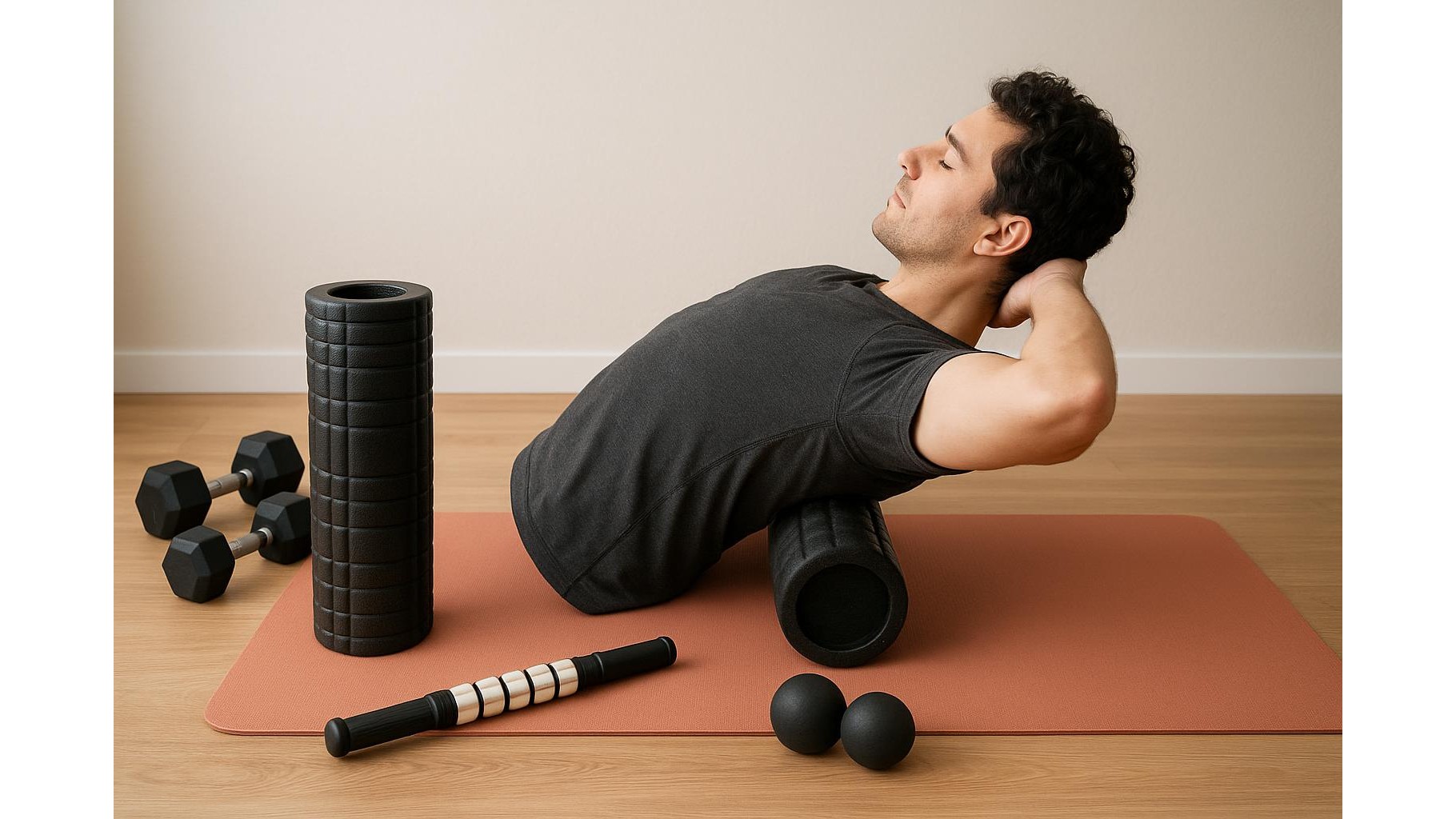
Foam rollers cover larger areas and are perfect for the back, lats, glutes and thighs. Start with a medium-density roller if you are a beginner; very hard rollers can be too intense and trigger guarding. Position the roller under the target area and use your hands and feet on the floor to control the load and speed. Roll slowly 20–30 cm at a time, for around 1–2 minutes per area. Do not roll directly on the lower back if you lack core control; instead, focus on the upper back, glutes and hips, which often drive low back tension. Foam rolling is particularly useful before training to improve mobility, and after training to downshift the nervous system.
Safety guidelines and when to avoid self-massage
Even simple self-massage tools require some caution. Avoid using intense pressure on acute injuries, recent bruises, open wounds or areas with strong inflammation. If you have circulatory issues, varicose veins, osteoporosis or are pregnant, talk to a doctor or physiotherapist before starting. During a session, aim for a sensation of “good discomfort” but stop if you feel sharp pain, numbness or tingling. Limit work on one specific spot to a couple of minutes and allow the area to rest in the following hours. When in doubt, use lower density tools, less bodyweight and shorter sessions – consistency over time is more effective than one brutal session.
Adding balls, sticks and rollers to your home gym is a cost-effective way to enhance recovery, reduce muscle tension and maintain healthy range of motion. Used with moderate pressure, slow breathing and respect for your limits, these self-massage tools help you train more often and feel better between workouts. Start with a few key areas – legs, glutes, upper back – and build a short routine you can repeat several times per week. Over time, you will learn to read your body better and use these simple tools to keep your home training both safer and more effective.