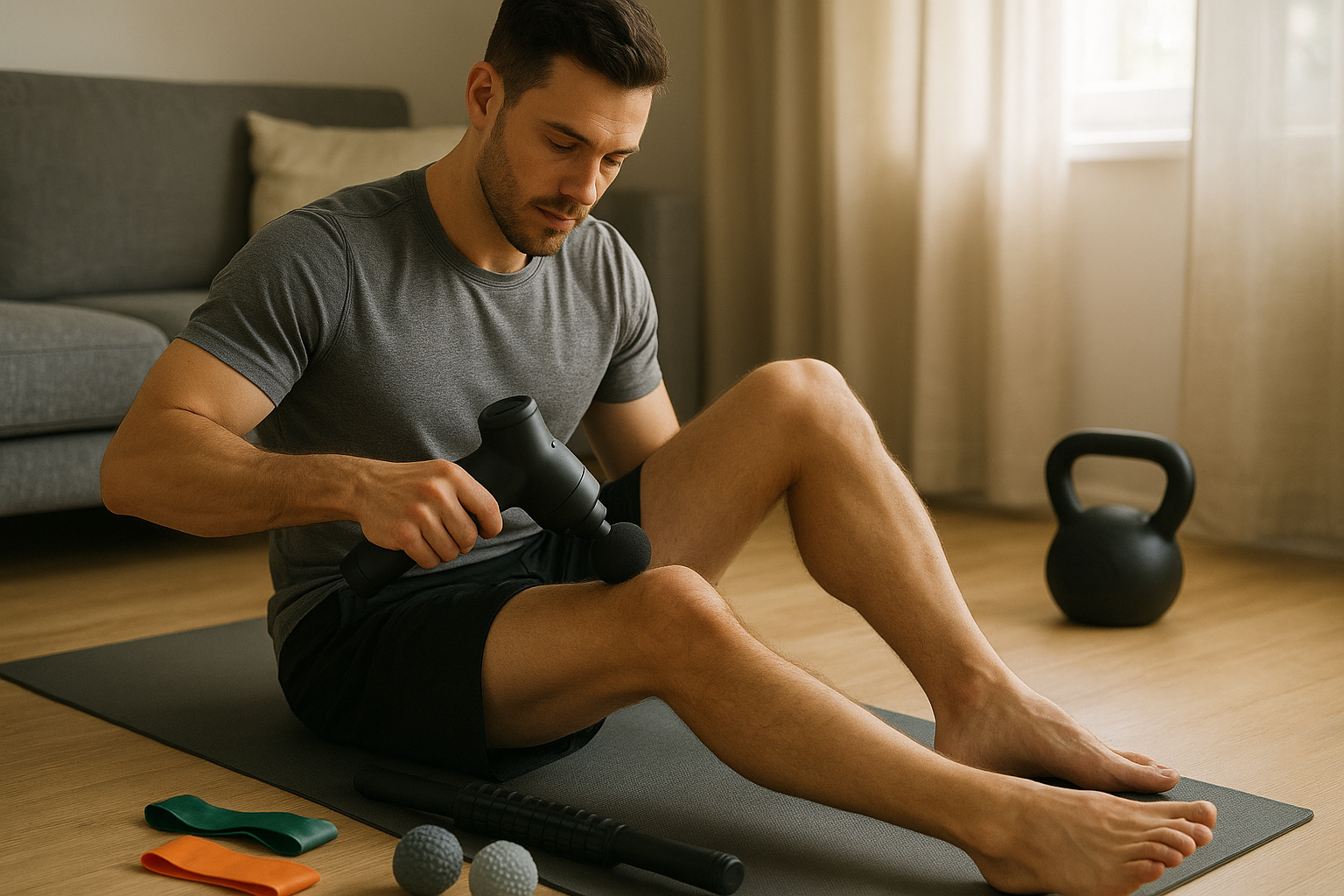
For home athletes training several times a week, self-massage can be a powerful ally for recovery. Between high-tech massage guns and simple manual tools like sticks and balls, it can be hard to know what to use, how much pressure is safe, and when to skip self-treatment altogether. This guide compares massage guns, sticks and balls for home recovery, with clear guidelines on timing, intensity and red flags.
Table of contents
Massage guns: targeted power for large muscle groups
Massage guns deliver rapid percussive pulses into the tissue, ideal for big, dense muscles like quads, glutes and hamstrings after strength or interval sessions. A quality massage gun typically offers multiple speed settings, interchangeable heads and a rechargeable battery, allowing you to customise treatment intensity. Use a low to medium speed for warm-ups (around 30 seconds per muscle group) to increase blood flow, and slightly higher speed post-workout (1–2 minutes per area) to reduce tightness. Keep the head moving slowly along the muscle belly and avoid bony areas, the front of the neck and directly over joints. If you feel sharp pain, pins and needles or your skin reddens significantly, reduce pressure or stop.
Massage sticks: control and coverage for legs and back
Massage sticks (also called roller sticks) are simple, portable tools that let you manually roll and compress muscles using your own hands. They shine for the quads, calves and upper back, especially for runners and cyclists. Because you control the pressure directly, sticks are excellent for people who find massage guns too intense. For recovery, roll each muscle group for 60–90 seconds, using slow strokes along the length of the muscle. Start with light pressure and increase gradually until you feel a strong but tolerable sensation, never beyond a 6–7 out of 10 on a discomfort scale. Sticks are also useful before training as a quick warm-up, combined with dynamic stretching, to improve tissue glide and reduce the feeling of stiffness.
Massage balls: precision for trigger points and small areas
Massage balls (lacrosse balls, mobility balls or peanut-shaped balls) are best for small, hard-to-reach areas and specific trigger points. Home athletes often use them for the glutes, hip rotators, feet, chest and around the shoulder blades. To use safely, place the ball between your body and the floor or wall, then slowly lean in until you feel moderate pressure. Hold on a tender spot for 20–40 seconds while breathing slowly, or perform small, controlled movements around that area. Avoid rolling aggressively over the lower back or directly on the spine. Massage balls are ideal on rest days or in the evening to release accumulated tension from desk work, especially in the upper back and hips.
Timing, pressure and combining tools in your weekly routine
For most home athletes, the best approach is to combine massage guns, sticks and balls based on timing and training load. Before a workout, use light, brief passes with a gun or stick to “wake up” the muscles, never replacing a proper dynamic warm-up. After training, focus on 5–15 minutes of self-massage on the main muscles you used, prioritising moderate pressure and slow breathing. On rest or low-intensity days, use massage balls to address stubborn tight spots and improve mobility around hips, shoulders and feet. Always respect your pain signals: dull pressure and mild discomfort are acceptable, but sharp, radiating or electric sensations are a sign to back off. Combine self-massage with hydration, sleep and active recovery (like easy walking) for the best results.
When to avoid self-treatment and seek professional help
Even the best self-massage tools have limits. Avoid using massage guns, sticks or balls directly over recent injuries, visible swelling, bruises, open wounds or areas with suspected fractures. People with conditions like deep vein thrombosis, severe osteoporosis, bleeding disorders or uncontrolled cardiovascular issues should consult a healthcare professional before using intense self-massage. Do not apply strong pressure to the front or side of the neck, over the abdomen, or along the spine. If pain is worsening over days, accompanied by numbness, weakness, fever or unexplained weight loss, stop self-treatment and seek medical evaluation. Self-massage is a complement to, not a substitute for, professional physiotherapy or medical care when red flags appear.
For home athletes, understanding when to use massage guns versus manual tools like sticks and balls can transform recovery routines. Use guns for broad muscle groups and quick warm-ups, sticks for controlled pressure on legs and back, and balls for precise trigger-point work. Apply moderate pressure, keep sessions short and regular rather than rare and extreme, and always respect your body’s warning signals. With smart timing and sensible intensity, self-massage can help you train consistently, move better and stay in the game longer.