Taking care of your ribcage and breathing muscles is one of the most underrated forms of home self‑care. Long hours at a desk, heavy lifting in your home gym and high‑intensity workouts can all leave your intercostal muscles (the small muscles between the ribs) tight and sore. This simple routine uses only a mat, a towel and a small ball to gently mobilise the ribs, ease post‑workout tightness and improve your breathing comfort at home.
Table of contents
Set up your space and basic equipment
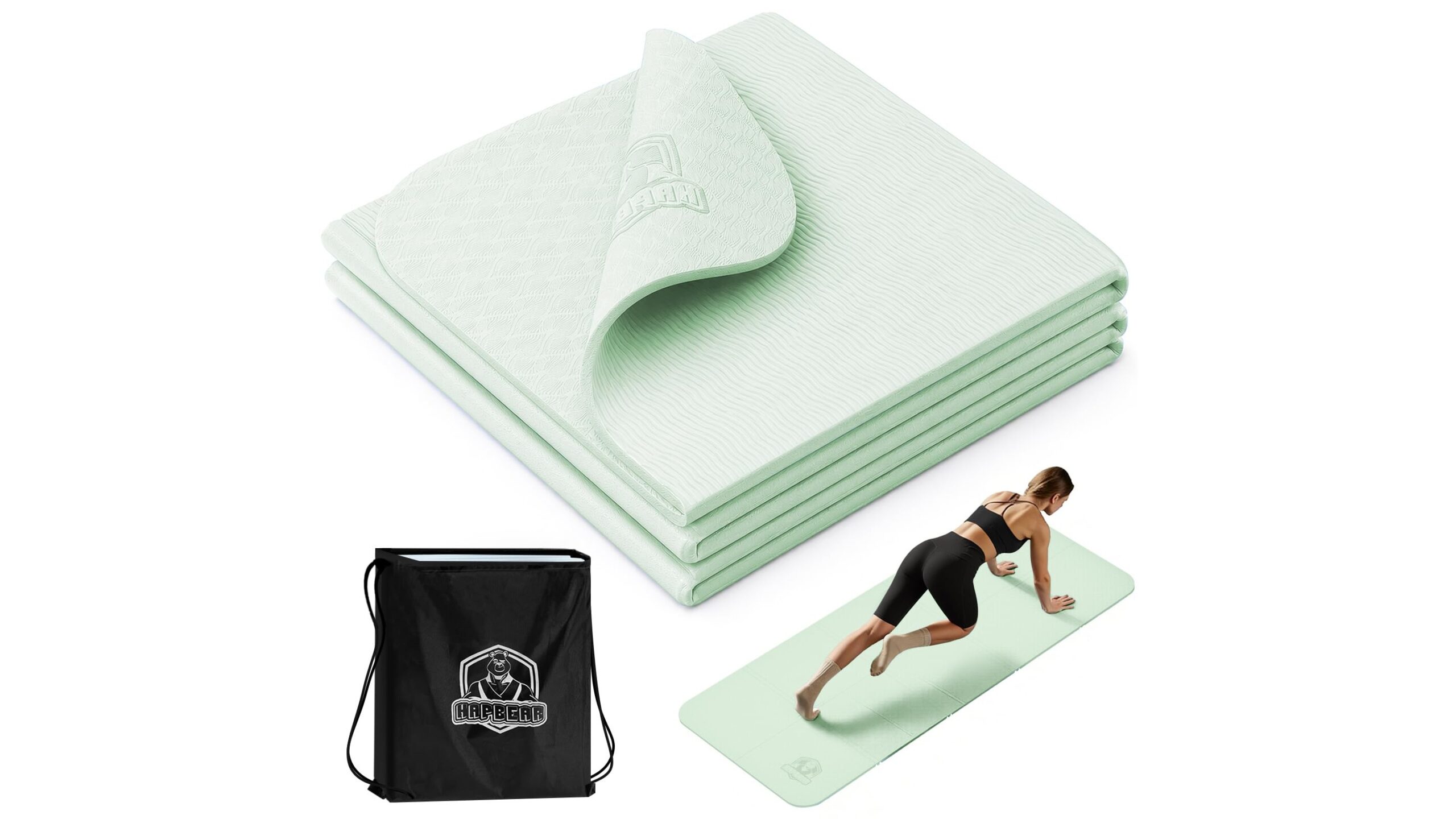
Before starting, choose a quiet corner of your home gym or living room where you can lie down comfortably. You will need a supportive surface like a thick exercise mat to cushion your spine and ribs, plus a regular bath towel that you can roll up as a simple prop, and a small, firm ball (a tennis‑style ball or soft massage ball works well). Wear light, non‑restrictive clothing so your ribcage can expand freely while you breathe. Aim for about 10–15 minutes, ideally after your workout or at the end of the day when your body is warm. Move slowly and stay within a comfortable, pain‑free range at all times.
Gentle ribcage mobility on the mat
Lie on your back on the mat with knees bent and feet flat, hip‑width apart. Rest your hands lightly on the lower ribs. Inhale through your nose, feeling the ribs gently widen to the sides and back; exhale through the mouth, allowing the ribs to soften down towards the mat. Repeat this lateral rib breathing for 8–10 slow breaths. Next, slide both arms overhead on the floor as you inhale, reaching long through the fingertips, then bring them back down as you exhale. This combines shoulder mobility with ribcage expansion. Finally, rock your knees slowly side to side in a mini windscreen‑wiper motion to gently rotate the spine and ribs without forcing the movement.
Using a rolled towel to open the front ribs
Roll your towel into a firm cylinder and place it horizontally under your mid‑back, roughly at bra‑strap or mid‑sternum level. Lie back over it with your knees bent, supporting your head with your hands if needed. As you inhale, feel the front of the chest and ribs softly opening; as you exhale, let your body drape over the towel. This creates a mild thoracic extension that counters the rounded‑shoulder posture many of us adopt at desks and during pressing exercises. Spend 1–2 minutes here, breathing slowly. If comfortable, you can slide the towel slightly higher or lower along the spine to target different levels of the ribcage, always avoiding any sharp or pinching sensation.
Small‑ball self‑massage for tight intercostals
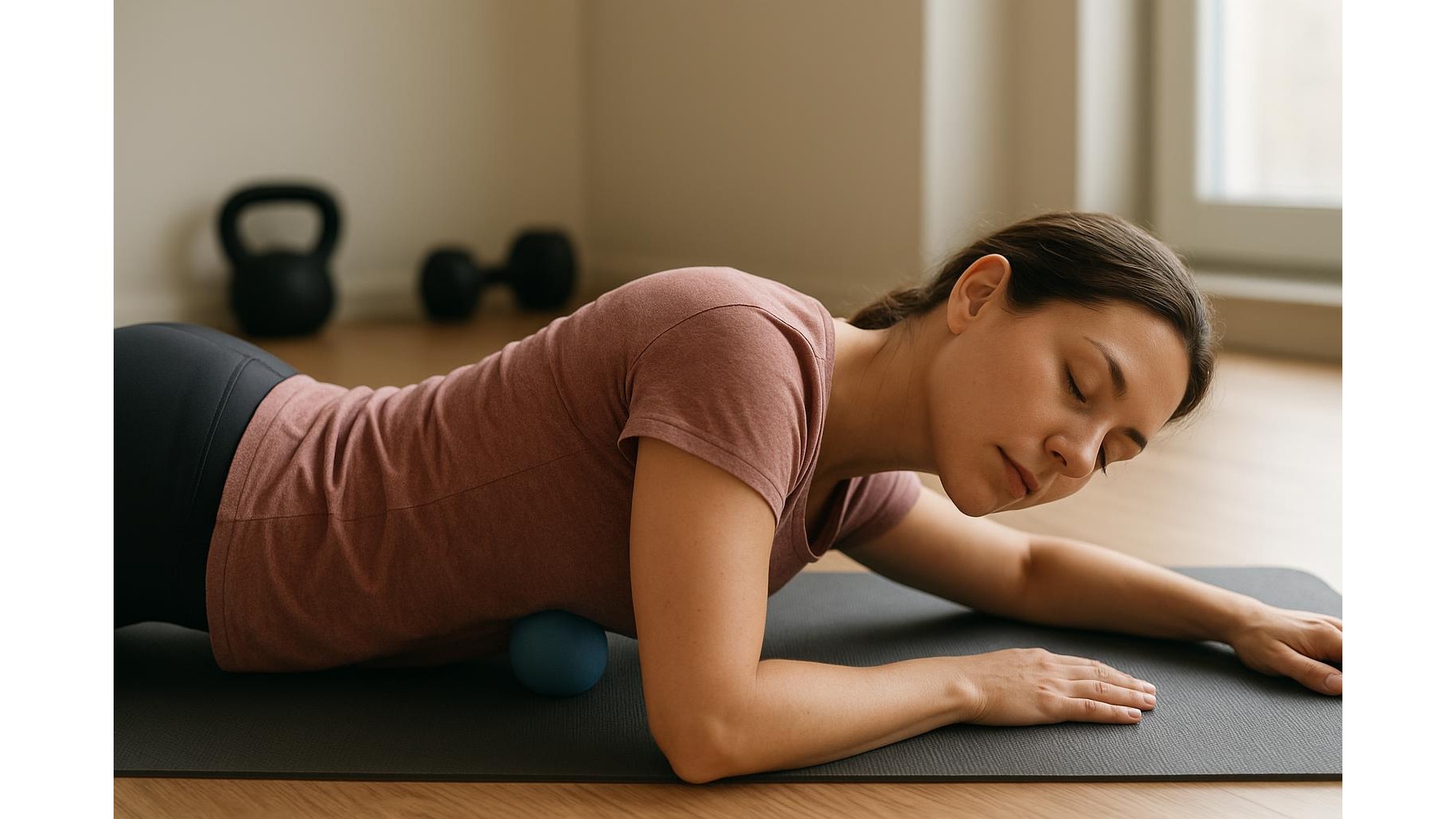
Now use your small ball for targeted self‑massage along the side ribs. Lie on your side on the mat and place the ball gently between the floor and the outer ribcage, just below the armpit. Support your head with your bottom arm and keep the top hand on the floor in front of you for balance. Sink your weight into the ball only as much as is comfortable, then take 6–8 slow breaths, feeling the ribs expand around the pressure point. You can make tiny rolls up and down (a few centimetres only) to explore tight spots in the intercostal muscles and the side of the latissimus dorsi. Repeat on the other side, keeping your breathing smooth and relaxed.
Back and diaphragm release with breath awareness
To finish, lie on your back again with the ball under the mid‑back, slightly to one side of the spine (never directly on the vertebrae). Take slow breaths into the area of pressure, imagining the air reaching the back of the ribs. After a few breaths, move the ball to the other side. This gentle pressure can help reduce residual back tightness after pulling and rowing exercises. Then remove the ball, rest flat on the mat with arms by your sides and spend one or two minutes simply observing your breathing. Notice whether the breath now feels more expansive around the sides and back of the ribcage, and whether your shoulders and neck feel less involved in every inhale.
Incorporating this simple ribcage and breathing‑muscle self‑care routine into your weekly schedule can significantly improve post‑workout comfort, flexibility and overall breathing ease. With just a mat, a towel and a small ball, you can address tight intercostals, support better posture and help your body recover more efficiently between home gym sessions. Practised consistently, these low‑intensity techniques can become a calming ritual that supports both performance and everyday wellbeing.