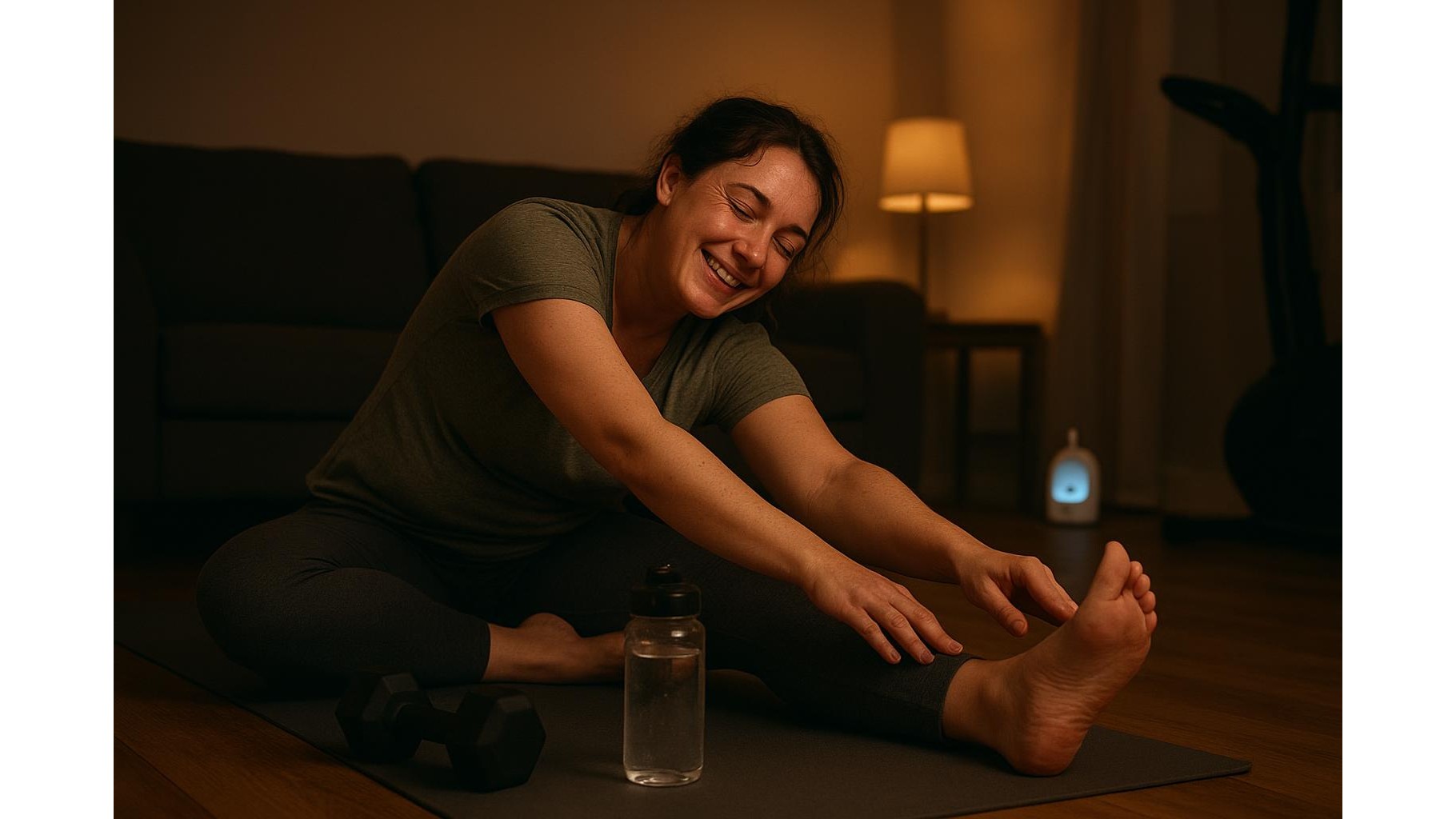
When you are a parent, the only realistic slot for a serious home workout is often after the kids are finally asleep. Training at 9–10 p.m. can be amazingly convenient, but it also risks poor recovery, short sleep and dragging fatigue the next day. With a smart recovery plan focused on cooling down, refuelling, hydrating and optimising sleep, you can keep making progress without feeling wrecked every morning.
Design a true cool-down, not just a last set
Late-night training ramps up your heart rate, body temperature and nervous system activity, all of which can delay sleep. Plan a 10–15 minute cool-down as part of the workout, not an optional extra. After your last working set, switch to low-intensity movement such as walking around the room or very easy cycling on a stationary bike for 3–5 minutes, then add long, slow stretches for the hips, chest, hamstrings and back. Focus on nasal breathing and longer exhales to shift into a more parasympathetic state. A simple self-massage routine with a foam roller or massage ball (for example on the calves, quads and upper back) helps signal “session over” to your body and reduces next-day stiffness so you can still handle school runs and work duties.
Recovery-friendly nutrition when it’s almost bedtime
Eating after a late session is tricky: you need enough protein and carbohydrates to support muscle recovery without a heavy meal that keeps you awake. Aim to finish your workout at least 60–90 minutes before you plan to sleep, then go for a light, balanced snack rather than a full dinner. A good template is 20–30 g of protein plus a small serving of easily digested carbs and a little fat: for example Greek yoghurt with berries and oats, or scrambled eggs on a slice of toast. Avoid ultra-greasy foods and huge portions, which slow digestion and can disturb sleep. If time is tight, a quality protein shake paired with a banana or a slice of wholemeal bread gives your muscles what they need, while staying gentle on the stomach. Keeping this post-workout snack consistent helps your body adapt to a repeatable late-evening routine.
Hydration: enough, but not all at once
Parents often under-drink all day, then smash a litre of water after training and wonder why they are up twice in the night. Instead, start your evening workout already fairly hydrated: keep a bottle nearby during the afternoon and sip steadily. After the session, replace fluids gradually with 300–500 ml of water over 30–60 minutes, adding a light electrolyte drink if you sweat heavily or live in a warm home. This helps restore sodium and potassium levels that support muscle function and reduce cramping, without overwhelming your bladder. Limit caffeine-containing pre-workouts after 5–6 p.m., choosing non-stimulant options if you need a performance boost. The goal is balanced evening hydration: enough for recovery, not so much that you break your deep sleep with multiple bathroom trips.
Create a fast transition from workout mode to sleep mode
After an intense home session, your mind can still be buzzing from sets, reps and your playlist, making it hard to fall asleep quickly. Design a short, repeatable post-workout routine that helps you downshift. First, clear and reset your workout area so your brain gets a visual “training is over” cue. Then dim the lights, switch to warmer bulbs or a low bedside lamp, and avoid bright phone and TV screens for at least 20–30 minutes before bed. A quick warm shower can drop your core temperature afterwards, supporting natural melatonin production. Simple breathing patterns—such as inhaling for 4 seconds and exhaling for 6–8 seconds—lower heart rate and calm the nervous system. Think of this as the “cool-down for your brain”, just as important as stretching is for your muscles.
Protect your sleep window and weekly schedule
For late-evening home workouts to be sustainable, you must protect your sleep duration. Decide your ideal wake-up time based on family commitments, then work backwards to set a realistic bedtime that still allows 7–9 hours in bed. Fit your session length around this window rather than sacrificing sleep to do more volume. On particularly busy days, swap a long strength workout for a shorter full-body circuit or mobility session so you do not end up training at midnight. Structure your week with one or two lighter days after your hardest late sessions, and be ruthless about screens, chores and scrolling that steal minutes from your pre-midnight sleep. By respecting sleep as a core part of your training programme, you can keep progressing, stay present with your children and avoid the chronic fatigue that often derails motivated parents.
Planning recovery as carefully as you plan sets and reps is the key to thriving as a parent who only trains once the house is quiet. By building in a deliberate cool-down, smart late-evening nutrition, measured hydration and a consistent wind-down into sleep, you transform late workouts from a source of exhaustion into a sustainable habit that supports your health, strength and family life in the long term.