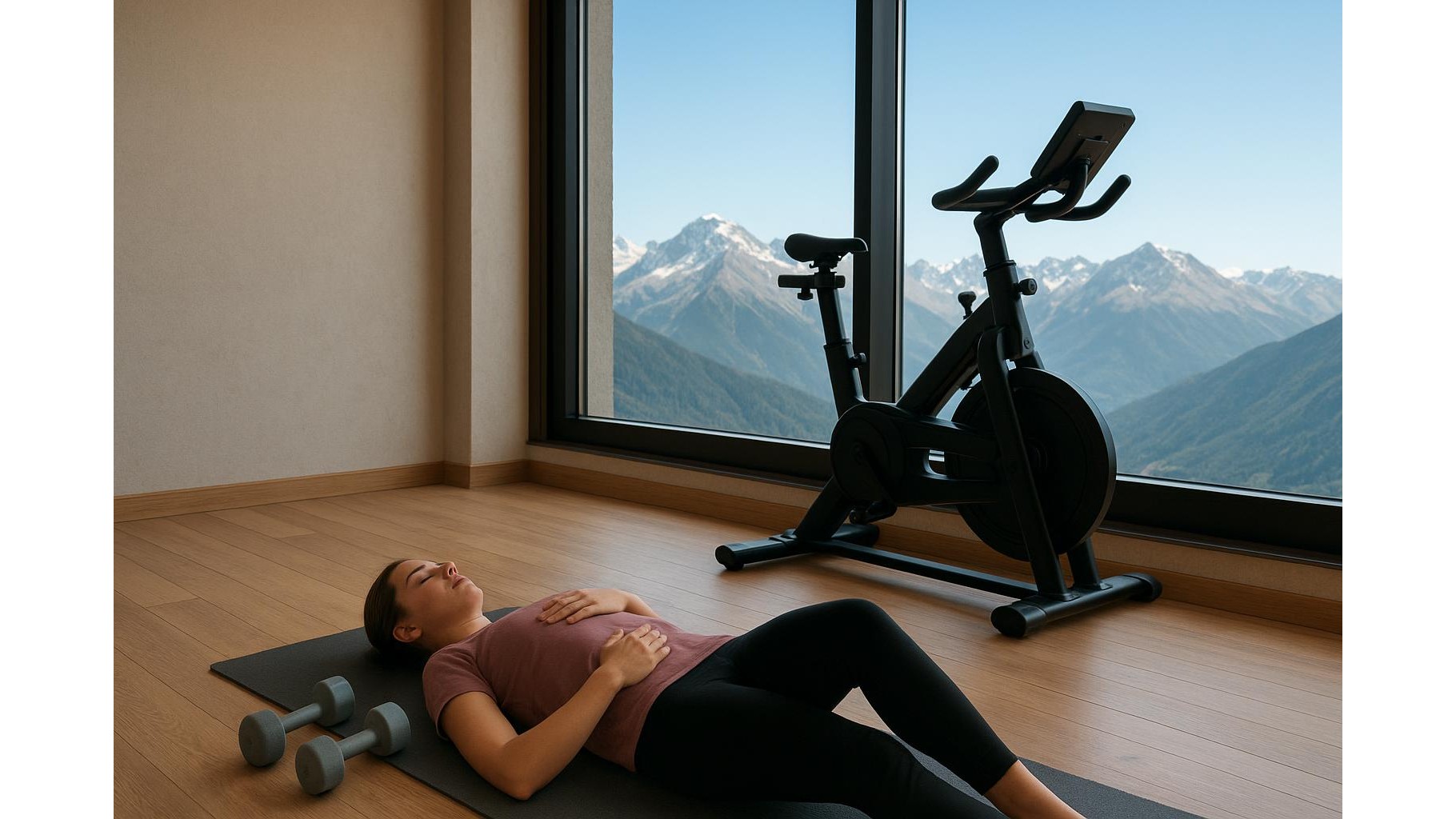
Living at high altitude can make every home workout feel harder. Thinner air means reduced oxygen availability, higher heart rate and often poorer sleep quality, all of which slow recovery. With the right at‑home strategies, however, you can support your lungs, protect your sleep and keep progressing in both strength training and cardio without burning out.
Hydration and nutrition for thin air recovery
At high altitude, your breathing rate increases and you lose more fluid through respiration, so smart hydration is your first recovery tool. Aim to sip water consistently through the day rather than chugging large amounts pre‑workout. Adding electrolytes can help maintain fluid balance and reduce headaches and post‑training fatigue. Pair this with a diet rich in iron (leafy greens, beans, red meat if you eat it) and antioxidants (berries, colourful vegetables) to support red blood cell production and manage oxidative stress from training in thinner air. After home workouts, focus on a mix of protein for muscle repair and carbohydrates to replenish glycogen so your body has enough fuel to adapt to the extra altitude stress.
Breathing drills to boost oxygen efficiency
Because oxygen is scarcer at altitude, improving your breathing mechanics is crucial. Start with simple diaphragmatic breathing: lying on your back, place one hand on your chest and one on your belly; inhale through your nose for four seconds, feeling your belly rise, then exhale slowly through pursed lips for six. Repeat for 5–10 minutes after training. This helps you use the lower parts of your lungs more effectively. You can also practice box breathing (inhale for four, hold for four, exhale for four, hold for four) to improve CO₂ tolerance and calm the nervous system. Consistently working on these home drills trains your body to extract more oxygen per breath, so climbing stairs, interval work and strength sets feel more manageable over time.
Sleep hygiene when the air feels thin
Many people living at high altitude report fragmented sleep, nighttime awakenings and a racing heart, all of which delay recovery. Build a home sleep routine that prioritises calm breathing and temperature control. Keep your bedroom cool and dark, and avoid heavy, late‑night meals which can increase heart rate. Schedule your hardest workouts at least 4–6 hours before bed so your nervous system has time to settle. Ten minutes of slow nasal breathing or a short stretching session before sleep can lower sympathetic arousal. Elevating your head slightly with an extra pillow may also ease breathing if you feel short of breath at night. The better your sleep quality, the more easily your body adapts to altitude and the faster you rebound between training days.
Pacing your training load at altitude
Trying to match sea‑level performance at high altitude is a common mistake. Instead of chasing absolute numbers, use RPE (rate of perceived exertion) and heart rate ranges to guide your home workouts. Expect simple activities—like bodyweight circuits or indoor cycling—to feel tougher. Start by reducing your training volume (sets, reps or duration) by 20–30% when you first move to or start training at altitude, then build back gradually over several weeks. Incorporate more low‑intensity, Zone 2 cardio to develop your aerobic base without overwhelming your recovery. Plan regular deload weeks with lighter sessions and mobility work. This pacing strategy helps you stack consistent training days, which is far more important for long‑term progress than occasional maximal efforts that leave you exhausted.
Mobility, active recovery and home routines
Because high altitude adds systemic stress, structured active recovery is essential. On days between harder sessions, schedule low‑impact movement at home: easy indoor cycling, walking, light mobility flows or yoga. These activities promote blood flow without significantly raising your heart rate or oxygen demand. Focus on key areas used in your home gym setup: hips, thoracic spine and shoulders if you do a lot of pressing or pulling; ankles and calves if you run or use a treadmill. Combine this with short, frequent breaks from sitting to prevent stiffness and support circulation. Over time, this active recovery routine helps reduce soreness, improves joint range of motion and makes your next strength or cardio session at altitude feel smoother and more efficient.
Living and training at high altitude is demanding, but with intentional hydration, structured breathing drills, solid sleep hygiene, smart pacing and regular active recovery, you can manage fatigue and keep progressing in your home gym. Treat the altitude as another training variable to respect and adapt to, and your body will gradually become more efficient at using oxygen, allowing you to breathe easier, sleep deeper and train better where you live.