
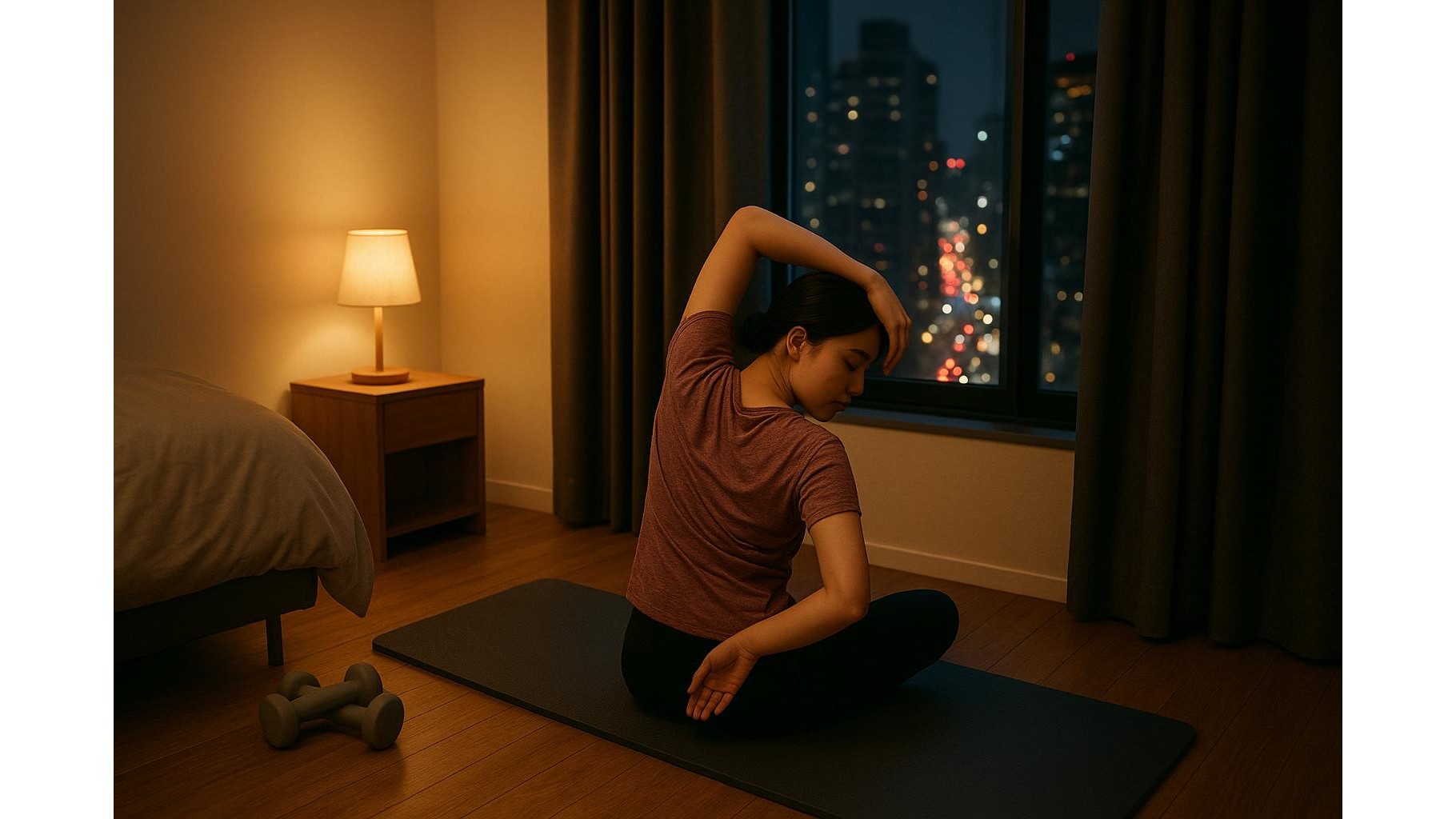
Living in a busy city often means thin walls, loud neighbours and limited space. For home workouts, this can be a double challenge: you need to protect your sleep from noise and light, and your joints from repeated impact on hard floors. With some smart tweaks to your routine, environment and equipment, you can still recover well and keep progressing, even in a small, noisy apartment.
Create a sleep-friendly pre-workout and post-workout routine
Recovery starts with consistent, high-quality sleep. If you train after work, avoid very intense, late-night sessions that spike your heart rate and core temperature right before bed. Instead, schedule heavy strength work at least 3 hours before sleep and keep the last 30–40 minutes of the evening for low-intensity mobility, stretching and breathing. Dim the lights, limit screens, and finish with 5–10 minutes of slow nasal breathing to signal to your nervous system that it is time to wind down. A simple ritual, repeated daily, helps your body fall asleep faster and improves the hormones that drive muscle repair and joint recovery.
Use simple sound and light hacks to protect your recovery
Noise and light pollution are two of the biggest enemies of city sleep. Even without major renovation, you can reduce their impact. Thick curtains or makeshift blackout panels cut down on street light and early sun, helping keep your sleep cycles stable. A constant, low-level background sound such as a fan or a white noise track can mask sudden noises from traffic or neighbours, preventing the micro-awakenings that fragment sleep. If total silence is impossible, foam earplugs combined with a low-volume sound source can be a good compromise. These low-cost tweaks don’t just make nights quieter; they also make short daytime power naps more effective, which is crucial when you train hard in a noisy environment.
Choose low-impact training that is kind to joints and neighbours
In a small flat with hard floors, traditional high-impact exercises like jumping jacks, burpees or skipping can be noisy and tough on your ankles, knees and hips. Prioritise low-impact strength training and controlled tempo work: think slow squats, split squats, hip hinges, glute bridges, push-ups and core variations. Replace jumps with step-ups, marches or power-focused but grounded moves like fast but quiet lunges. Shoes with good cushioning and, ideally, a thick mat help absorb shock and reduce vibration that travels through the floor. This approach protects your joints from repetitive impact while keeping noise levels acceptable for people living below you.
Build a joint-friendly training surface in your home gym corner
A dedicated, cushioned training surface is essential for joint health and noise control. Use a thick, dense exercise mat or a layer of interlocking foam tiles under your workout spot to create a more forgiving surface for knees, wrists and hips. This also dampens the sound of setting down weights or moving through dynamic exercises. Try to keep heavy movements like lunges, deadlifts and push presses over this area, and avoid slamming weights or dropping equipment. Over time, this small setup can significantly reduce cumulative stress on your joints, especially if you train at home several days per week on top of walking and commuting in a busy, hard-surfaced city.
Support recovery with smart mobility and micro-breaks
When you cannot control your external environment, focus on what you can control inside your body. After workouts, spend 5–10 minutes on mobility drills for hips, thoracic spine and ankles to keep joints moving well. Light stretching, self-massage with a simple tool like a tennis ball, and gentle dynamic movements help flush out tension built up from both training and sitting. During the day, insert short movement breaks: stand up, walk, perform a few easy squats or calf raises. These micro-breaks improve circulation and reduce stiffness, so your muscles and joints are not starting each workout already tight. Combined with adequate hydration and balanced nutrition, these habits enhance recovery even if sleep is occasionally cut short by city noise.
Recovering well in a noisy city apartment is absolutely possible if you approach it strategically. Prioritise consistent sleep routines, use simple sound and light adjustments, switch to low-impact home workouts that protect your joints and your neighbours, create a cushioned training corner, and add regular mobility and movement breaks. These small, realistic changes compound over time, allowing you to keep progressing, stay pain-free and enjoy your home training without needing a perfect environment.









