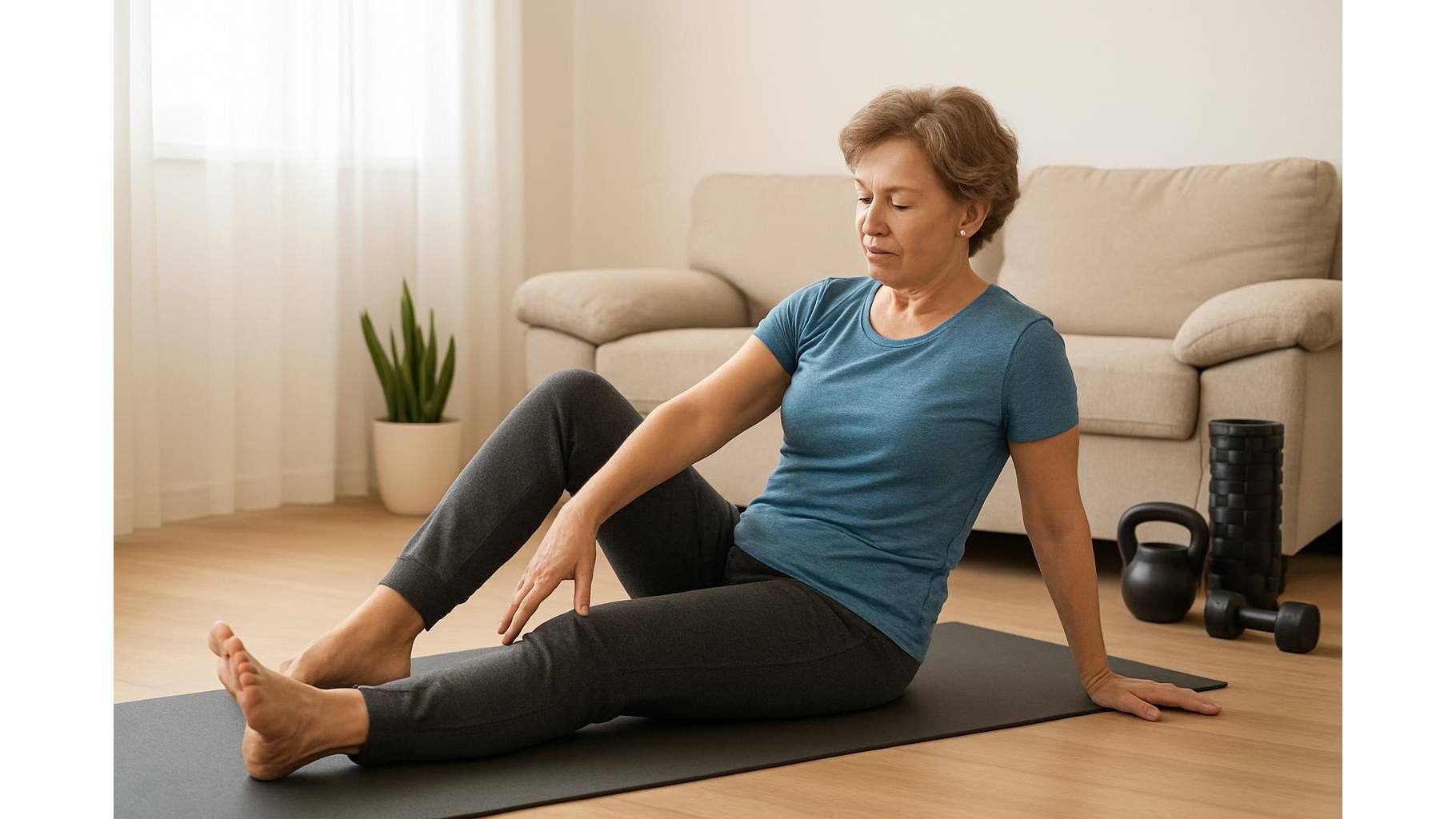
Preparing your joints before training is essential if you live with mild arthritis or recurring joint stiffness. A short, focused pre-workout joint prep done at home can warm your tissues, improve mobility and help you feel more confident going into strength or cardio sessions. Below you will find a simple routine that needs no complex equipment and is tailored to home athletes who want to protect their knees, hips, shoulders and hands while still enjoying regular exercise.
Set up your space and listen to your joints
Before you start, choose a safe space with enough room to move your arms and legs freely. Use a non-slip mat and comfortable clothing that does not restrict your range of motion. If your joints feel particularly sensitive, keep a chair nearby for support during balance work. Begin each session with a quick body scan: gently move your neck, shoulders, elbows, wrists, hips, knees and ankles, and rate your joint discomfort from 0 to 10. Today’s routine should stay within a mild level of discomfort and never tip into sharp or worsening pain. If a movement increases pain, shorten the range, slow down, or skip it. This “listen first, move second” approach is crucial for training safely with arthritis.
Gentle joint mobility circuit for daily use
Start with 3–5 minutes of very light whole-body movement, such as marching in place or slow step-touches, to raise your body temperature. Then move into a simple joint mobility circuit. For your neck and shoulders, perform slow neck rotations, shoulder rolls and controlled arm circles. For your elbows and wrists, bend and straighten the arms, then gently circle the wrists, opening and closing your hands to lubricate the finger joints. For hips and knees, try seated or standing knee lifts, small hip circles and gentle half-squats within a pain-free range. Finish with ankle circles and heel-toe rocks to wake up your feet and ankles. Perform 8–10 slow repetitions per joint, focusing on smooth, pain-free motion rather than depth or speed.
Dynamic warm-up before strength or cardio
Once your joints feel looser, shift into a dynamic warm-up that looks more like your planned workout. If you are preparing for walking or cardio, use brisk marching, side steps, gentle knee lifts and light arm swings for 3–5 minutes. If you plan a strength session, add bodyweight movements such as supported squats to a chair, wall push-ups and hip hinges with hands on your thighs. Aim to gradually increase the range and rhythm while keeping your breathing calm and controlled. This phase helps your muscles and connective tissues handle load more comfortably, reducing the sense of stiffness that can accompany mild arthritis. Stop and reset if any joint feels hot, unstable or unusually sore.
Simple strengthening to support aching joints
Targeted strength training around arthritic joints can improve comfort between workouts. For knees and hips, include exercises like seated leg extensions, glute bridges on the mat and sit-to-stand from a chair, using your hands lightly on the thighs if needed. Perform 2 sets of 8–12 repetitions, moving slowly and focusing on controlled form. For shoulders, elbows and wrists, wall push-ups, isometric holds where you press your palms together, or light resistance band rows can build support without stressing the joints. Strengthening the muscles around painful joints acts like a natural brace, improving stability and reducing the load placed directly on the cartilage. Train these patterns two to three times per week, and keep at least one rest day between strength-focused sessions.
Cool-down, stretching and post-workout care
After your session, include a short cool-down to help joints settle. Walk slowly around the room for a minute, then perform gentle stretches for the major muscle groups: calves, hamstrings, quadriceps, chest and upper back. Hold each stretch for 15–20 seconds without bouncing and stay under the threshold of pain. Slow breathing through the nose and relaxed exhalations can calm your nervous system, which may also reduce your perception of pain. If certain joints feel warm or irritated, use simple home strategies such as elevating your legs, applying a cool cloth, or resting in a comfortable position. Keep a brief log of what you did, how your joints felt during the workout and how they feel a few hours later to track which elements of your routine serve you best.
Building a consistent, gentle pre-workout joint prep routine at home can make training with mild arthritis far more manageable. By setting up a safe environment, using a progressive joint mobility circuit, adding dynamic warm-up moves that mimic your workout, and supporting your joints with basic strength and careful cool-down, you can reduce stiffness and move more confidently. Adjust intensity day by day, be patient with your progress, and work with a health professional if symptoms change. With regular practice, your home warm-up becomes a powerful tool to protect your joints and keep you active.