For home athletes over 40, waking up with stiff joints can quickly derail both comfort and performance. A short, focused morning mobility routine can “lubricate” your ankles, knees, hips and shoulders, helping you move more freely at work and train more safely later in the day. This 10‑minute, equipment‑free joint reset is gentle enough for busy mornings but powerful enough to reduce tightness and support long‑term joint health.
Table of contents
Why a 10‑minute joint reset matters after 40
After 40, connective tissues naturally lose some elasticity and recovery tends to slow down. Long hours at a desk or in the car only add to the problem, leaving hips locked, ankles stiff and shoulders rounded forward. A deliberate morning mobility sequence boosts blood flow to the joints, stimulates synovial fluid (your body’s natural joint lubricant) and gently reminds your nervous system that full‑range movement is safe. Instead of jumping straight from bed to heavy lifts or a commute, a 10‑minute reset acts like a daily “oil change” for your body, laying the foundation for safer home workouts later.
Step 1: Wake up the ankles and knees
Start from standing, barefoot if possible. Hold on to a chair or wall for balance. First, perform slow ankle circles: lift one foot slightly and trace large circles with your toes, 10 in each direction per side. Keep the movement smooth rather than forcing range. Then move into ankle rocks: with both feet flat, gently shift your weight forward until your knees travel over your toes, then back to neutral, 10–15 reps. Finish with knee flexion and extension: lightly bend both knees as if starting a squat, pause, and straighten without locking, 10–12 times. These drills help prepare your joints for stairs, walking commutes and later leg training, decreasing the chance of awkward twinges.
Step 2: Open the hips for better posture and power
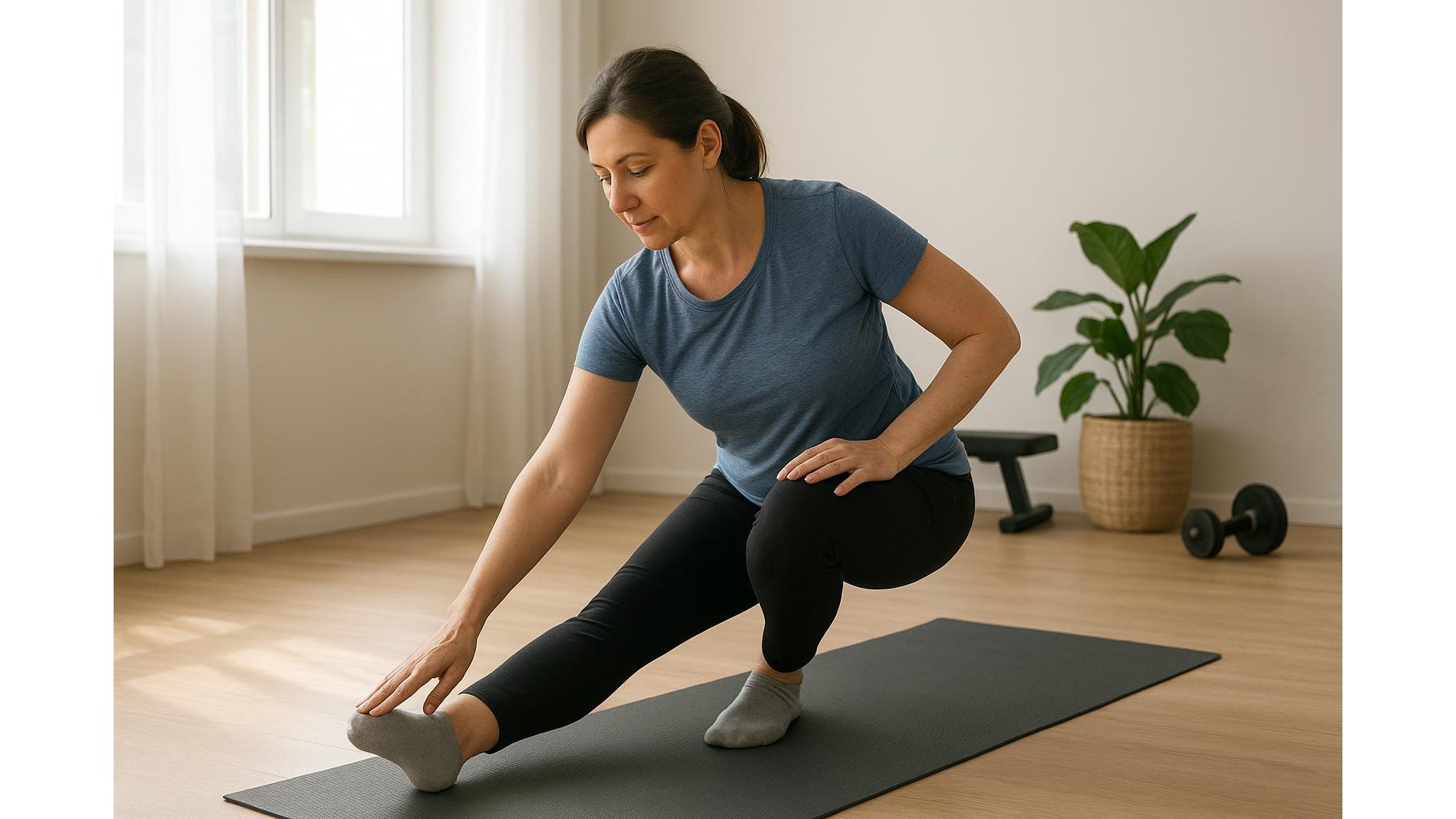
Next, target the hips, a common stiffness hotspot for home workers. Stand tall and perform slow hip circles, hands on hips, drawing a wide circle with your pelvis 8–10 times each way. Then move to standing hip CARs (controlled articular rotations): holding a support, lift one knee to hip height, open it out to the side, rotate the thigh inwards and bring it back down, like drawing a big circle with your knee. Perform 5–6 slow reps per leg. Finally, practice hip hinges: with a soft bend in the knees, push your hips back as your torso leans forward, then drive the hips forward to stand tall, 10–12 reps. These moves restore front‑to‑back and rotational hip motion, improving posture and protecting the lower back during both sitting and lifting.
Step 3: Mobilise the shoulders and upper back
Sitting and phone use often leave the shoulders rounded and the upper back rigid. Start with scapular shrugs: stand tall, lift your shoulders towards your ears, pull them slightly back, then slide them down and forward in a slow circle, 8–10 times each way. Follow with arm circles, small at first and gradually larger, 10–15 reps forward and backward. Then add wall slides: stand with your back and arms against a wall, elbows bent at 90 degrees, and gently slide your arms up and down while keeping contact, 8–12 reps. Focus on smooth motion and easy breathing. These drills help you reclaim overhead range, reduce neck tension and prepare your upper body for pressing and pulling without discomfort.
Step 4: Link everything with gentle flow and breathing
To cement the benefits, integrate your joints with a brief full‑body flow. From standing, move through slow cat‑camel style spine waves: tuck your pelvis and round your back slightly, then gently arch and open your chest, 8–10 cycles. Add dynamic half squats—small, controlled squats that stay within a pain‑free range—syncing the movement with your breath. Finally, include a short standing twist, rotating the torso side to side with soft knees, 10–12 reps per side. Aim to breathe in through your nose and out through your mouth, never holding your breath. This integration phase teaches your joints to cooperate, not just move in isolation, which is vital for real‑world tasks and safe training sessions.
By investing just 10 minutes each morning in a structured, equipment‑free mobility routine, home athletes over 40 can dramatically reduce stiffness, improve posture and feel more confident heading into both work and workouts. Consistency matters more than intensity: keep the movements gentle, stay within a comfortable range and treat this routine as non‑negotiable self‑maintenance. Over time, you’ll likely notice smoother squats, easier overhead work and fewer nagging aches—proof that a daily joint reset is one of the smartest training habits you can adopt.