Stiff shoulders and tight hips are a common side effect of long work-from-home days and heavy lifting sessions. A short, focused resistance band mobility routine can help you restore range of motion, wake up sleepy muscles and prepare your body for whatever the day throws at you. This 12-minute, band-based mobility flow is designed to be simple, joint-friendly and easy to repeat every morning in your home gym or living room.
Why a banded morning mobility flow works
Unlike static stretching, a banded mobility routine adds gentle resistance and assistance, teaching your joints to move through fuller ranges under light tension. This improves joint stability while also reducing that familiar feeling of morning stiffness. Elastic bands are also incredibly versatile: with a single long loop band you can target shoulders, upper back, hips and glutes without needing large machines or heavy weights. Done consistently, this kind of flow can ease desk-related aches, improve your overhead position for lifting and make daily movements feel smoother.
Gear you need: a simple loop resistance band
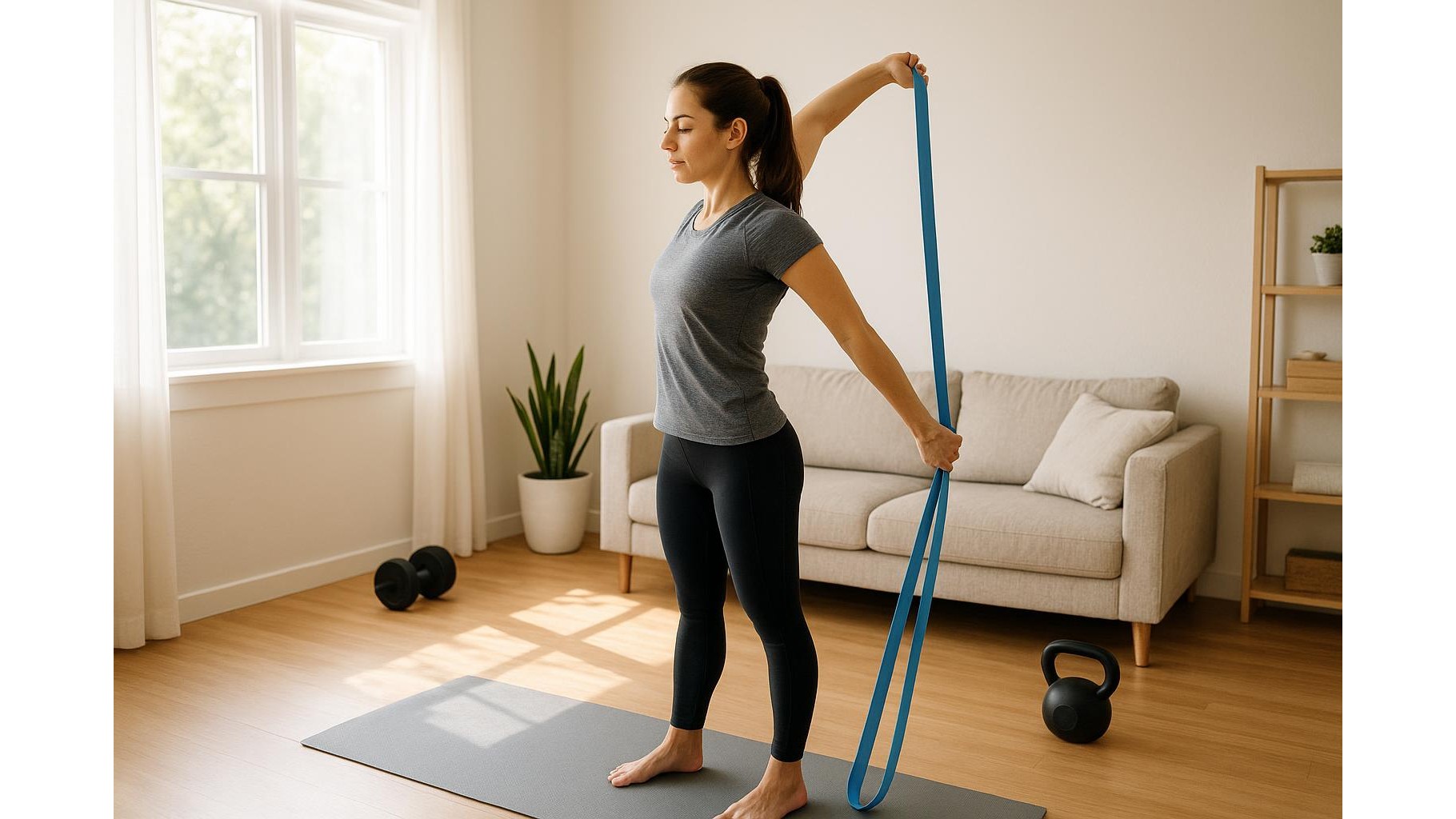
For this routine, all you really need is a medium-light loop resistance band long enough to allow overhead stretches and hip work. A generic 208 cm closed-loop band with moderate tension normally used for pull-ups and warm-ups is ideal, as it provides enough resistance for shoulder traction and hip activation without being overpowering. Look for a durable latex or fabric band with smooth seams so it will not dig into your hands or ankles during longer holds. Bands like these are compact, quiet to use and easy to store, making them perfect for a small home gym setup or even a bedroom routine before you open your laptop.
Upper body sequence: opening shoulders and upper back
Start with 6 minutes focused on your shoulders and upper back. First, perform banded shoulder dislocates: hold the band wide with straight arms, then slowly pass it from front to back over your head for 8–10 controlled reps, keeping tension and a pain-free range. Next, anchor the band at hip height (under a door or around a sturdy post) and do banded lat prayer stretches, sinking your chest down to open the lats and thoracic spine for 20–30 seconds per side. Finish with band pull-aparts: holding the band at chest height, pull it wide by squeezing your shoulder blades together for 12–15 reps. This trio builds better posture, improves overhead mobility and helps undo the rounded shoulders that come from typing all day.
Lower body sequence: unlocking hips and glutes
The next 6 minutes target your hips, glutes and lower body. Loop the band around a solid anchor close to the floor and step into it so it sits deep in the crease of your hip. Gently walk forward to create traction, then drop into a half-kneeling position, rocking your weight in and out of the front leg for 45–60 seconds per side to mobilise the hip joint. Follow this with banded glute bridges, placing the band just above your knees and driving your knees slightly out as you lift your hips for 12–15 reps. Finish with standing banded hip abductions, using the band around your ankles and slowly lifting one leg out to the side for 10–12 reps each leg. These moves wake up the glutes, create space in the hips and support healthier lower back mechanics.
How to structure your 12-minute morning routine
To keep things simple, think in three short rounds. Round one focuses mainly on range of motion with slower, exploratory reps; round two builds control, adding a bit more tension or slightly deeper range; round three is about smooth, flowing movement and breathing. Spend about 2 minutes on upper body work and 2 minutes on lower body work each round, resting only as needed. Aim to breathe through your nose when possible and avoid forcing any position. This should feel like a gentle joint wake-up, not a PR attempt. Over time, you can adjust band resistance or add a second band to progress the challenge.
Tips for consistency and making it a daily habit
The magic of a mobility flow lies in consistency, not intensity. Keep your band somewhere visible in your home gym or next to your desk so the routine becomes a natural part of your morning. Pair it with an existing habit, like making coffee, and perform the 12-minute sequence while the kettle is on. Track how your shoulders and hips feel over a couple of weeks—many people notice easier squats, overhead presses and less nagging tightness during long sitting periods. If you are short on time, perform just one or two of your favourite banded drills, but try not to skip completely. A little daily movement with a simple resistance band goes a long way toward keeping your body mobile and ready for training.
This 12-minute, band-based morning mobility routine is a low-friction way to care for your shoulders and hips at home. With one simple loop band and a small corner of floor space, you can gently open tight joints, activate key muscles and set a better movement tone for the rest of your day. Repeat it before strength workouts or on busy workdays to keep stiffness at bay and maintain long-term joint health.