Long home workouts can easily turn into a grind: focus dips, technique gets sloppy and the last sets feel twice as heavy as the first. Strategically inserting ultra-short micro-recovery pauses of about 60 seconds can transform your training. By combining breathing, light mobility and quick hydration, you reduce fatigue without losing your mental edge or letting your heart rate crash. Here is how to build smart reset breaks into any home training session to train harder, safer and more consistently.
Why 60‑second micro-recovery works
A well-timed 60‑second break is long enough to clear some fatigue, but short enough to keep you in the training zone. Instead of scrolling your phone, use this mini window for intentional active recovery: deep diaphragmatic breaths, joint circles and a sip of water. This combination lowers perceived exertion, improves movement quality and preserves grip strength for the next set. Over a long home workout, these micro-pauses help you maintain a steady pace, protect your joints and avoid the late-session form breakdown that often leads to overuse issues.
Structuring breathing resets between sets
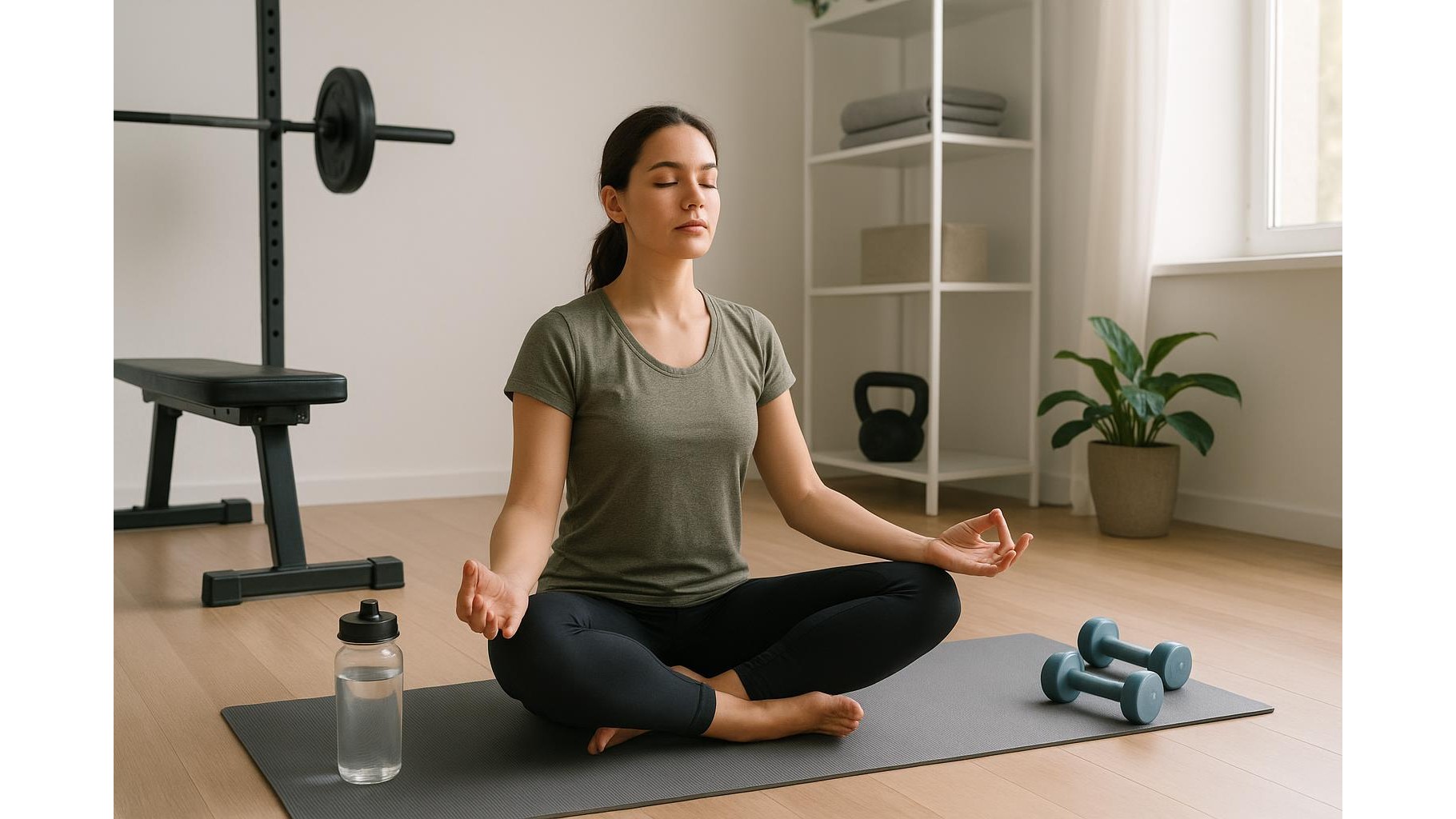
Turn your usual rest into targeted breathing resets. As soon as a set ends, stand tall or sit upright, place one hand on your chest and one on your belly and inhale through the nose for four seconds, feeling the lower hand rise. Exhale through the mouth for six to eight seconds, letting your shoulders relax. Aim for 5–8 of these cycles in your 60‑second pause. This simple pattern calms your nervous system just enough to sharpen focus, while keeping you physically ready to attack the next set. Over an entire home session, these resets reduce breathlessness and help you stay technically precise on every rep.
Mobility micro-breaks to keep joints fresh
Instead of standing still between sets, plug in 30–40 seconds of light mobility work that complements the exercise you just performed. After push-ups or presses, add slow shoulder circles and thoracic spine rotations. Following squats or lunges, do gentle hip openers and ankle rocks. Keep the movements pain-free and low effort: the goal is to lubricate joints, not add more load. These mobility micro-pauses improve range of motion, reduce stiffness and help you maintain solid technique deep into a long home workout, especially if you train on multiple days in a row.
Smart hydration without breaking your flow
Dehydration is a silent performance killer during home training sessions. Use part of each 60‑second pause for a small, consistent sip of water instead of chugging a full bottle at the end. Keep a simple, BPA-free bottle within arm’s reach so you do not interrupt your focus by leaving your training space. Aim for frequent, modest sips rather than big gulps, especially during high-intensity circuits. This strategy supports stable energy levels, reduces headaches and helps maintain muscle function, so your final sets feel closer in quality to your first ones.
Putting it all together in your home workouts
To integrate micro-recovery pauses, decide in advance where they fit: between every heavy set, after each full circuit or every 5–7 minutes in a longer conditioning block. Keep the structure simple: 20–30 seconds of breathing, 20–30 seconds of mobility and a quick hydration sip. Avoid distractions like social media or TV during these pauses—your attention should stay on your body and your next set. With just a bit of planning, you can turn previously “dead” rest time into a focused reset that supports better performance and more sustainable progress.
By deliberately weaving 60‑second reset breaks into long home training sessions, you protect technique, manage fatigue and maintain concentration from start to finish. Combine intentional breathing, light mobility and steady hydration to keep your nervous system sharp and your joints comfortable. Over weeks of consistent use, these micro-recovery strategies can be the difference between “just surviving” your home workouts and systematically improving strength, endurance and overall training quality.