After a demanding strength session, the last thing you want is a complex recovery protocol. Yet, skipping joint‑friendly recovery can leave you stiff, wired and sleep‑deprived. This simple evening routine combines gentle mobility, light self‑massage and breathing work you can do in your home gym or living room to calm the nervous system, reduce muscle tightness and prime your body for deep, restorative sleep.
Set the scene: downshift your nervous system
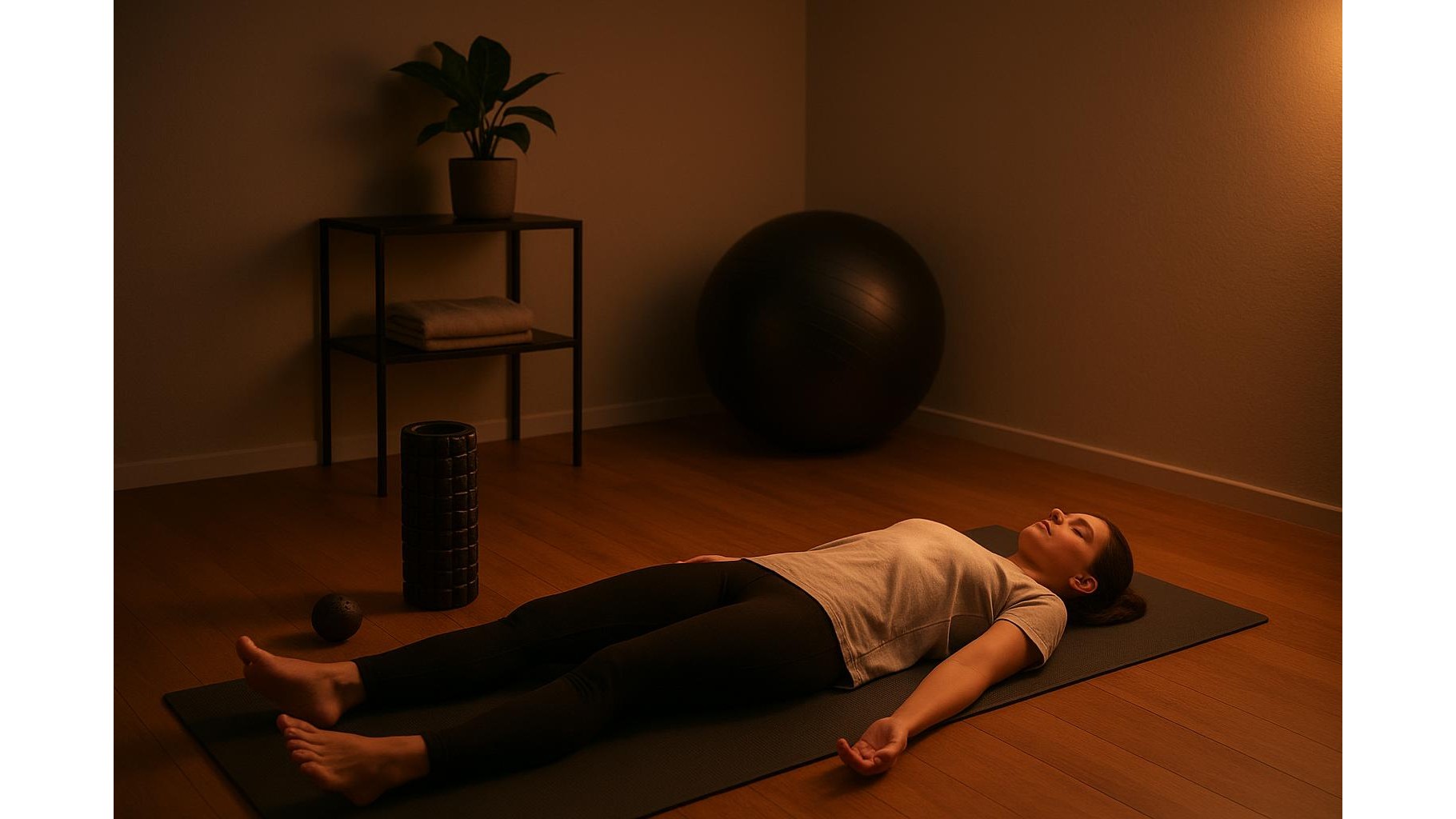
Begin by turning your training space into a recovery zone. Dim the lights, put your phone on silent and switch to slower music or ambient sounds. Sit or lie on a mat and take 3–5 minutes of nasal breathing: inhale quietly through the nose for 4 seconds, hold for 2, then exhale for 6. This longer exhale helps trigger the parasympathetic “rest and digest” response, counteracting the adrenaline from heavy lifting. Aim to keep your jaw, neck and shoulders relaxed. This tiny pre‑routine ritual signals to your body that the hard work is over and it is safe to unwind.
Joint‑friendly mobility: slow, small, pain‑free
Next, move through 5–10 minutes of gentle mobility, focusing on the joints that took the heaviest load: hips, knees, shoulders and spine. Keep everything pain‑free and low‑effort. Think slow hip circles while holding on to a chair, cat‑camel spine waves on all fours, and wall‑supported shoulder halos with light arms. The goal is not to stretch aggressively but to lubricate the joints and restore comfortable ranges of motion. Perform 5–8 slow repetitions per direction, breathing steadily. If you feel yourself tensing or holding your breath, reduce the range of motion; joint‑friendly recovery is about easing your body, not challenging it.
Light self‑massage to melt post‑workout stiffness
Follow mobility with 10 minutes of self‑massage targeting the areas that feel most fatigued, such as quads, glutes, lats or upper back. You can use a simple foam roller, a massage ball or even a folded towel against the wall. Apply low to moderate pressure—you should be able to relax your face and breathe slowly through the nose. Spend 30–60 seconds on each spot, gently rolling or making small circles. If you hit a tender point, pause and take 3–5 long exhales instead of digging harder. This style of myofascial release reduces perceived tightness without provoking more tension, making it ideal when your joints already feel taxed from heavy strength work.
Breathing‑based stretching for deeper relaxation
Once your muscles feel warmer and less reactive, add 5–8 minutes of breathing‑based stretching. Choose 3–4 simple, supported positions like a lying hamstring stretch with a strap, child’s pose for the back and hips, or a chest‑opening doorway stretch. Rather than chasing maximal range, aim for a mild, sustainable stretch while you take slow, quiet breaths. Inhale gently through the nose, then exhale for 6–8 seconds, letting each out‑breath soften the muscles around the area you are stretching. Hold each position for 4–6 breaths. This approach blends flexibility work with nervous‑system downregulation, helping your body shift out of “high alert” and into a state more compatible with high‑quality sleep.
Transition to sleep: a short wind‑down ritual
Finish with a 3–5 minute wind‑down that bridges your home workout space and your bedroom. Lie on your back with your calves on a chair or sofa to unload the lower back, place one hand on your chest and one on your belly, and gently scan your body from feet to forehead, releasing any remaining tension on the exhale. Keep your eyes closed and breathe through the nose at a comfortable, unforced pace. When you stand up, move slowly, dim the lights further and avoid screens where possible. By repeating this same evening recovery routine after heavy strength sessions, you teach your body to associate it with “shutdown mode,” improving both sleep onset and how refreshed you feel at your next training day.
This joint‑friendly protocol is intentionally simple: a few minutes of mobility, light self‑massage and breath‑led stretching performed consistently. Rather than adding stress to your schedule, it gently guides your body away from post‑workout stiffness and nervous‑system overdrive toward relaxation and better sleep quality. Implement it on your next heavy training evening and adjust the duration to match your energy; even a shortened version will compound over time, supporting recovery and long‑term joint health.