
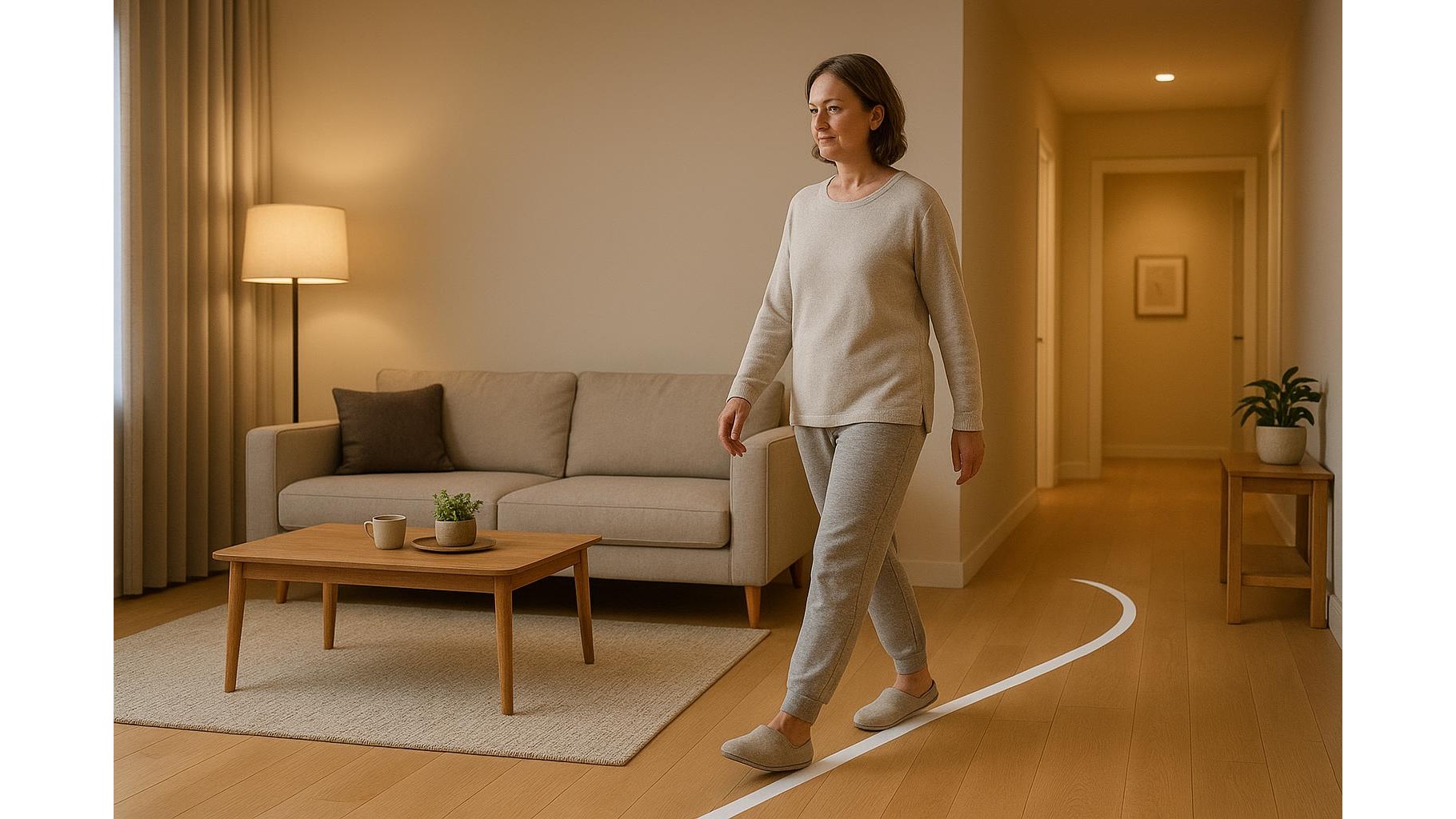
Designing simple indoor walking routes at home is one of the easiest ways to stay active on recovery days. By turning your hallways, living room and stairs into safe, low‑intensity circuits, you can boost circulation, support joint health and ease stress without overloading your body. With a bit of planning and the right accessories, these gentle laps can genuinely accelerate recovery between harder training sessions.
Plan your indoor walking circuit with safety first
Start by mapping out a clear, unobstructed loop. Walk through your home and remove tripping hazards such as loose cables, unstable rugs or low stools. Aim for a route that allows at least one full minute of continuous, low‑intensity walking before you need to turn, so you can settle into a rhythm. If you have a long hallway, combine it with a loop around the living room or kitchen island to create variety. Keep lighting bright and even to reduce eye strain, and choose footwear with good grip or walk barefoot on non‑slip floors. The goal is a route that feels relaxed and safe enough that you could comfortably complete 20–30 minutes while still being able to hold a conversation.
Using a compact walking pad to create a predictable route
If your space is very limited or clutter‑prone, a folding walking pad can give you a controlled, predictable surface for indoor active recovery. Look for a model that is low‑impact, runs at very slow speeds and folds away easily so it does not dominate your living area. A walking pad allows you to focus purely on gentle movement and posture, rather than steering around furniture. Set the speed just above a relaxed stroll and walk for short bouts of 5–10 minutes, checking in with your breathing and perceived effort. You should always feel that you could go faster but choose not to; that is the sweet spot for recovery walks that support blood flow without adding extra fatigue.
Incorporate stairs and gentle elevation wisely
Stairs can be useful in an indoor walking route, but they must be used with care on recovery days. Instead of powering up and down, think of them as a place to add brief, controlled elevation. Walk slowly, using the handrail if needed, and focus on smooth, quiet steps. Limit stair segments to short intervals, such as one or two flights followed by several minutes of flat walking. If you have knee or hip sensitivity, keep stair use to a minimum or remove it altogether, replacing it with slightly longer flat loops. The aim is to encourage gentle muscle activation through a comfortable range of motion, not to create a mini hill‑sprint workout indoors.
Track steps and intensity to keep recovery truly gentle
To stop recovery days from accidentally becoming extra training, use simple tools to monitor step count and intensity. A basic step counter or smartwatch can help you stay within a target range, such as 3,000–5,000 easy indoor steps, depending on your usual activity level. Combine this with the “talk test”: you should always be able to speak in full sentences without gasping. If you find yourself sweating heavily, shortening your sentences or craving a sit‑down, slow your pace or shorten the route. On active recovery days, more is not always better; consistency and comfort matter more than chasing high numbers.
Add variety with mindful walking and mobility breaks
To keep your indoor walking laps engaging, alternate simple variations while staying in a low‑effort zone. Every few minutes, pause for gentle ankle circles, shoulder rolls or cat‑camel movements for your spine, then resume walking. You can practice mindful walking by paying attention to how your feet contact the floor, how your arms swing and how your breathing feels. If you share your space, turn the route into a short, device‑free break where you walk and talk with a family member. These small tweaks reduce mental stress, improve posture awareness and transform a basic hallway loop into a mini recovery ritual you’ll actually look forward to repeating.
By treating your home as a flexible walking arena, you can build indoor active recovery routes that genuinely support healing between tougher workouts. Focus on safety, low intensity and comfort, adapt your route to your joints and energy levels, and view each lap as a chance to reset both body and mind. With consistent practice, these gentle circuits will enhance circulation, maintain mobility and help you arrive at your next training session fresher and more resilient.









