
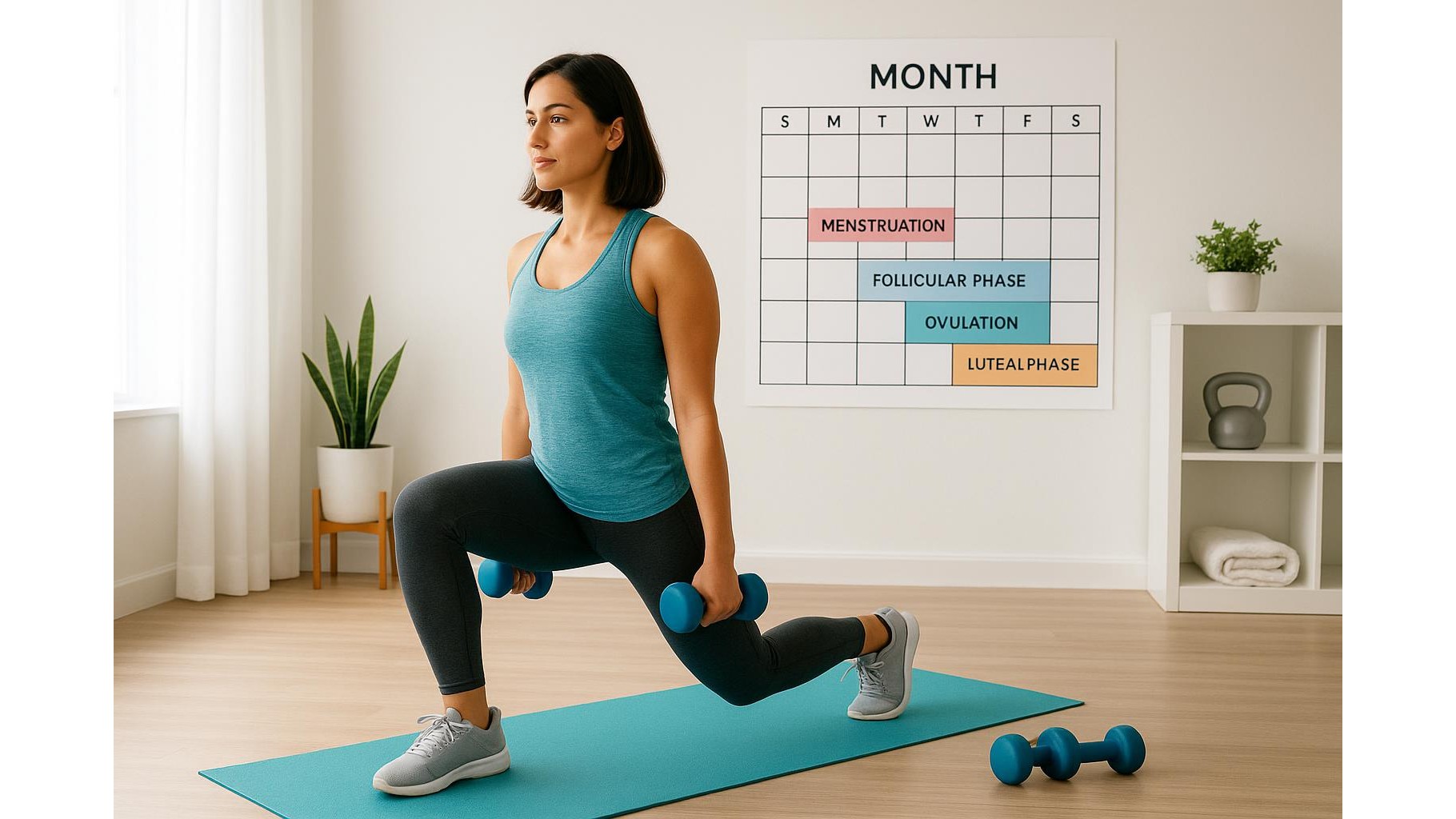
Training at home gives you the freedom to adapt your workouts to your menstrual cycle instead of forcing your body into a rigid plan. By matching your strength, cardio and recovery strategies to hormonal shifts, you can schedule smart deload weeks, protect performance and actually improve long‑term progress. This guide shows how to organise your home sessions around each phase of the cycle so you stay consistent without burning out.
Understanding the phases of the menstrual cycle
The menstrual cycle is typically divided into four main phases: menstruation, the follicular phase, ovulation and the luteal phase. During menstruation and early follicular days, hormones are relatively low, which can make some women feel tired but also surprisingly capable of handling strength training. In mid‑follicular to ovulation, rising oestrogen may support higher intensity and heavier lifting. In the late luteal phase, many experience PMS symptoms such as bloating, fatigue and mood changes, which can reduce motivation and recovery. Recognising where you are in this pattern lets you decide when to push harder and when to programme lighter weeks at home.
Planning heavier blocks and progressive overload
Use the higher‑energy days of the mid‑follicular and ovulatory phases to focus on progressive overload in your home workouts. Schedule your heaviest compound exercises such as squats, hip hinges and push movements, whether you train with bodyweight, dumbbells or a compact home gym set‑up. Aim to increase load, reps or sets in this window while keeping technique sharp. Because hormones may support better power output and pain tolerance, this is a strong time to test slightly heavier weights, train closer to failure on key sets and push more challenging cardio intervals. Logging your sessions helps you see patterns over several cycles and refine exactly when your personal “peak weeks” fall.
Designing deloads and lighter weeks without losing progress
A deload is not a step backwards; it is a strategic reduction in training stress that allows fitness adaptations to consolidate. A simple way to plan is to align a lighter week with late luteal or early menstrual days when symptoms are strongest. Reduce total volume by about 30–50%: fewer sets, slightly lighter weights and shorter or lower‑intensity cardio. Keep key movement patterns but make them easier, for example by reducing range of motion or using bodyweight instead of added load. To avoid losing progress, maintain consistency: keep showing up on your usual training days, even if the sessions are brief. This protects habits and keeps your body primed for the next heavier block.
Symptom‑aware exercise choices for home training
Different symptoms call for different exercise modifications. If cramps and low back discomfort are prominent, prioritise gentle mobility work, light glute activation and core stability instead of maximal lifts. When experiencing bloating or breast tenderness, choose movements that minimise impact, such as controlled step‑ups, slow tempo squats or low‑impact dance cardio. On days of low mood or anxiety, a short, structured routine—like a 15‑minute circuit combining simple bodyweight moves and easy steady‑state cardio—can support mental health without overwhelming you physically. The key is flexibility: swap high‑intensity intervals for walking, shorten sessions or break them into two mini‑workouts while still honouring your plan.
Recovery tactics that respect energy fluctuations
Recovery is where you actually build strength and endurance, and it becomes even more important when energy fluctuates across the cycle. During heavier weeks, double down on basics: adequate protein intake, hydration and 7–9 hours of sleep. In the premenstrual and menstrual phases, add extra recovery tools such as light stretching, short relaxation sessions and intentional low‑intensity movement like indoor walking. Monitor signs of poor recovery—persistent fatigue, irritability, disrupted sleep or unusually sore muscles—and be willing to swap a hard session for active recovery. By integrating recovery deliberately into your home routine, you make deloads more effective and reduce the risk of overtraining.
Building a sustainable long‑term home training rhythm
Instead of viewing the menstrual cycle as a barrier, treat it as a built‑in framework for periodised training. Map your month into higher‑intensity blocks, moderate weeks and planned light phases, then adjust based on real‑world feedback from your body. Over time, you will understand which days favour strength personal bests, which are best for technique work and when to lean into gentle movement and recovery. This cycle‑aware approach allows you to maintain momentum, reduce guilt on low‑energy days and achieve steady progress in your home training across many months, not just a single programme.









