Building a home gym isn’t only about dumbbells and kettlebells. If you want better recovery, fewer aches, and more mobility, you also need a small but smart home stretching toolkit. A few low-cost props can make your cooldowns safer, more comfortable and far more effective, especially if you spend long hours at a desk or are just getting into training again.
Table of contents
Why simple tools supercharge your cooldown
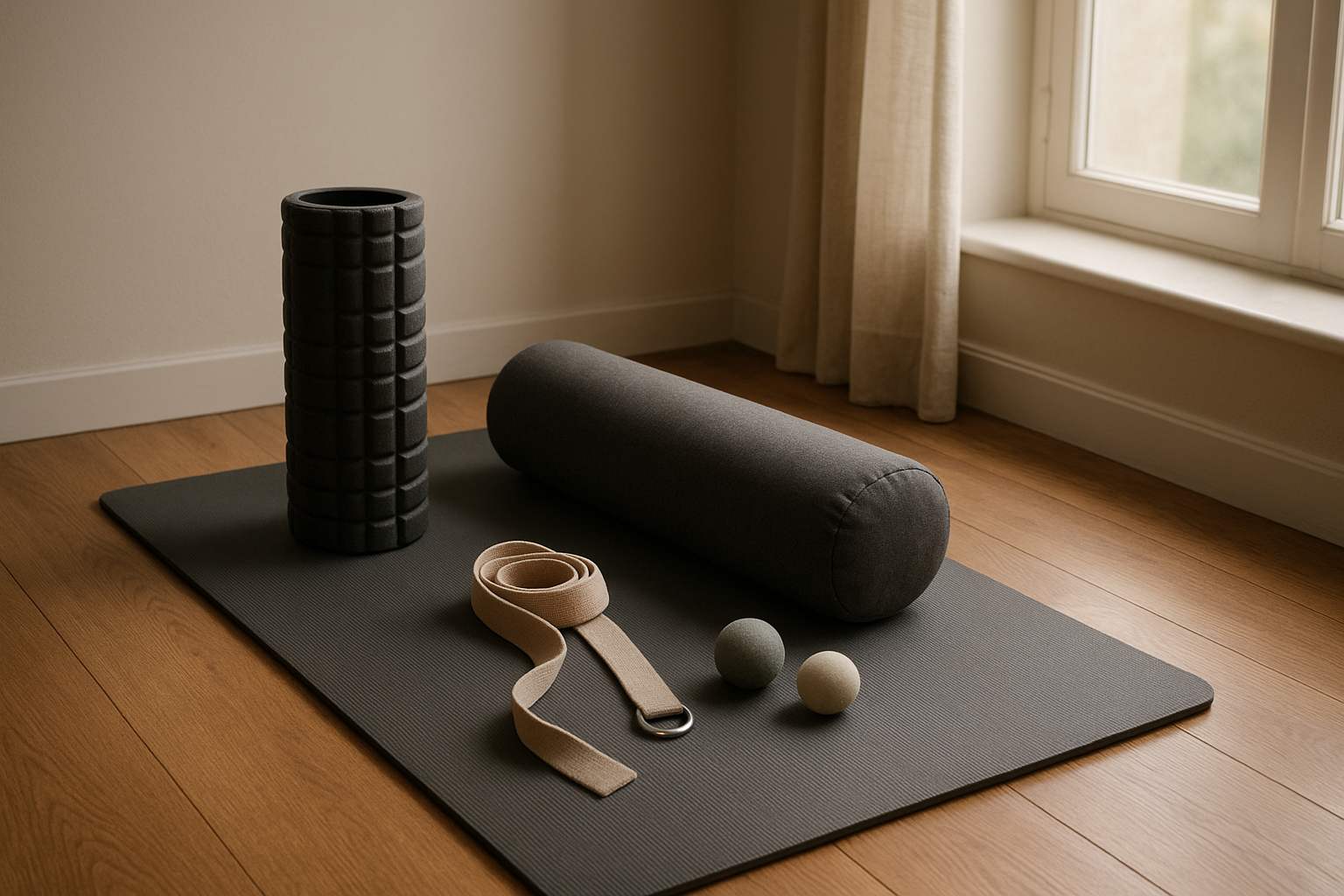
Bodyweight stretches are great, but adding a few inexpensive stretching accessories helps you get into better positions, hold them longer, and relax more deeply. Think of props as extensions of your arms and legs: they bridge the gap between where your mobility is now and where you’d like it to be. In a small corner of your living room you can combine a stretching strap, a foam roller, a supportive bolster, a couple of massage balls and a thick mat to create a mini recovery studio that makes every cooldown feel more intentional and enjoyable.
Stretching strap: assistance for tight hamstrings and shoulders
A yoga or stretching strap with loops is one of the most versatile tools you can add to your home setup. Instead of yanking on your feet or rounding your back, a strap lets you keep good alignment and still feel a strong stretch. Loop it around your foot for supine hamstring stretches, or hold it overhead to gently open tight shoulders and chest after pressing workouts. Look for a model with multiple built-in loops so you can easily adjust the intensity without wrapping the strap around your hands. Use slow breathing and mild tension: the goal is to guide your range of motion, not force it.
Foam roller: self-massage for tired muscles
A quality foam roller turns any bit of floor space into a recovery station. Rolling your quads, calves, glutes and lats for 5–10 minutes after training can reduce muscle tightness and help you feel less stiff the next day. Choose a roller with a textured surface if you like a deeper, more targeted massage, or a smooth, softer roller if you’re a beginner or very sensitive to pressure. Start with small, slow rolls over the muscle belly, pausing on tender spots while you breathe. Combined with stretching, this kind of self-myofascial release helps tissues glide better and makes it easier to move into deeper, more comfortable positions.
Bolster and cushions: support for passive flexibility work
A firm yoga bolster or dense cushion can transform how restorative your cooldown feels. Instead of forcing intense stretches, you can set up supported poses that you hold for several minutes while your body gradually unwinds. Slide a bolster lengthways under your spine for a gentle chest opener after push sessions, or place it under your knees in a forward fold so tight hamstrings don’t pull on your lower back. The key is support: when joints and muscles feel safely supported, they stop guarding and allow more release. If you train at the end of the day, using a bolster to create a short restorative sequence can also help downshift your nervous system and improve sleep.
Massage balls: pinpoint relief in a small package
Where foam rollers are great for large muscle groups, a set of massage balls shines for precise trigger-point work. A simple rubber or lacrosse-style ball can get into the small muscles around the shoulder blades, glutes, feet and hips that are hard to reach otherwise. Place the ball between your body and a wall or the floor, then slowly lean into it until you feel a strong but tolerable pressure. Roll in tiny circles or just hold the pressure for 30–60 seconds. A second, softer ball is useful for the soles of the feet or forearms if you spend a lot of time typing. This kind of targeted myofascial release before or after stretching often makes stiff areas feel instantly lighter.
Thick mat: a comfortable base for every session
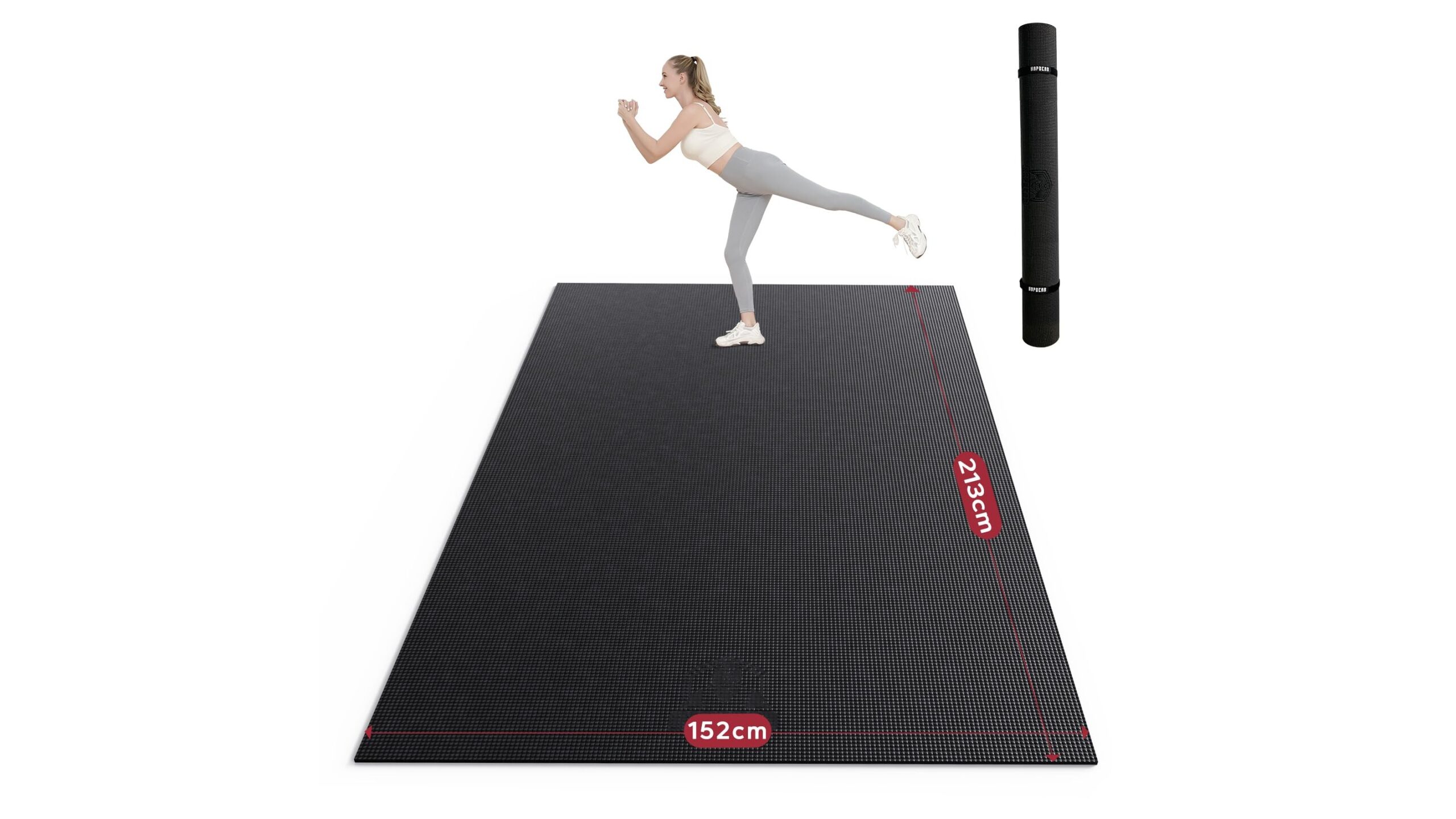
A good exercise or yoga mat is the silent star of your stretching toolkit. Extra thickness and cushioning protect your knees, hips and spine on hard floors, making it more likely you’ll actually stick with your cooldown routine. Look for a mat that balances comfort and stability: enough padding to feel supported, but not so squishy that you wobble in kneeling lunges or balance work. Non-slip texture is essential if you tend to sweat or combine stretching with bodyweight mobility flows. Keeping your mat permanently rolled out in your home gym or living room corner is a powerful visual cue that invites you to take five minutes for mobility and relaxation, even on busy days.
Building a home stretching toolkit doesn’t require a big budget or a dedicated studio. With a strap, foam roller, bolster, massage balls and a reliable mat, you can turn simple cooldowns into focused sessions for flexibility, recovery and stress relief. Experiment with different combinations, notice which tools your body responds to best, and treat your post-workout time as essential training, not an optional extra—your joints, muscles and future workouts will all benefit.