Spending long hours at a desk can leave your neck, shoulders, hips and lower back feeling tight and achy. This simple, science-based home stretching routine is designed for stiff desk workers who want to feel looser in just 15 minutes. You can do it at the end of your work-from-home day or as a warm-up before your home gym workout. All you need is a bit of floor space, a supportive surface and a focus on slow, controlled breathing.
Table of contents
Set up your space and support your joints
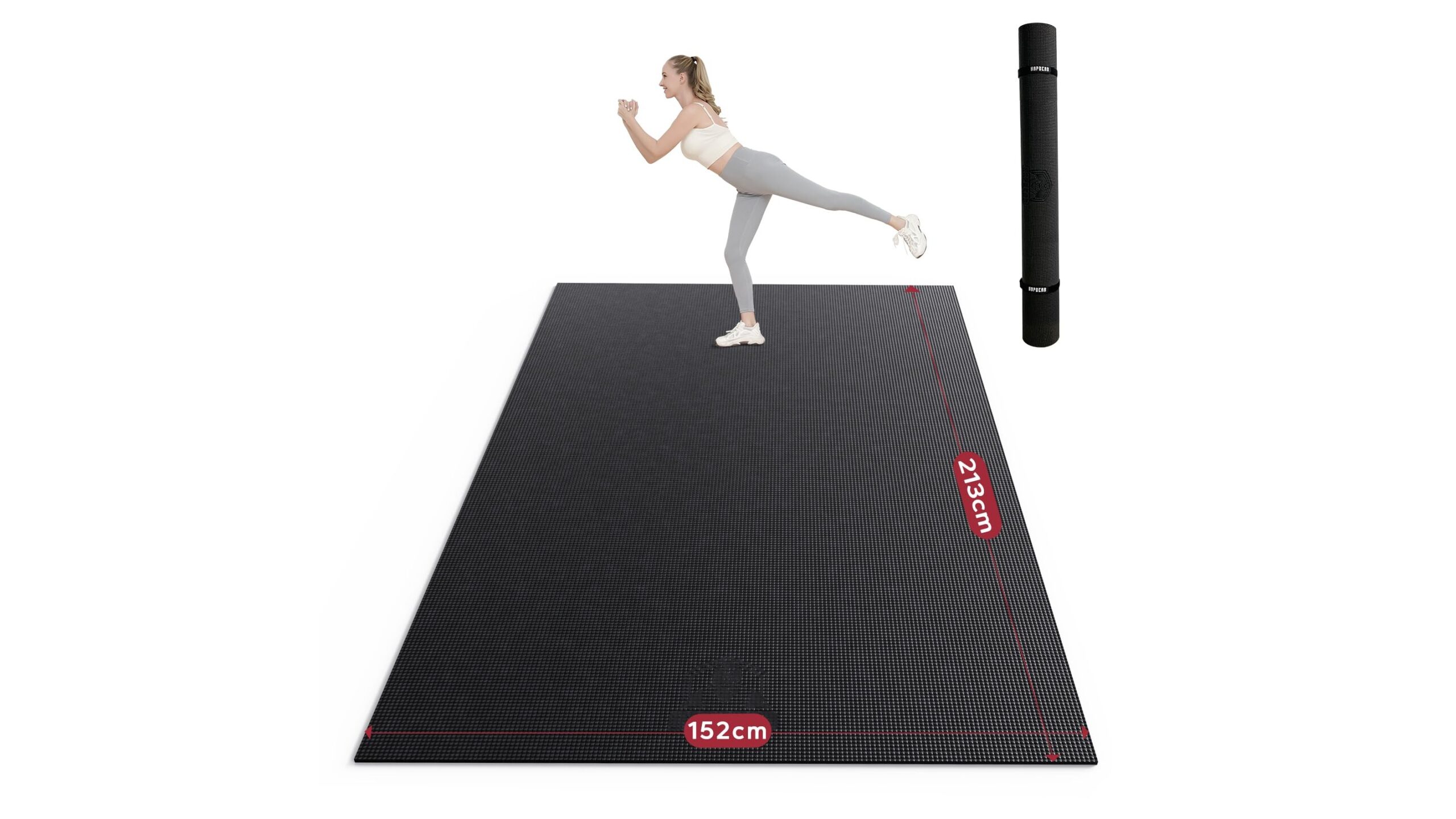
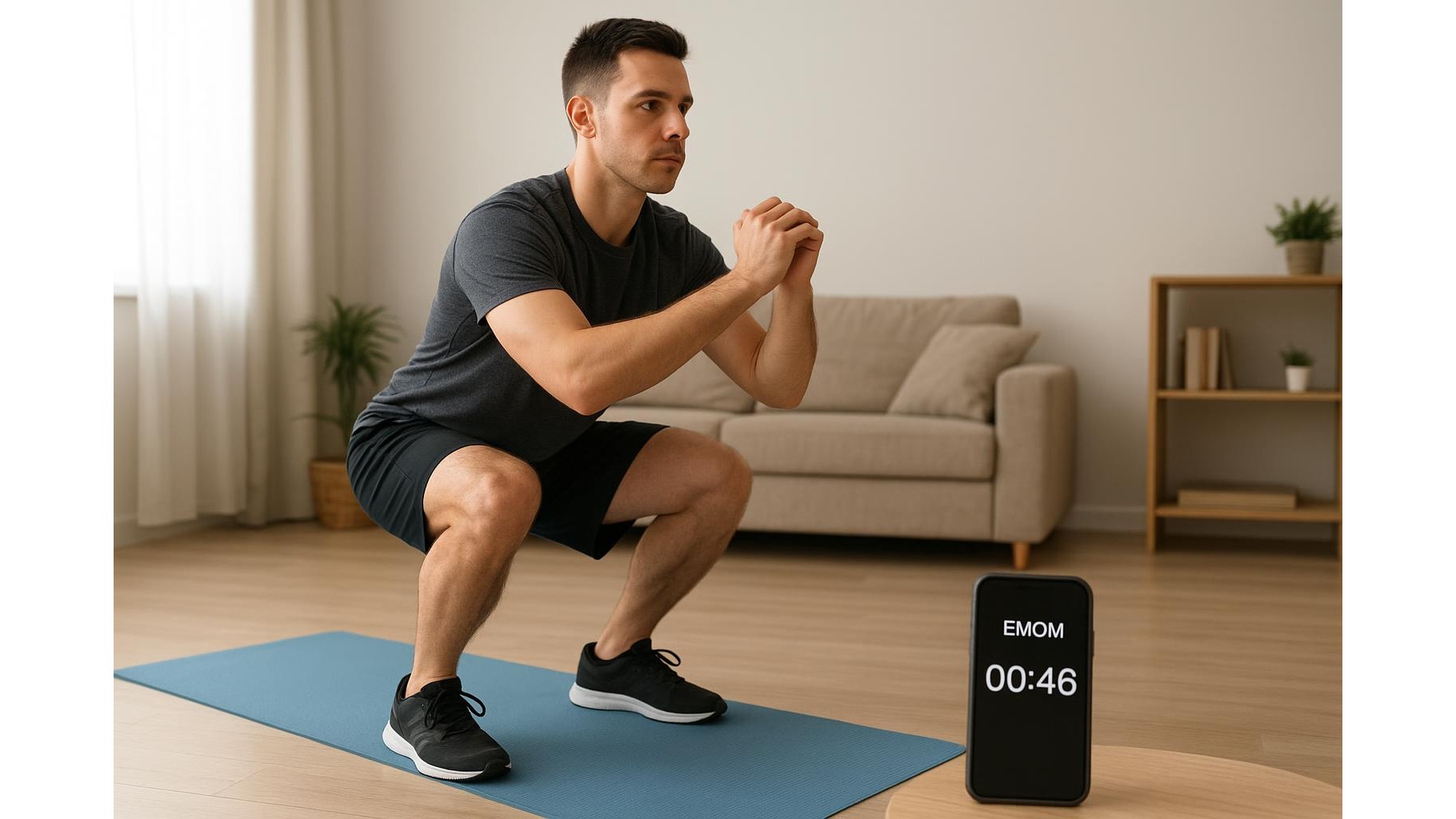
Before you start, create a comfortable area so you can actually relax into each stretch. Using a supportive mat helps your joints and encourages you to stay in positions long enough to be effective. A non-slip mat like the yoga mat you might use for home workouts is ideal, as it cushions your knees, hips and spine during longer holds. Make sure you have enough room to lie down fully, with your arms stretched overhead or out to the sides. Dim the lights, silence notifications and set a timer for 15 minutes so you are not tempted to rush. Being consistent with this setup helps your body associate the space with unwinding and mobility work.
Release neck and shoulder tension from screen time
Desk work often leads to a forward head posture and rounded shoulders, overloading the neck muscles. Start by slowly performing neck stretches: sit or stand tall, gently tilt your ear toward your shoulder and hold for 20–30 seconds per side, breathing slowly. Next, interlace your fingers behind your head and guide your chin slightly toward your chest to lengthen the muscles at the back of your neck. Follow with a chest opener: clasp your hands behind your back, straighten your arms and lift your knuckles away from your body while gently drawing your shoulders down. These moves help counteract hours spent hunched over a laptop and can reduce tension headaches and upper back stiffness.
Open tight hips from prolonged sitting
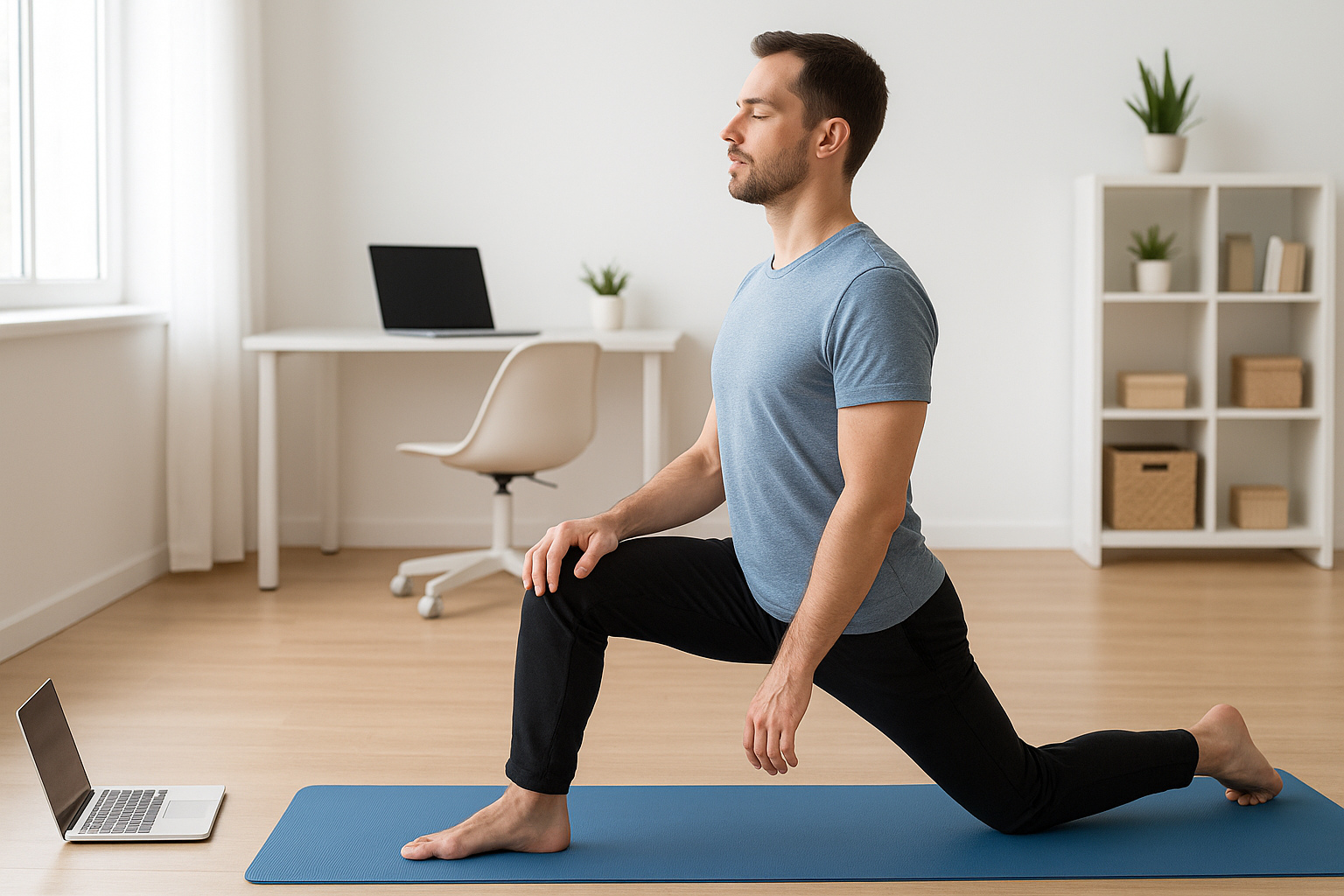
Sitting all day keeps your hip flexors in a shortened position, which can contribute to lower back discomfort and limit your stride when you walk or run. Begin with a half-kneeling hip flexor stretch: place one knee on the mat and the other foot forward at 90 degrees, then gently shift your weight forward until you feel a stretch at the front of the hip of the leg that is down. Keep your glutes slightly engaged to avoid overarching your lower back. Hold 30–45 seconds per side. Follow with a figure-4 stretch on your back: cross one ankle over the opposite knee and draw the supporting leg toward your chest to target the glutes and deep hip rotators. These positions restore range of motion through the hips, making it easier to move freely during home workouts.
Care for your lower back and spine
The lower back often pays the price for poor desk ergonomics. Rather than aggressive bending, focus on gentle, controlled spinal mobility. Lying on your back, try a supine twist: bring your knees to 90 degrees, then slowly let them drop to one side while your arms rest out in a T-shape. Keep both shoulders as close to the floor as possible and breathe deeply for 4–6 slow breaths before switching sides. Then move into a cat-cow sequence on all fours, alternating between rounding and gently extending your spine to lubricate the joints and improve posture awareness. Avoid pushing into sharp pain; the goal is a sense of space and relief across your lower back, not intensity.
Finish with hamstring, glute and full-body reset
To round out your 15-minute stretching routine, focus on the back of your legs and a full-body relaxation pose. From standing, hinge at your hips and let your torso fold forward, keeping a soft bend in the knees if your hamstrings are tight. Hold onto opposite elbows and let your head hang heavy for 30–60 seconds, feeling a gentle lengthening from calves to lower back. Then move to the floor for a glute stretch: lie on your back, pull one knee toward your chest and angle it slightly across your body. Finish in a supported lying position with your legs stretched out or bent, arms by your sides and eyes closed. Spend 1–2 minutes focusing on slow nasal breathing, letting your body integrate the work you’ve just done. This final reset helps shift you from “work mode” into recovery, so you feel lighter, calmer and more prepared for your next home workout or a restful evening.
In just 15 minutes, this home stretching routine for desk workers helps undo many of the aches that build up during a work-from-home day. By consistently targeting your neck, shoulders, hips and lower back, you improve circulation, reduce stiffness and support better posture. Over time, these small daily sessions can make your home workouts feel smoother and help you stay more comfortable at your desk. Treat this routine as non-negotiable maintenance for your body, just like brushing your teeth—simple, quick and essential for long-term mobility and comfort.