Recovering well after a home workout is just as important as the training itself, but not everyone can easily get down onto a mat and back up again. Joint pain, limited mobility, recent surgery or balance issues can make floor work stressful or unsafe. Chair‑based recovery offers a practical alternative: you stay supported in a stable seated position while still working on mobility, gentle stretching, breathing and relaxation. This approach helps you maintain joint health, reduce post‑exercise stiffness and calm your nervous system, all without having to lie on the floor.
Why chair-based recovery works
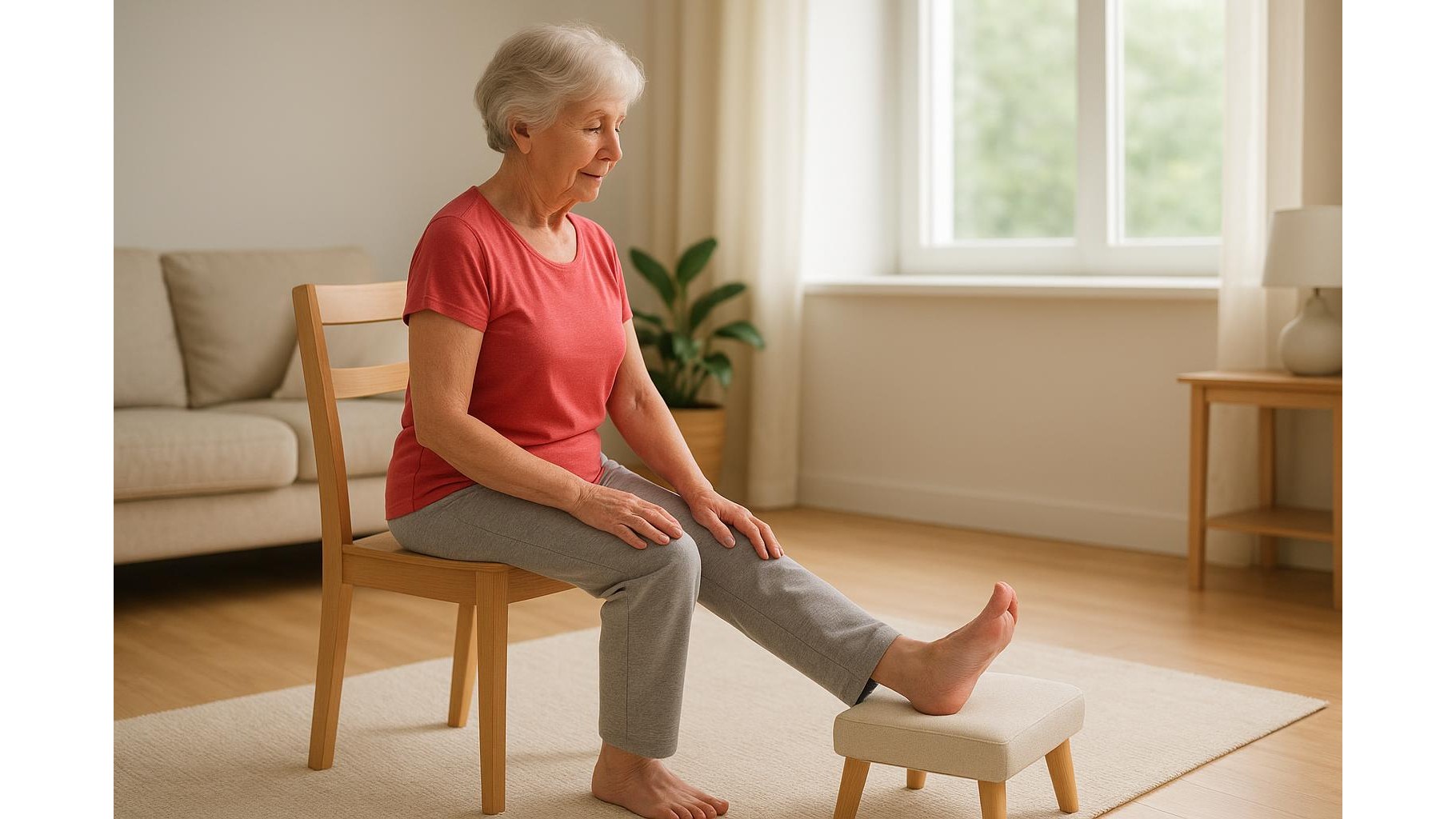
Chair‑based recovery drills take the principles of traditional cool‑downs and adapt them to a more accessible position. Sitting on a stable chair with your feet flat on the ground helps you feel secure, so you can focus on slow, controlled movement rather than worrying about balance. This is ideal for older adults, people with higher body weight, or anyone with knee or hip limitations that make getting up and down difficult. Gentle range‑of‑motion exercises for shoulders, spine and hips can still be highly effective when done seated, particularly when paired with diaphragmatic breathing. The goal is not intensity but consistency: a few minutes after each home session helps circulation, reduces muscle tightness and supports long‑term joint health.
Simple seated stretches for tight muscles
Start with very simple chair stretches that you can perform after walking, cycling or light strength sessions. For the upper body, try a seated chest opener: sit tall, interlace your fingers behind you (or hold a small towel), gently draw your shoulders back and breathe deeply for 20–30 seconds. For your back, place your hands on your thighs and alternate between gently rounding and arching the spine, moving one vertebra at a time. To release hips and glutes without floor work, cross one ankle over the opposite knee, keeping your back straight, and slowly hinge forward until you feel a comfortable stretch. Hold each stretch, breathe slowly through the nose and avoid bouncing. Over time, this routine can ease stiffness and support a more relaxed posture in daily life.
Chair mobility flows to keep joints moving
Beyond static stretches, you can build short mobility flows entirely on a chair to keep your joints nourished. Think of these as low‑impact “tune‑ups” for your shoulders, spine, hips, knees and ankles. Shoulder circles, gentle neck rotations and side bends help counteract the rounded posture many develop at a desk. Controlled seated marches, where you lift one knee at a time, promote hip mobility and light circulation in the legs. Ankle circles and toe taps are particularly helpful if you spend long periods seated or have mild swelling. Performing these moves slowly, with 5–10 repetitions each, maintains fluid movement without loading the joints excessively. This style of active recovery is especially useful on days between harder workouts to reduce stiffness while still respecting your limits.
Breathing and relaxation without lying down
Relaxation does not require a yoga mat. In a stable sitting position, you can still practise powerful breathing exercises that down‑regulate stress and support recovery. Sit upright, place one hand on your chest and one on your abdomen, and aim for slow diaphragmatic breathing where the belly gently rises on the inhale and falls on the exhale. A simple pattern such as inhaling through the nose for four counts and exhaling for six to eight counts encourages a calmer nervous system and can lower perceived tension. You might also add brief body scans: starting from your feet, mentally check each body area and consciously release unnecessary tightness. These practices help improve sleep quality and make the transition from workout to rest more intentional, even if you never lie on the floor.
Practical tips to build a safe chair-based routine
To make your home recovery routine sustainable, keep it short, structured and predictable. Aim for 5–10 minutes of chair‑based work after each home session, combining one or two upper‑body stretches, one hip stretch, a few mobility drills for the lower body and a couple of minutes of focused breathing. Choose a sturdy chair without wheels, place it against a wall if balance is a concern, and wear comfortable clothing that allows free movement. If pain is present, stay within a “comfortable stretch” zone and never push into sharp or escalating discomfort. People with recent surgery, cardiovascular issues or dizziness should discuss any new routine with a healthcare professional. With these precautions in place, chair‑based stretching and relaxation can be a highly accessible way to support recovery, even when floor exercises are not an option.
Chair‑based recovery strategies prove that you do not need to get down on a mat to care for your body after training. By combining gentle seated stretches, simple mobility flows and calming breathing drills, you can reduce stiffness, support your joints and signal to your nervous system that it is time to unwind. This approach respects real‑world limitations while still moving you toward better comfort, function and long‑term fitness. Consistency matters more than complexity: a few focused minutes on a stable chair after each session can transform how you feel between workouts and keep home exercise both effective and sustainable.