Recovering well is just as important as logging miles. A smart home recovery routine for runners can reduce stiffness, improve mobility and keep you consistent with training. The following living‑room protocol focuses on lower‑body stretching, joint mobility, soft‑tissue care and breathing, using simple tools you can store under the sofa. Done 3–4 times a week, it takes around 20–25 minutes and can make a real difference to how your legs feel on your next run.
Table of contents
Set up your space and key tools
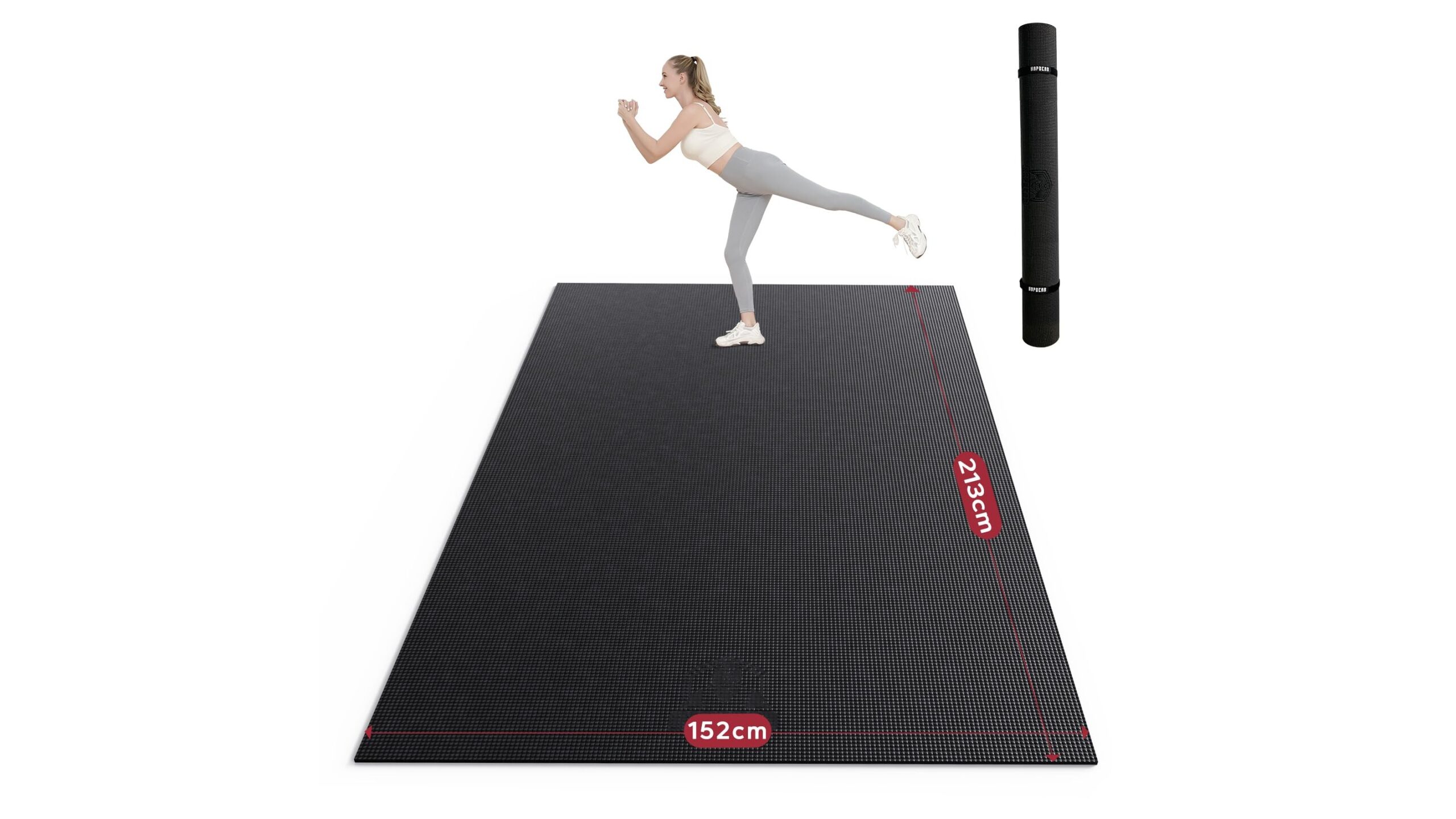
Before you start, clear a small area where you can comfortably lie down and move your legs in all directions. A supportive mat helps you relax into positions rather than fighting against a hard floor. A good option is a non‑slip yoga mat such as the non‑slip yoga mat (example: yoga mat non slip on Amazon.co.uk), which offers enough cushioning for knees and spine without feeling unstable in balance work. For soft‑tissue work, keep a foam roller, a massage ball and, if you like more intensity, a massage gun close by. A simple stretching strap with loops (or even a long towel) will help you access deeper hamstring and calf stretches without straining your back or shoulders.
Lower‑body mobility flow (hips, ankles and spine)
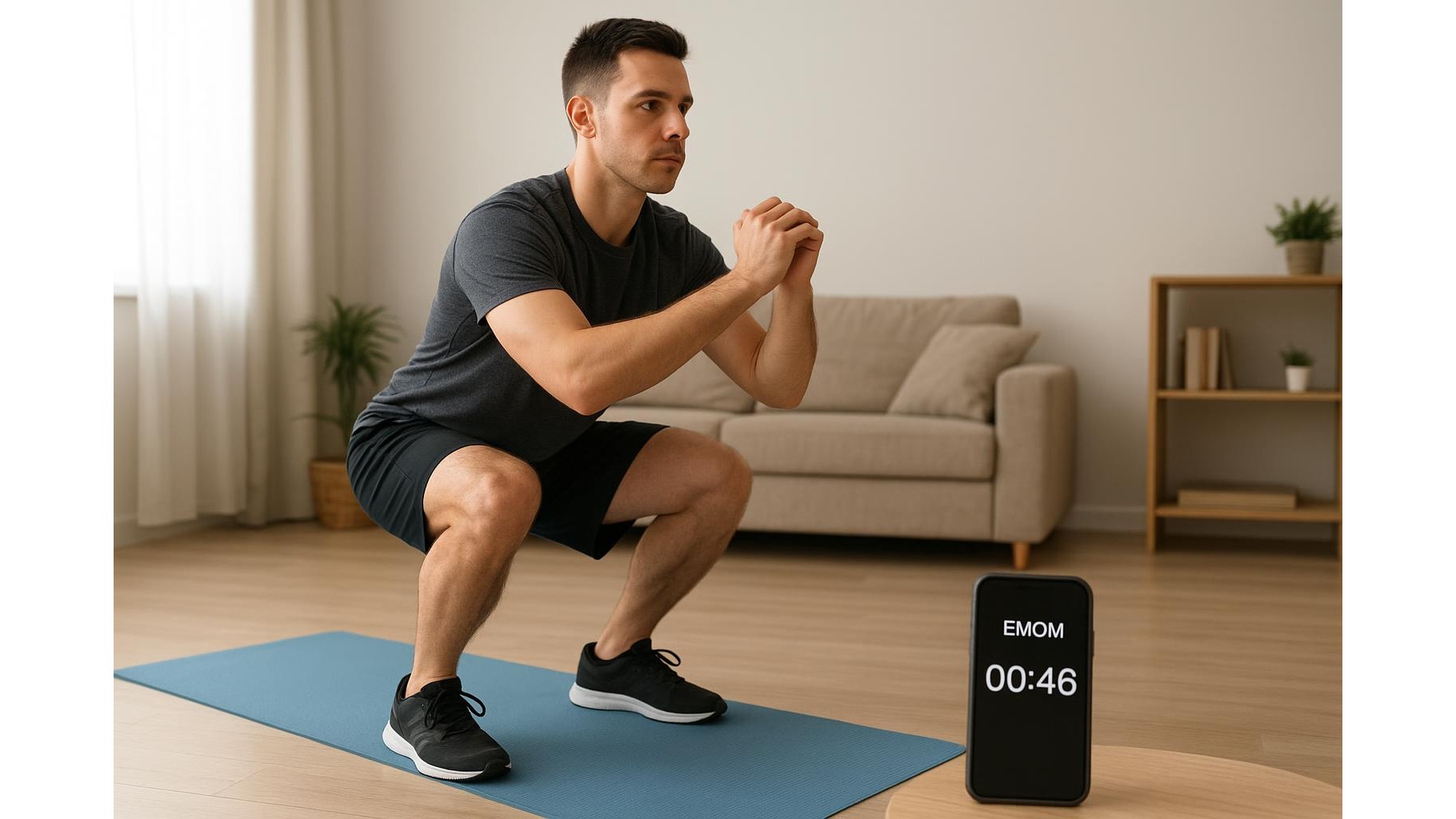
Start with 5–7 minutes of dynamic mobility to bring blood flow to tired muscles. From a hands‑and‑knees position on your mat, cycle through slow cat–cow movements to mobilise the spine, then step one foot forward into a low lunge, gently rocking front to back to open the hip flexors. Add small circles with the front knee to explore different angles around the hip joint. Next, move to ankle circles and heel‑to‑toe rocks in a half‑kneeling position to restore ankle range that gets stiff from repetitive road running. Keep movements smooth and controlled, focusing on quality over range; you should feel mild stretching and warmth, never pain.
Targeted stretching for runners’ hot spots
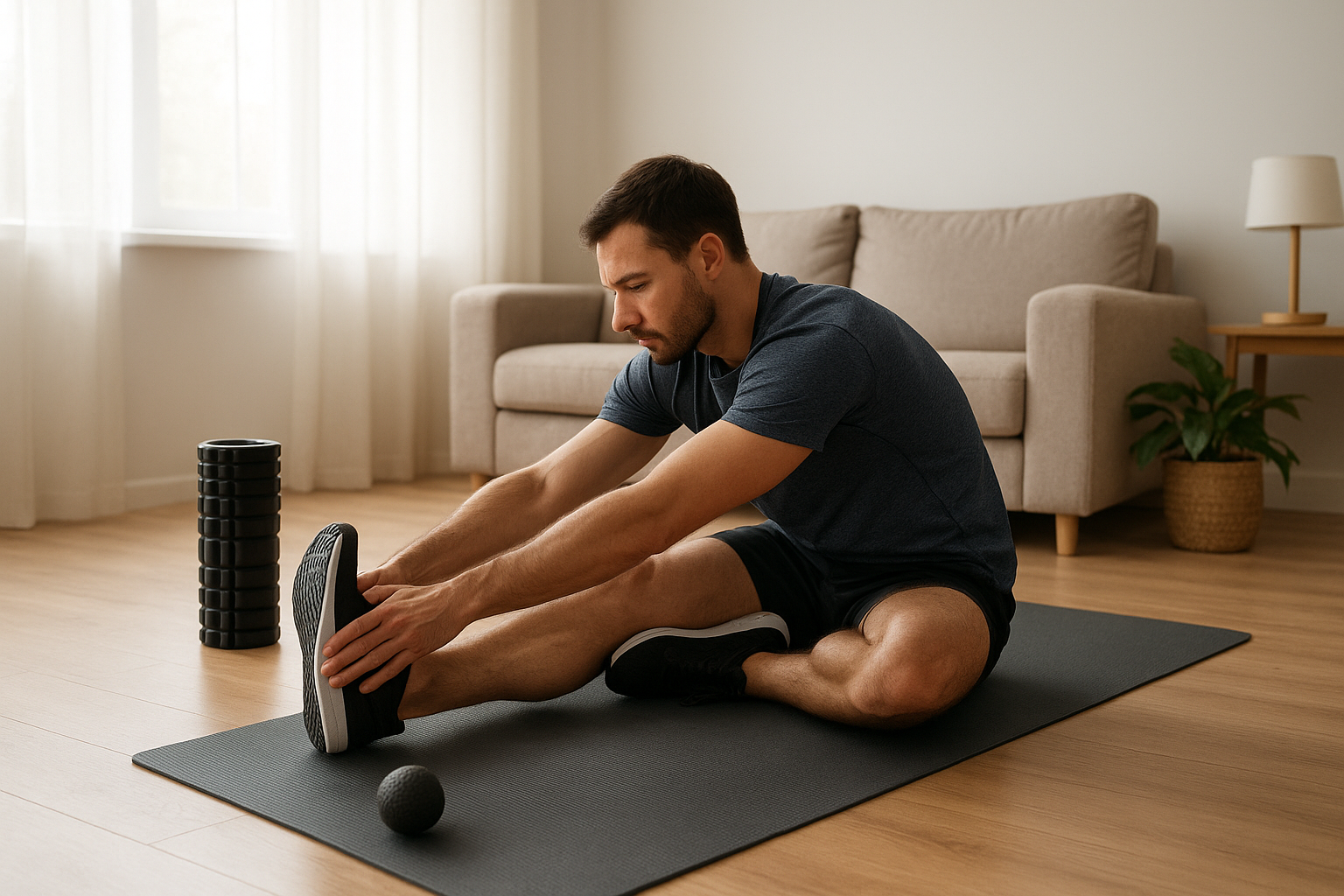
Once you are warm, spend 8–10 minutes on static stretches for the key running muscles. Lying on your mat, loop a stretching strap with loops around one foot and gently straighten your leg toward the ceiling to target the hamstrings; hold 30–45 seconds per side, breathing slowly. Then move the leg slightly across your body to stretch the IT band and outer hip, keeping both shoulders grounded. Follow with a classic hip flexor stretch in a half‑kneeling lunge, tucking your pelvis under to avoid arching your lower back. Finish with a calf and Achilles stretch by placing the ball of your foot against a wall or the edge of your mat and leaning forward. Aim for 2 rounds per side, staying relaxed; the goal is to reduce post‑run tightness, not to force extreme flexibility.
Soft‑tissue care with foam roller and massage ball
Soft‑tissue work helps relieve local hotspots of tension and can complement your stretching. Use a firm foam roller (for example, search for a “foam roller for runners” on Amazon.co.uk) to work on the quadriceps, calves and glutes. Roll slowly 5–10 cm at a time, pausing on tender spots for 20–30 seconds while you breathe. For more precise work around the arches of the feet, glute medius and deep hip rotators, sit or lie on a small massage ball and make tiny controlled movements. Keep the pressure at a level where you can still breathe calmly; intensity should be uncomfortable but manageable. One to two minutes per muscle group is plenty for a daily routine and helps your legs feel lighter the next day.
Optional tech: using a massage gun wisely
If you enjoy gadgets, a handheld massage gun (e.g. search “massage gun for runners” on Amazon.co.uk) can be a useful complement to manual work. Stick to low or medium settings and keep sessions short: 30–60 seconds per muscle group on the quads, hamstrings, calves and glutes is usually enough. Glide the head slowly along the muscle belly and avoid bony areas, joints and the front of the neck. A massage gun should feel like a quick boost, not a replacement for basic stretching and mobility. For many runners, the best use is on particularly sore areas the day after a long run or speed session, paired with gentle movement and hydration.
Down‑regulation: breathing and relaxation to finish
End your home recovery session with 3–5 minutes of diaphragmatic breathing on your mat. Lie on your back with your feet flat and knees bent, one hand on your chest and one on your abdomen. Inhale quietly through your nose for about four seconds, allowing your lower ribs and belly to rise; exhale for six seconds, feeling your body sink into the floor. This simple practice stimulates the parasympathetic nervous system, helping you shift out of “fight or flight” and into recovery mode. As you breathe, mentally scan from your feet to your jaw, releasing any remaining tension. When you stand up, you should feel calmer, looser and ready for your next training day.
This living‑room routine combines mobility, stretching, soft‑tissue release and breath work in a compact, repeatable package. By keeping a yoga mat, foam roller, massage ball and optional massage gun close at hand, you remove friction and make recovery as automatic as lacing up your shoes. Performed consistently, this home protocol will help you reduce stiffness, move more freely and support better running performance over the long term.