
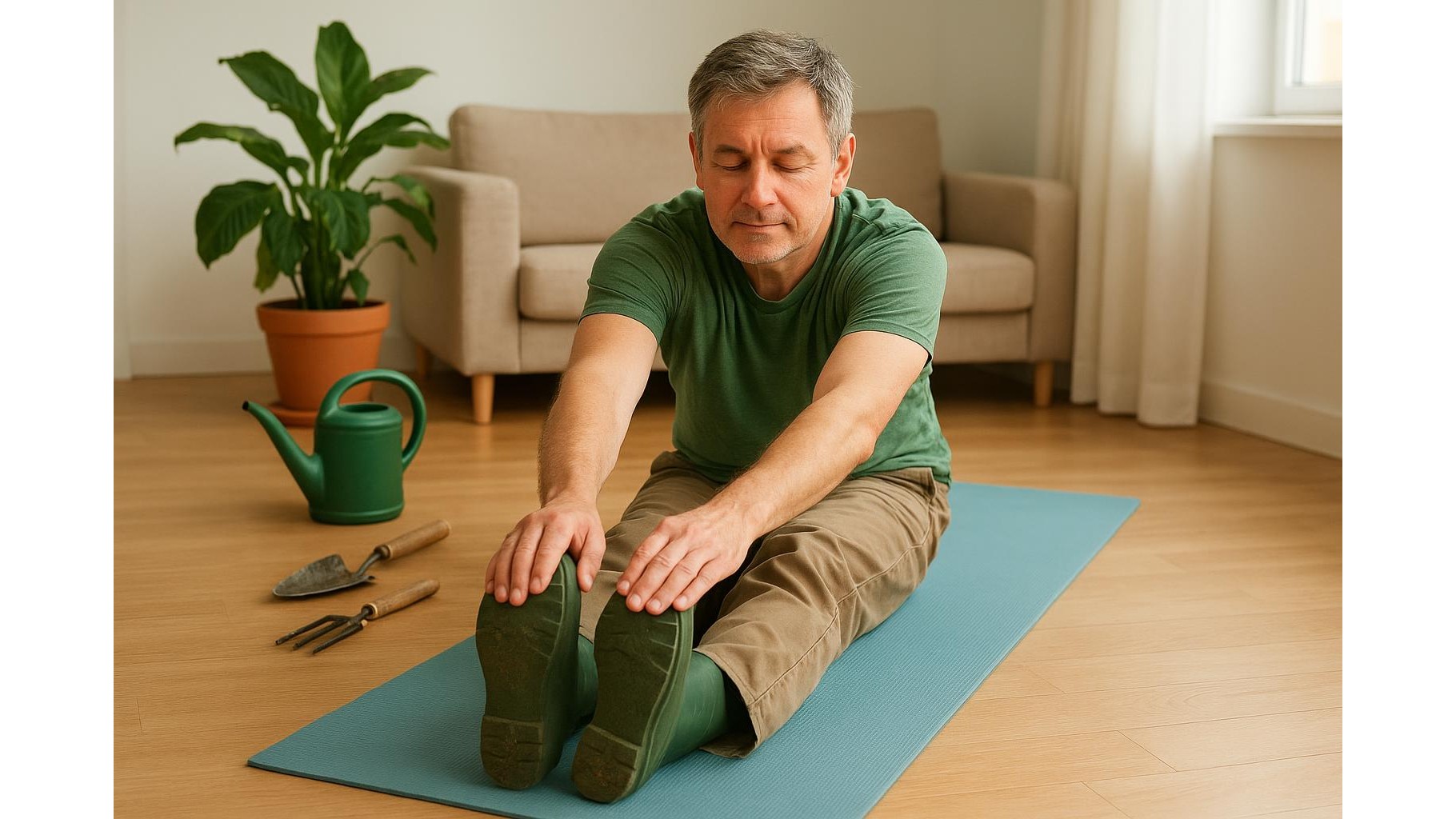
Weekend gardening can feel like a full-body workout. Hours of digging, lifting pots, pruning and raking load your hips, back and shoulders in ways that mimic a home strength session – just without the warm-up or cooldown. A simple, joint-friendly recovery routine helps you unwind tight muscles, protect your joints and be ready for the next round in the garden instead of waking up stiff and sore.
Why gardeners need a recovery routine
Most garden tasks combine forward bending, twisting and squatting for long stretches of time. That means your lower back, hips, hamstrings and shoulders take a beating, especially if you are not used to this level of activity during the week. Without some post-yard-work mobility, tight muscles can pull on your joints, irritate your lower back and even trigger headaches from neck tension. Treating heavy gardening like a workout – with a short, focused recovery sequence – reduces soreness, improves posture and keeps you enjoying your garden instead of recovering on the sofa.
Gentle lower-back and hip release after digging
After a day bending over flower beds, start with easy moves that decompress your spine. Lie on a firm surface, knees bent, feet flat, and slowly rock your knees side to side for 60–90 seconds to massage the lower back. Then bring one knee towards your chest, clasp behind the thigh and hold for 20–30 seconds; switch sides. Follow with a simple hip flexor stretch: kneel on one knee, other foot in front, and gently shift your weight forward until you feel a stretch in the front of the hip on the kneeling leg. Keep your torso tall and avoid forcing the range. These small, controlled movements help counter all the forward flexing you did while weeding and planting.
Opening tight shoulders from pruning and raking
Pruning high branches or raking wide areas can leave your shoulders, chest and upper back feeling locked. To open them up, stand tall and clasp your hands behind your back, gently drawing your knuckles towards the floor as you lift your chest. Hold 20–30 seconds, breathing slowly. Next, stand side-on to a wall, place your palm on it at shoulder height and rotate your body away until you feel a stretch across the chest and front of the shoulder. For the upper back, cross one arm over your chest, hold it with the opposite hand and pull gently towards you. These gentle holds restore mobility to the shoulder joint and help rebalance the hunched position you maintain over flower beds.
Stretching legs and feet stressed by squatting and lifting
Squatting to plant and lifting bags of soil taxes your quads, hamstrings and calves, while long periods in gardening shoes can cramp your feet. After you come indoors, take 3–5 minutes to release your legs. Stand facing a wall, place one foot behind you and press the heel down to stretch the calf; swap sides after 20–30 seconds. For the front of the thighs, hold onto a chair, bend one knee and bring the heel towards your glute, holding the ankle and keeping both knees close. To relieve your feet, sit on a chair and roll the sole of each foot slowly over a small ball or rolling pin for 1–2 minutes. This simple leg-and-foot care improves circulation and eases the heavy feeling that often follows long hours outside.
Using simple tools to enhance home recovery
You do not need a full gym to recover effectively from heavy yard work, but a couple of basic tools can make a big difference. A thick, non-slip exercise mat cushions your knees and spine during floor stretches, making it more comfortable to hold positions for longer so your muscles actually relax. A basic foam roller can be used on thighs, calves and upper back to gently massage tight areas – roll slowly, avoiding joints, and pause on tender spots while breathing deeply. If you prefer something more targeted, a small massage ball works well along the soles of the feet or between your shoulder blades against a wall. Keep these items in an accessible corner so that “post-gardening recovery” becomes as automatic as washing your hands after coming inside.
Turn post-gardening into a feel-good ritual
Think of your time in the garden as both outdoor therapy and functional fitness. A short, consistent recovery routine – 10 to 15 minutes of stretching and light mobility work – can turn next-day stiffness into a pleasant sense of having moved your body well. Focus on the areas you use most: hips, lower back, shoulders and legs. Combine gentle stretches with a bit of self-massage on a mat, breathe slowly and treat it like a calming cool-down, not another workout. With this approach, your weekend yard work can remain your favourite form of “home training” while your joints stay happy enough to enjoy the results season after season.









