Hours at the desk, a few episodes on the couch, then straight into a brutal home workout: your spine pays the price for those sudden couch-to-gym transitions. A short, focused home mobility routine can act like a daily reset for your back, keeping the joints fluid, the muscles active, and the nervous system ready for load. Below you’ll find a simple sequence you can do in 10–15 minutes with minimal equipment, plus one smart tool that can make spinal care at home much more effective.
Table of contents
Prepare your space and your spine
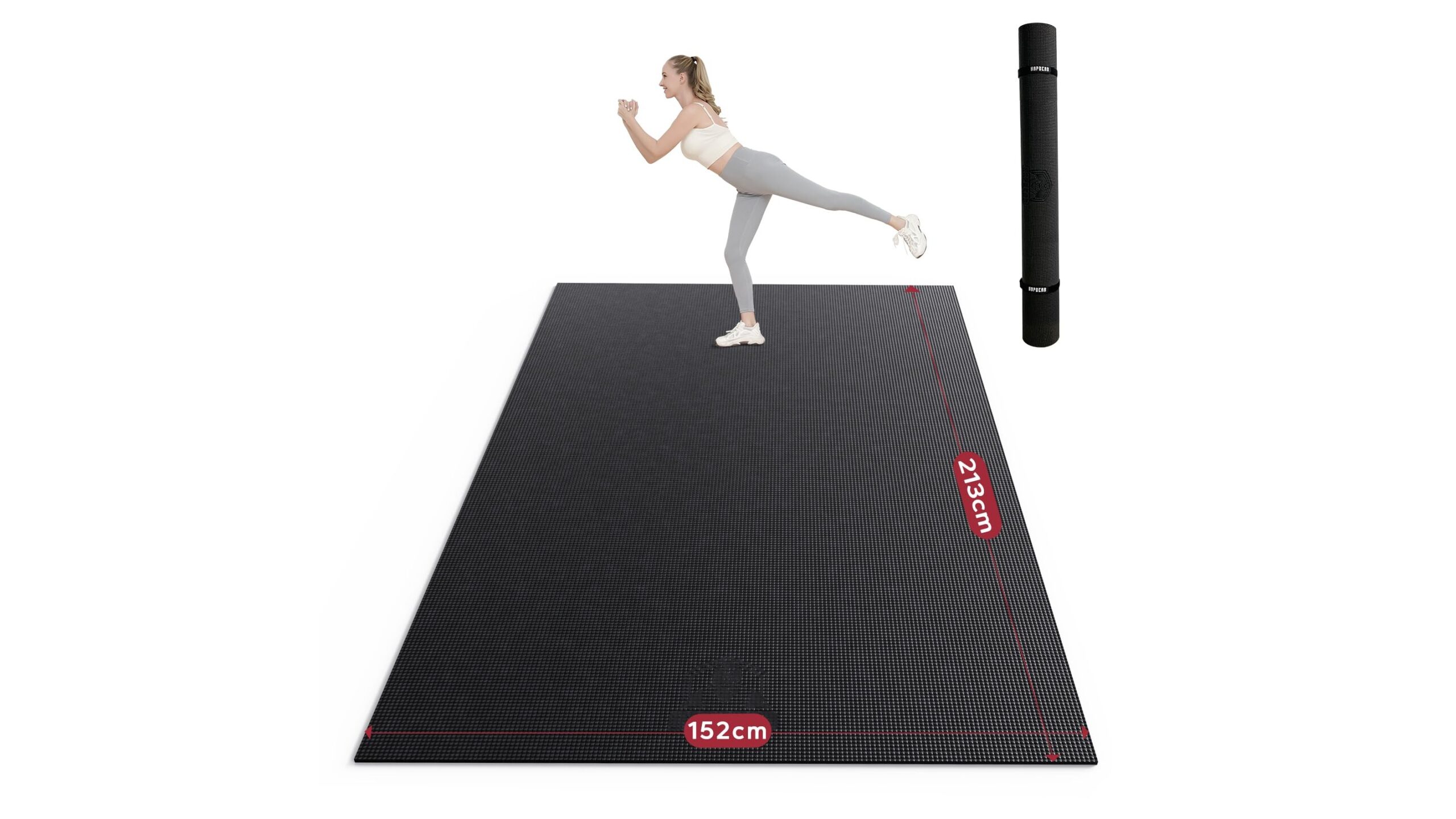
To build a sustainable habit, keep your spine mobility routine friction-free. Clear a small area where you can comfortably lie on the floor, ideally with a yoga mat. Place your laptop stand or TV in view so you can follow the same sequence every day. If you struggle with stiffness between the shoulder blades or in the lower back, consider adding a foam roller like the Maximo Fitness Fascia Roller for Spine and Back. Its medium-hard density EVA and textured surface provide firm support without feeling like a torture device, making it ideal for daily use before or after your home workouts.
Start with gentle spinal breathing
Begin on your back with your knees bent and feet flat. Place one hand on your chest and the other on your abdomen. Inhale through your nose for four seconds, allowing your belly to rise and your lower back to gently expand into the floor; exhale for six seconds, letting your ribs soften and your spine sink heavier into the ground. Repeat for 8–10 breaths. This simple breathing drill reduces unnecessary tension in the muscles around the spine and prepares your core to engage more reflexively in the rest of the routine. Focus on smooth, quiet breathing rather than forceful abdominal contractions.
Segmental cat-cow for controlled flexion and extension
Move to an all-fours position with hands under shoulders and knees under hips. Instead of rushing classic cat-cows, aim for segmental control: starting from your tailbone, slowly tuck under and round one vertebra at a time up toward your neck, finishing by gently tucking your chin. Then reverse the motion, beginning with lifting the tailbone, letting each segment of the spine fall into a slight arch until your head is the last to look forward. Take 5–8 slow cycles. This teaches your spine to move smoothly in flexion and extension, improving awareness and control, which is crucial when you jump from sitting to heavy lifting.
Rotational mobility to unlock the mid-back
Thoracic stiffness is common in people who sit a lot, leading to the lower back overworking during home workouts. Lie on your side with hips and knees bent at 90 degrees, arms reaching straight in front at shoulder height. Inhale, then as you exhale, sweep your top arm in a big arc across your body, letting your chest rotate toward the ceiling while keeping your knees stacked. Pause where you feel a stretch but no pain, breathe for 2–3 cycles, then return. Perform 6–8 reps per side. This spinal rotation drill frees the mid-back so that overhead presses, rows, and push-ups place less stress on the lumbar spine.
Foam rolling to release tension
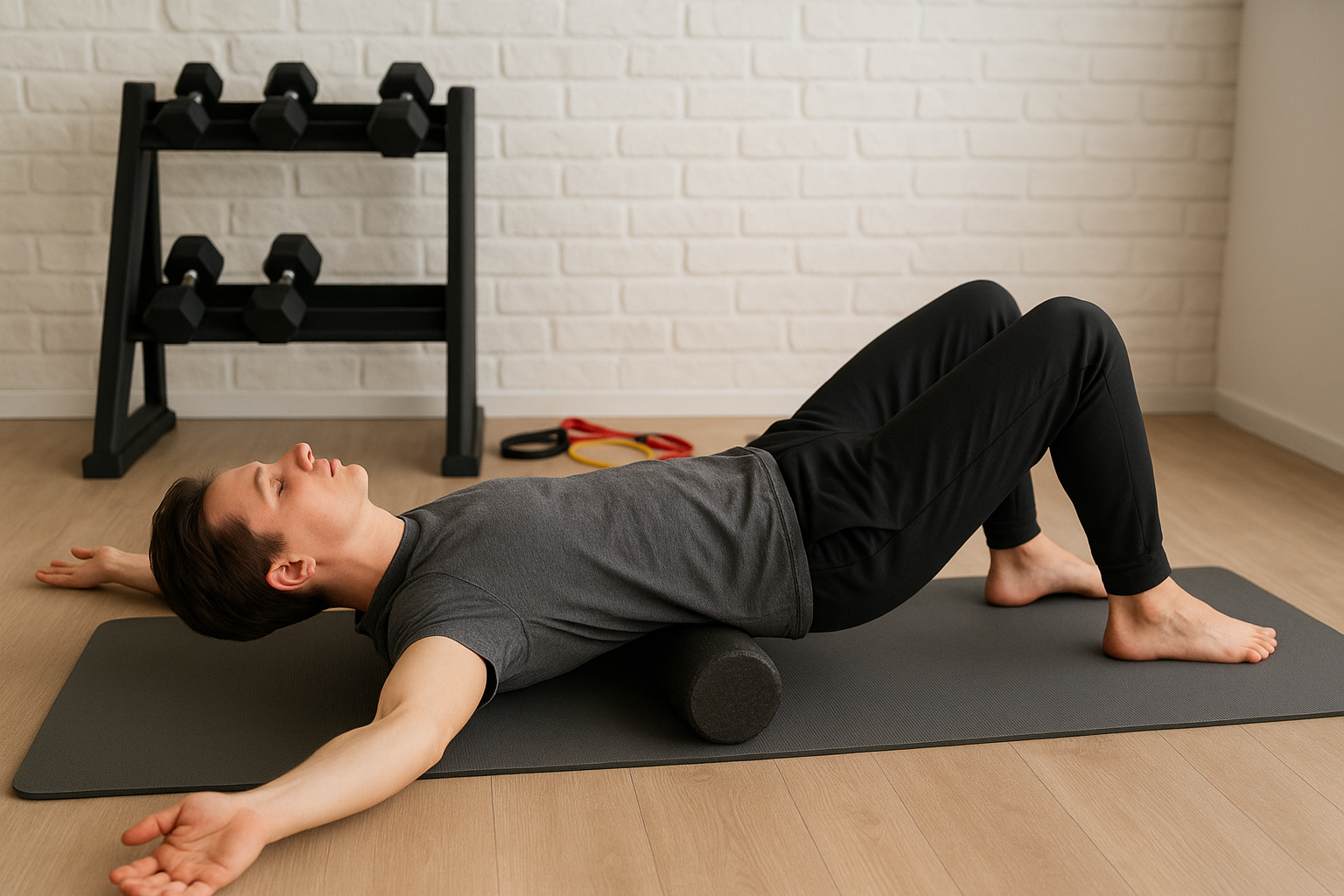
Now introduce self-massage. Place the Maximo Fitness Fascia Roller for Spine and Back horizontally under your mid-back, knees bent, hands supporting your head. Lift your hips slightly and slowly roll from the base of your ribcage up to the bottom of your neck, pausing on tight spots for a few breaths. Its 45 cm length comfortably supports both sides of the back, and the firm, high-density construction offers enough pressure to stimulate blood flow without collapsing. Spend 1–2 minutes here, then shift to the glutes and hip muscles, which directly influence how your lower back feels during squats, deadlifts, and kettlebell swings in your home gym.
Active core and hip activation before training
Finish with activation so your spine is not just mobile, but supported. Stay on your back and move into dead bug variations: arms up, knees over hips at 90 degrees, then slowly lower the opposite arm and leg toward the floor without letting your lower back arch. Perform 8–10 controlled reps per side. Then roll over into a front plank, focusing on gently drawing your ribs toward your hips and squeezing your glutes for 20–30 seconds. This sequence trains the deep core to stabilize the spine against movement—the exact demand placed on it when you jump from the couch into high-intensity home sessions.
Done consistently, this daily spine mobility routine acts like insurance for your back, smoothing the transition between long periods of sitting and intense home gym workouts. With just your bodyweight and a versatile tool like the Maximo Fitness Fascia Roller for Spine and Back, you can restore movement, reduce stiffness, and prime your core and hips for safer loading. Commit to 10–15 minutes before your main session or in the evening after work, and your spine will be far better prepared for whatever your home fitness routine demands.