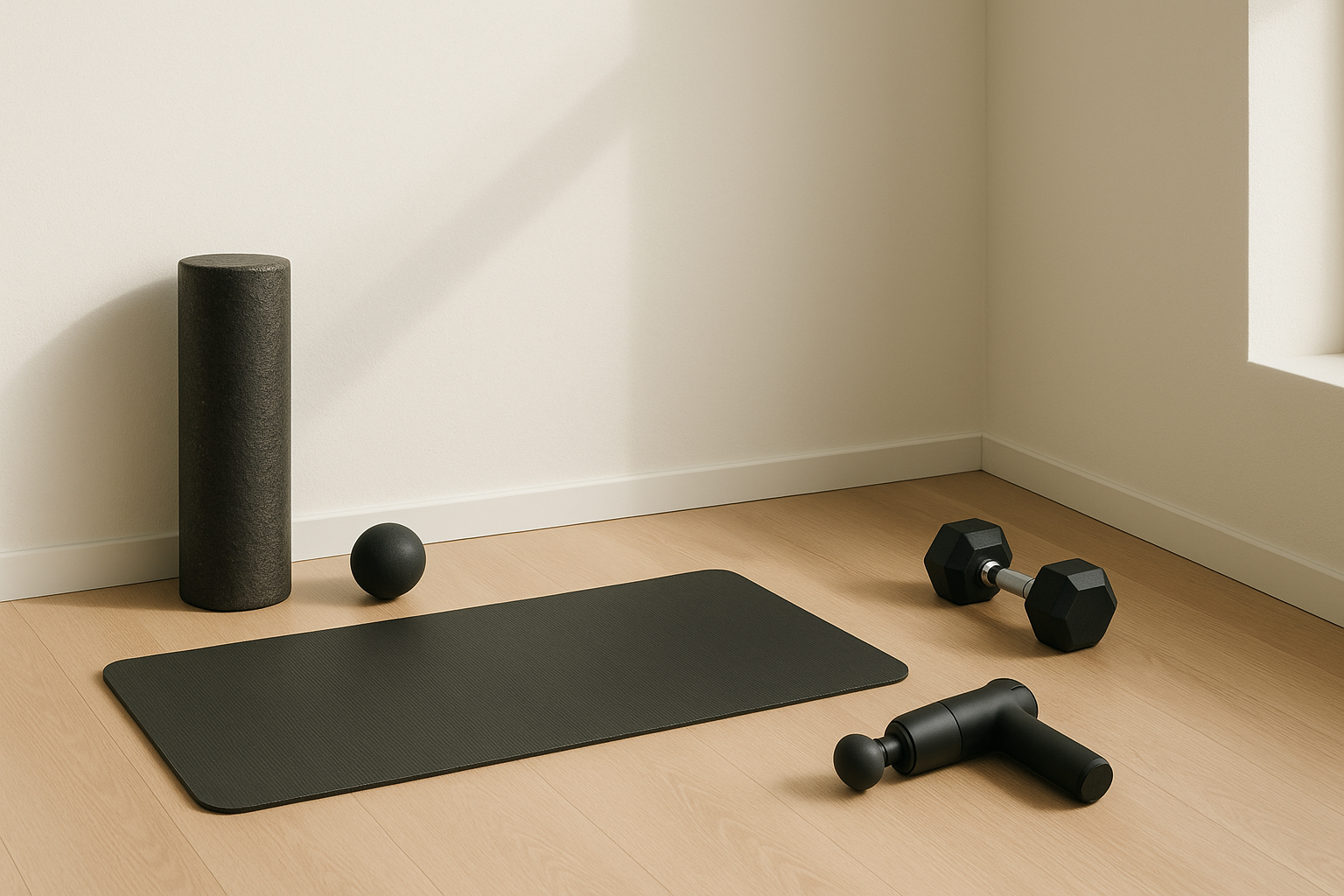
Building a home recovery kit does not have to mean filling a drawer with gadgets you never use. With a few well‑chosen home massage tools you can improve mobility, ease post‑workout soreness and recover better between sessions. This guide focuses on three essentials – foam rollers, massage balls and massage guns – and explains what each actually does, how often to use it and how to match it to your training style and budget.
Table of contents
Start with a basic foam roller
A good foam roller is the backbone of a minimalist recovery kit. A medium‑density, full‑length roller lets you work on quads, hamstrings, glutes and upper back without feeling like torture. Look for a model that balances firmness and comfort, is light enough to move around easily and has a grippy surface so it does not slide on hard floors. A simple, straight roller without aggressive ridges is usually enough for most lifters and runners, making it ideal if you are trying not to overbuy. Aim to roll major muscle groups for 5–10 minutes after training or on rest days, focusing on slow passes and relaxed breathing rather than speed.
Use massage balls for precision work
Where foam rollers cover large areas, massage balls are your precision tool. A firm rubber or PVC ball about the size of a tennis ball is perfect for targeting feet, glutes, hips, chest and between the shoulder blades. Because the surface area is smaller, pressure is more focused, which helps you work on stubborn trigger points without needing a therapist. Roll gently against a wall for sensitive spots like shoulders and upper back, and on the floor for tougher areas like glutes. Keep sessions short – 1–2 minutes per tight spot is usually enough – and avoid pressing directly on joints or sharp pain. For most home gyms, one or two balls in different densities beat buying full sets you will rarely touch.
Decide if you really need a massage gun
Massage guns have become a popular recovery gadget, but they are not essential for everyone. Their main benefit is convenience: they deliver rapid percussive pulses to muscles, which can make you feel looser and less sore in a few minutes. They are especially handy if you lift heavy several times per week, run high mileage or feel too tired to get on the floor with a roller. When choosing a massage gun, prioritise an adjustable speed range, at least one soft head attachment and a battery that lasts through several sessions. Use it for 30–60 seconds per muscle group, skimming over the surface rather than jamming into the tissue. If you train just a couple of times a week, you may get 80–90% of the benefits you need from a roller and a ball alone, saving money and storage space.
Match tools to your training style and budget
To avoid overbuying, think about how you actually train. Strength athletes and CrossFitters usually benefit most from a sturdy foam roller and a firm ball for hips, glutes and lats. Runners and cyclists may prioritise calves, IT band and feet, so a roller plus a small ball for plantar fascia work is usually ideal. If you are doing mixed training at home, start with those basics and only add a massage gun if you notice persistent areas of tightness you are not addressing. From a budget perspective, a roller and ball combination is extremely cost‑effective and will cover most needs; consider the massage gun as a “nice to have” upgrade rather than a starting point. This minimalist approach keeps your home gym uncluttered while still ticking the key boxes for recovery and mobility.
How often to use each tool for best results
Consistency beats intensity when it comes to self‑massage. For most active people, using a foam roller lightly after every workout and for a slightly longer session once or twice a week is enough. Massage balls work best in very short bursts whenever you notice specific tight spots – before a run, after a heavy squat day or during a work break if you sit a lot. Massage guns are best treated as quick “tune‑ups”: a few minutes while you cool down, or in the evening to reduce lingering soreness. Whatever tools you choose, stay just below the level of sharp pain, breathe slowly and move the tool rather than holding static pressure for too long. This keeps sessions effective and sustainable, instead of turning recovery into another exhausting workout.
In summary, a smart home massage setup does not require a basket full of gadgets. Start with a reliable foam roller and a versatile massage ball, then add a massage gun only if your training volume, recovery needs and budget justify it. Used regularly and gently, these simple tools can help you move better, hurt less and get more from every home workout without cluttering your space or draining your wallet.