Sore knees and shoulders are common when you train at home, especially if you sit a lot or repeat the same workouts. Building a simple routine of joint care, mobility drills and gentle self-massage can keep you training consistently and reduce everyday aches. In this guide you will find practical, low-effort strategies you can use in your home gym with minimal equipment.
Table of contents
Why joint care matters in your home gym
Your joints love regular movement and hate sudden overload. In a home gym, it is easy to jump straight into heavy squats, presses or kettlebell work without enough warm-up, which can irritate the knee and shoulder joints. A few minutes of mobility exercises and targeted self-massage before and after training improves blood flow, lubricates the joints and reduces stiffness. Over time, this can help you maintain range of motion, recover faster and avoid the kind of niggles that stop your progress. Think of joint care as basic maintenance: a tiny time investment that keeps your body ready to lift, run and play.
Gentle knee mobility you can do every day
For the knees, focus on controlled motion rather than aggressive stretching. Start with heel slides on the floor or bed: bend and straighten one knee slowly for 10–15 repetitions, then switch sides. Follow with supported squats holding a door frame or countertop, moving only as low as feels comfortable. Add straight-leg raises while lying down to wake up the quadriceps, which help stabilise the knee. These drills take just a few minutes and can be done daily, even on rest days. Consistency matters more than intensity: aim for smooth, pain-free motion and stop before any sharp discomfort. Over time you should notice less stiffness when you stand up, climb stairs or get into workout positions.
Self-massage tools for sore knees and quads
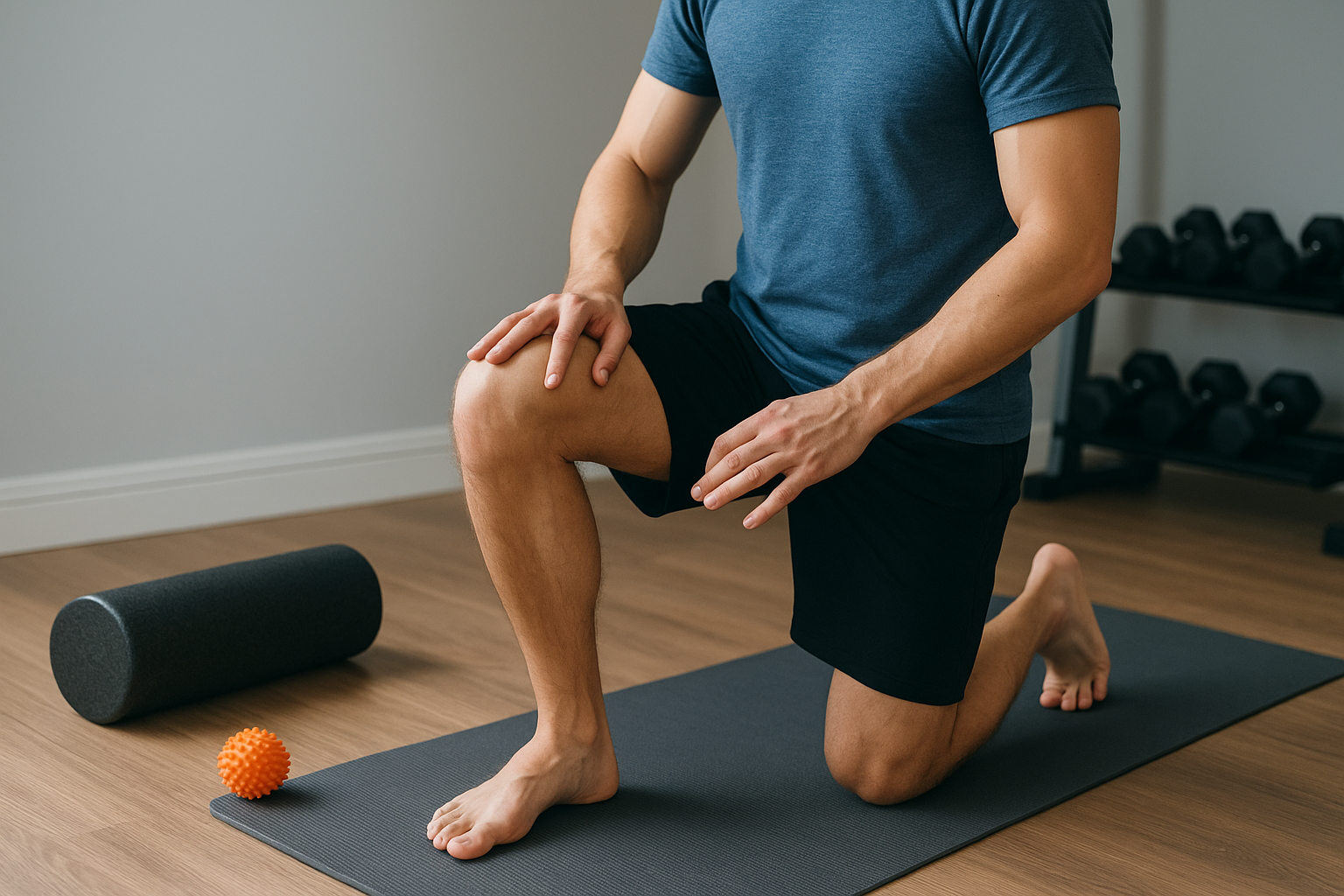
For tight quads and muscles around the knees, a simple foam roller or massage stick can provide effective myofascial release. Look for a compact model with textured rollers and comfortable handles so you can use it seated on a chair or on the floor. A typical routine lasts 3–5 minutes per leg: roll the front of the thigh from just above the knee up to the hip, pausing on tender spots and breathing slowly. You can also lightly roll the outer thigh to ease tension around the kneecap. Keep the pressure moderate; the goal is to reduce tightness, not bruise the tissue. Combine this with your mobility work and you will often feel an immediate improvement in ease of movement and comfort when squatting or lunging.
Easy shoulder mobility for lifters and desk workers
The shoulders crave a mix of rotation and scapular control. Begin with simple arm circles, forward and backward, then move to wall slides: stand with your back against the wall, elbows bent, and gently slide the arms up and down while keeping the ribs down. Resistance bands are an excellent home-gym tool here; a light loop band lets you do external rotation drills and pull-aparts to activate the rotator cuff and upper back. Keep the movements pain-free and focus on slow control rather than speed. A quick shoulder circuit before pressing or push-ups can reduce the sense of pinching at the front of the joint and support healthier posture if you spend hours at a computer.
Self-massage for tight shoulders and upper back
For shoulder and upper-back tension, a simple massage ball is invaluable. Place the ball between your upper back and a wall, then slowly roll across the muscles around the shoulder blade, pausing on tight areas. You can also target the chest by placing the ball against the wall and leaning in gently, helping to open the front of the shoulder. Aim for 1–2 minutes per area, breathing slowly and keeping the pressure at a tolerable level. Regular self-massage can reduce the feeling of “knots” after pressing sessions, improve awareness of your shoulder position and make overhead movements feel smoother. It is a low-cost, low-effort addition that supports long-term shoulder health in your home gym routine.
By combining simple mobility drills, light self-massage and smart load management, you can keep your knees and shoulders happier while training at home. A few minutes of daily care helps protect your joints, supports recovery and lets you enjoy your workouts with fewer aches. Treat these habits as a regular part of your home gym practice, just like warming up or tracking your sets, and your joints will thank you over the long term.