Finishing a tough home workout and stepping straight back into everyday life can leave your body wired and your muscles tight. A regular warm shower, if used with intention, can become a powerful recovery tool that helps you unwind from head to toe, easing soreness and preparing you for deeper sleep. This simple system combines water temperature, light mobility drills and breathing techniques, plus a couple of smart accessories, to turn your post-workout rinse into a structured ritual.
Table of contents
Set the scene: temperature, timing and safety
Begin by setting your shower to a comfortably warm temperature – think soothing, not scalding. Aim for 37–39°C if you can measure it; if not, choose a level that feels relaxing but does not redden or sting your skin. Keep the whole routine to about 10–15 minutes so you promote muscle relaxation without overheating or feeling drained. To reduce slipping risk when you are tired after training, use a sturdy non-slip shower mat and keep your essentials within arm’s reach. If you tend to feel light-headed after intense workouts, start with slightly cooler water at the feet and gradually work warmer up the body, allowing your circulation and breathing to adapt.
Upper body unwind: neck, shoulders and back
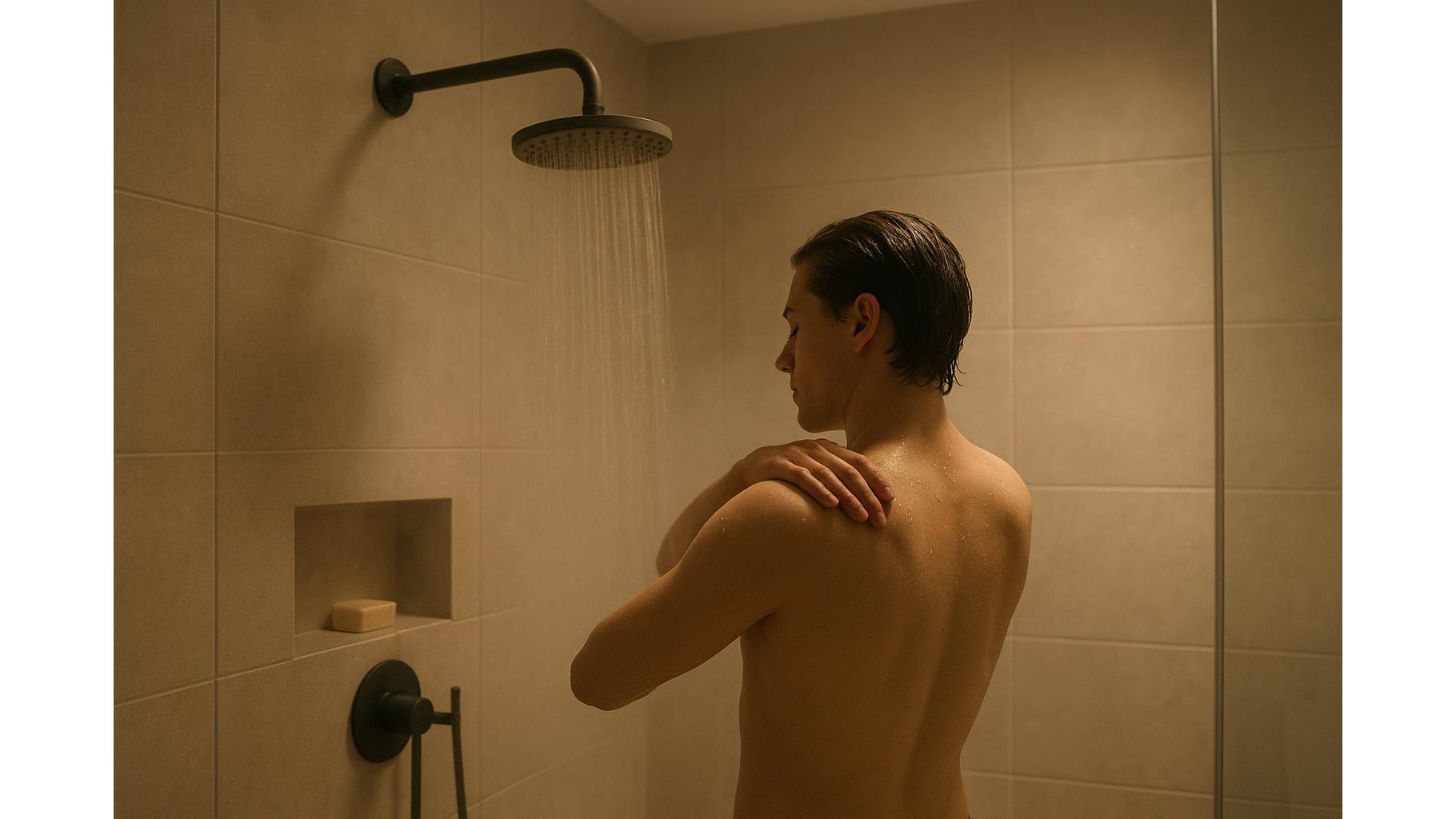
Face away from the shower so the warm stream hits the upper back and the base of your neck. Spend 1–2 minutes here, gently rolling your shoulders forward and back to let the heat soften tight traps and neck muscles. Try slow neck mobility: draw small circles with your nose, then easy side-to-side turns, staying within a pain-free range. Combine this with diaphragmatic breathing: inhale through the nose for four seconds, feeling your ribs expand, then exhale through the mouth for six seconds as the water runs down your spine. This longer exhale helps shift your nervous system from “fight or flight” into recovery mode, supporting better sleep later in the evening.
Legs and glutes: targeted heat plus gentle stretches
Point the shower head at your quads, hamstrings and glutes, spending about a minute on each area. Let the warm water run from the hips down to the knees to encourage circulation. While the water flows, cycle through a few simple stretches: a gentle standing quad stretch holding the wall for balance, a light hip hinge to feel the hamstrings lengthen, and an easy figure-four stretch for the glutes. Move in and out of each position instead of forcing long static holds; the goal is to support recovery, not add extra strain. If your feet are often sore from standing exercises or skipping, use the time to flex and extend your ankles, making slow circles to keep joints mobile.
Feet, arches and lower legs: small details, big relief
The feet and calves work hard in most home workouts but are often ignored after training. Direct a warmer stream onto your calves and Achilles for about 60–90 seconds per leg while performing slow calf raises and ankle circles. Then let the water flow over your arches and toes, spreading and curling them to release tension. This simple focus improves blood flow and can reduce the heavy, fatigued feeling that appears later in the day. If you train in minimal shoes or barefoot, this part of the routine is especially valuable to keep tissues supple and ready for your next squat, lunge or jump session.
Breath, contrast finish and simple add-ons
As you near the end of your warm shower routine, slow everything down. Spend 1–2 minutes standing with the stream on your mid-back, eyes closed, practising box breathing: inhale for four counts, hold for four, exhale for four, hold for four. This helps calm your nervous system and signals that the workout is truly over. If you tolerate it, finish with a brief cool rinse at the legs and arms for 20–30 seconds to gently wake up circulation without shocking your system. Step out, pat yourself dry, and follow with light clothing to stay warm as your body continues to recover.
Turning your everyday warm shower into a structured post-workout recovery ritual does not require a bathtub, spa equipment or complicated protocols. By deliberately combining comfortable water temperature, simple mobility drills and slow, controlled breathing exercises, you help your muscles relax, your joints stay mobile and your mind switch into rest mode. Make this head-to-toe shower sequence a regular part of your home training schedule and you will likely notice less lingering stiffness, smoother transitions into sleep and a more sustainable, enjoyable approach to your fitness routine.