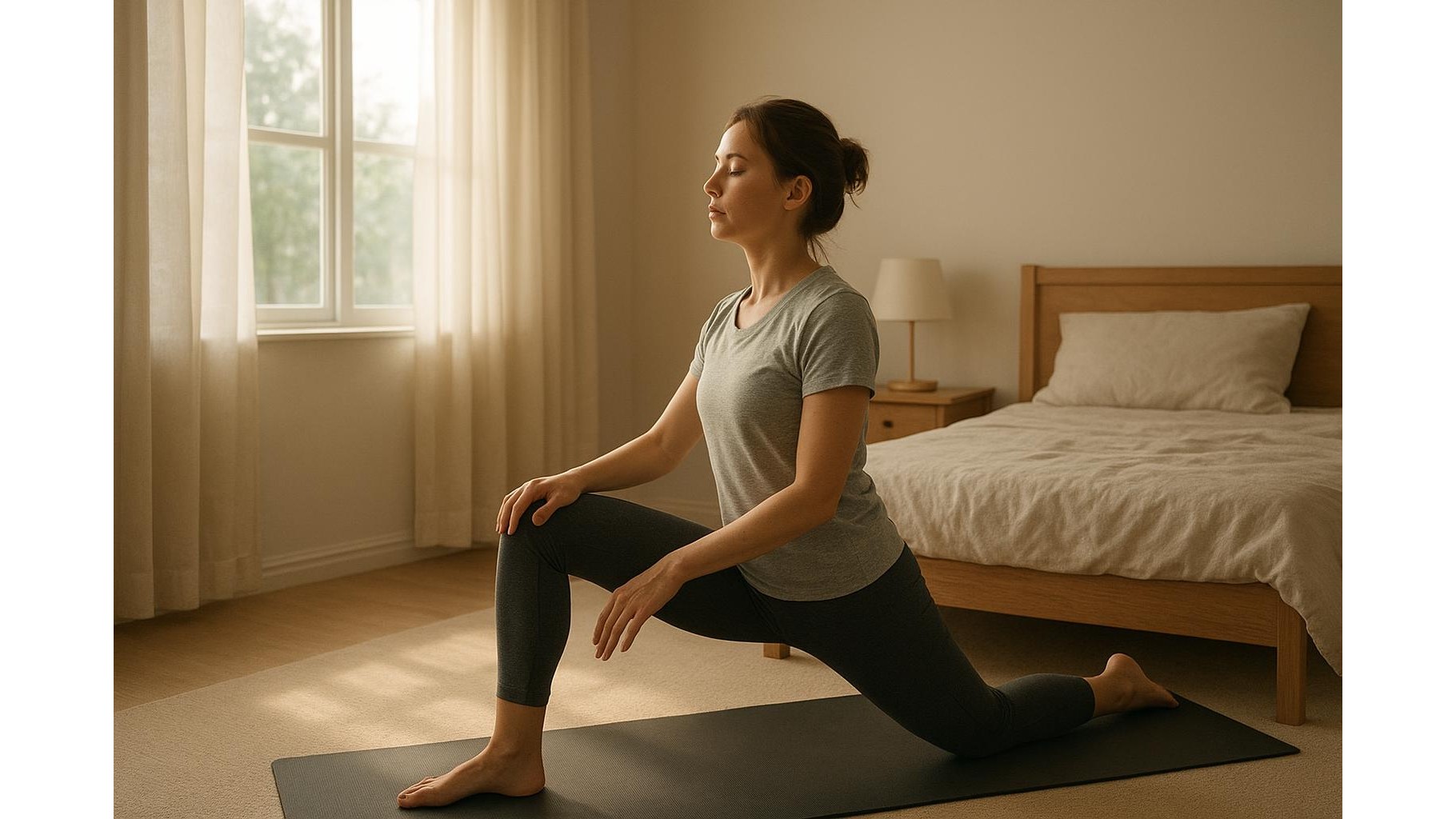
Starting your day with a gentle morning recovery routine can make the difference between dragging your body through the day and feeling lightly energised. This 10‑minute, equipment‑free mat session is designed for home athletes who train hard and need a calm way to loosen stiff joints, wake up the core and prepare the body for later home workouts after tough training days. You can do it beside your bed, in your pyjamas, before coffee – all you need is a comfortable surface and a few deep breaths.
Set up your space and wake your breath
Before you move, set the tone. Lay down on a soft surface and let your body fully relax for 30–60 seconds. Place one hand on your chest and one on your belly. Inhale slowly through the nose for a count of four, feeling the belly rise, then exhale for a count of six. This diaphragmatic breathing calms the nervous system and gently turns on your core muscles. Keep the shoulders relaxed and the jaw soft. Three to five slow breaths are enough to shift you out of sleep mode and into a more focused, athletic state, without spiking your heart rate too early in the morning.
Mobilise your spine and hips
Morning stiffness often sits in the lower back and hips, especially after heavy squats, deadlifts or long runs. Start on all fours and flow through 6–8 rounds of slow cat–cow: round your spine up towards the ceiling, then gently arch and lift your chest. Move with your breath, using each exhale to explore a bit more range. Next, step one foot outside your hand for a half lizard stretch, rocking slowly to open the hip without forcing it. Switch sides after 30–40 seconds. These controlled, low‑intensity movements lubricate the joints and prepare your body for the more demanding home gym sessions later in the day.
Gently activate your core
Instead of crunching hard first thing, use soft core activation to reconnect your midsection. Lying on your back with knees bent, perform 8–10 posterior pelvic tilts: exhale and gently press your lower back into the floor, feeling the deep abdominals switch on. Follow with a simple dead bug variation, lifting one knee and the opposite arm, then alternating sides for 30–60 seconds. Keep movements small and controlled, focusing on stability rather than burn. This approach supports your spine, improves posture and makes later strength or cardio work safer and more efficient, especially after intense training days.
Open chest, shoulders and upper back
Home athletes who lift, row or spend hours at a desk often wake up with a tight upper body. To counter this, lie on your side with arms extended in front of you and perform slow open book rotations, sweeping your top arm across your body and allowing your upper back to gently rotate. Aim for 6–8 reps each side, breathing steadily. Then sit tall and do controlled shoulder rolls and small arm circles to wake up the shoulder girdle. These simple moves relieve tension, improve overhead mobility and prepare you for pressing, pulling or kettlebell work later without feeling locked up.
Finish with a short reset and intention
End your 10‑minute routine in a comfortable seated or lying position. Take three slow breaths, noticing how your body now feels warmer, looser and more awake. Use this moment to set a quick intention for the day: perhaps focusing on quality movement in your next home workout, better recovery habits, or simply more patience with yourself as you train. This short reset anchors the routine in your mind, turning it into a sustainable habit instead of a one‑off stretch session.
This gentle morning recovery routine is a low‑friction way to support your performance from the moment you wake up. In only 10 minutes, without any equipment, you mobilise key joints, lightly activate your core and ease your body into the day, so that when it’s time for your tougher home gym training, you arrive prepared instead of stiff and sluggish.