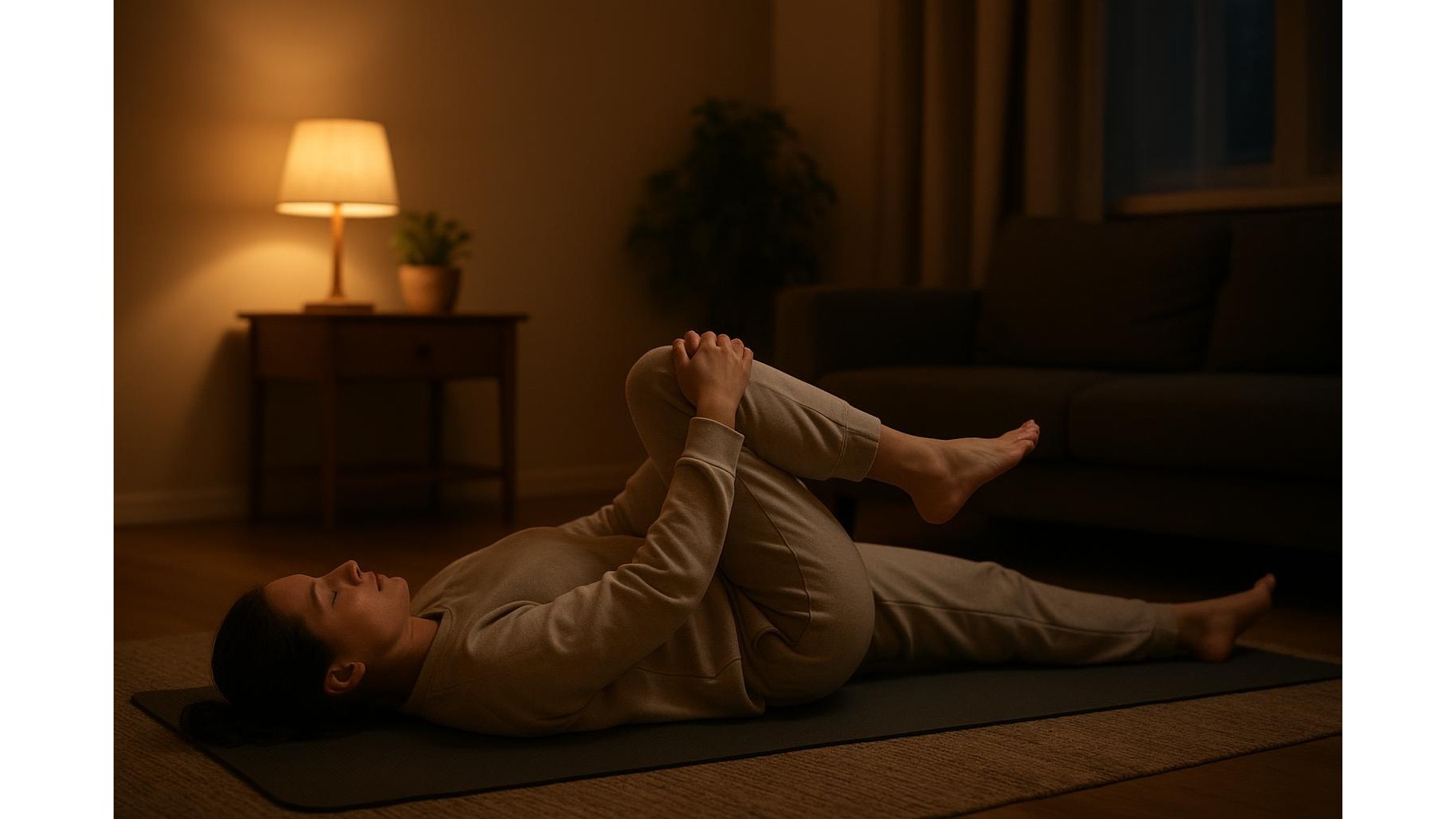
Evening is the perfect time for home lifters to slow down, release tension and prepare the body for deep, restorative sleep. A short, structured recovery routine doesn’t just make you feel better after training – it also supports muscle recovery, joint health and nervous system balance over the long term. In about 20 minutes, you can combine light mobility work, simple breathing drills and easy self‑massage in your living room, without turning it into another workout.
Set the scene: lights, floor space and mindset
Before you start, turn your living room into a calm recovery zone. Dim the lights, switch off stimulating screens and clear a patch of floor large enough to lie down comfortably. A basic yoga mat or carpet is enough; the focus here is on relaxation, not intensity. Give yourself permission to move slowly and keep effort at a low, “sleepy” level. If you track your training, think of this as active recovery, not another session to crush. Slowing your breathing, moving gently and staying present with each sensation tells your nervous system that it’s safe to downshift toward sleep.
Soft mobility circuit for tight lifter joints
Start with 8–10 minutes of joint‑friendly mobility, focusing on the areas most stressed by home lifting: hips, thoracic spine and shoulders. Flow through slow cat‑camel on all fours, gentle hip flexor stretches and lying “open book” rotations for the upper back. Keep every movement pain‑free and avoid aggressive bouncing or long, painful holds. Instead, breathe slowly through your nose, in and out for about four to six seconds each way, and let each exhale soften the stretch a little. This style of mobility boosts circulation, maintains range of motion and helps muscles switch from “ready to lift” to “ready to sleep”.
Self‑massage without gadgets: hands, floor and a cushion
You can get a lot of benefit from self‑massage using nothing more than your hands, the floor and a firm cushion. Lying on your back with knees bent, place the cushion under your upper back and gently roll side to side, pausing on tight spots between your shoulder blades. Use your thumbs and fingers to slowly knead your calves, quads and forearms, spending extra time on any areas that feel ropey after lifting. Aim for light to moderate pressure and smooth, continuous strokes. The goal isn’t to “smash” the muscle, but to reduce perceived tension and increase body awareness so your system can fully relax before bed.
Breathing and downshifting the nervous system
The final piece of an effective evening recovery routine is deliberate breathing that tells your body it’s time to wind down. Lie on your back with your feet on the floor, one hand on your chest and one on your belly. Inhale through the nose, quietly, feeling your lower ribs and belly expand, then exhale slightly longer than you inhale. A simple pattern is four seconds in, six seconds out. Continue for five minutes, keeping your jaw relaxed and your tongue resting gently on the roof of your mouth. This style of breathing shifts the balance toward the parasympathetic “rest and digest” side of the nervous system, improving sleep quality and helping your muscles recover from the day’s lifting.
Putting it all together into a 20‑minute flow
To make this routine stick, treat it as a small ritual that closes your training day. A simple structure could be: five minutes of gentle mobility for the spine, hips and shoulders; five minutes of easy self‑massage, focusing on your most worked muscle groups; and five to ten minutes of calm breathing in a comfortable lying position. Keep the lights low, move without rushing and avoid checking your phone. Over time, this consistent, low‑effort protocol acts like a signal to your body that strength work is done and recovery has started, supporting better sleep, less next‑day soreness and more sustainable progress in your home lifting journey.
By dedicating just 20 quiet minutes after your home workouts, you create a powerful bridge between training and sleep. This gentle combination of mobility, self‑massage and breathwork helps release tension, calms your mind and supports long‑term performance without adding extra stress. Think of it as daily maintenance for both body and brain: light on equipment, easy to do in any living room, and valuable for every lifter who wants to feel better, move better and recover more completely overnight.