
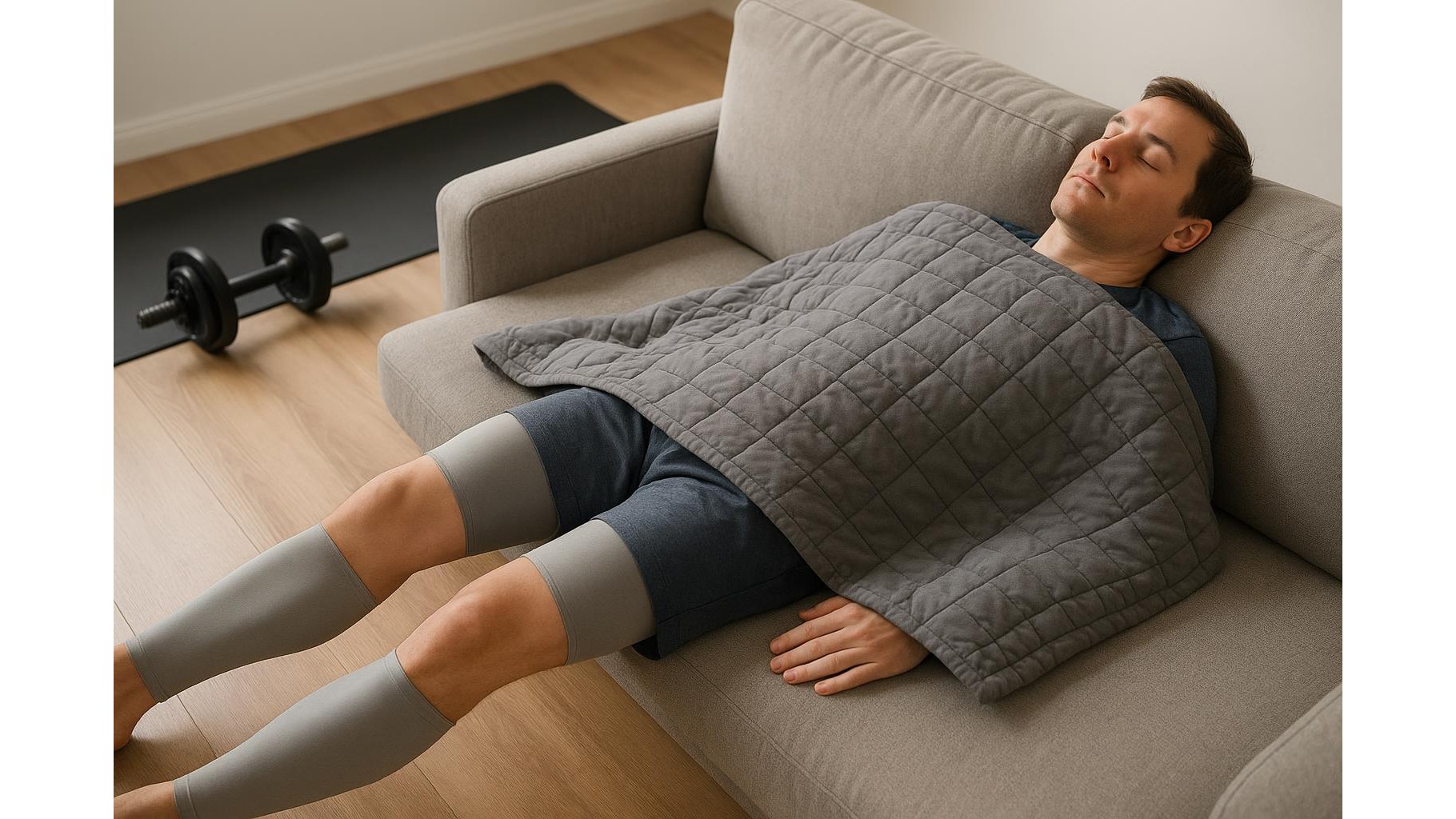
Turning your living room into a recovery space is now easier than ever. Many home lifters and runners are experimenting with full-body compression after workouts, combining a weighted blanket for the upper body with compression leg sleeves for the lower body. Used correctly, this combo can calm the nervous system, enhance relaxation and support recovery. Used at the wrong time, though, it may worsen circulation, irritate joints or even disturb sleep. Here’s how to use these tools in a smart, home-gym-friendly way.
How full-body compression works after home workouts
Both weighted blankets and compression sleeves apply gentle pressure to the body, but they do it for different reasons. Weighted blankets use deep pressure stimulation to help your nervous system shift from “fight or flight” to a calmer state, which can support post-workout relaxation and better sleep quality. Compression leg sleeves provide targeted pressure to the calves or thighs to reduce swelling, support venous return and decrease the feeling of heavy or tired legs after training. When you combine them, you get a top‑down calming effect and bottom‑up circulatory support, which can be ideal after intense strength training or long home cardio sessions. The key is choosing appropriate weight and compression levels for your body.
Choosing the right weighted blanket for recovery
A good weighted blanket for recovery should feel snug but not suffocating. As a rule of thumb, many people do well with a weight of around 8–12% of their bodyweight, but lighter is often better for first‑time users and for athletes who run hot after training. Look for features like evenly distributed glass beads, breathable outer fabric and machine‑washable covers to make home use practical. When using a weighted blanket after a workout, keep your room cool and avoid stacking it with heavy duvets that trap too much heat. If you wake up sweaty, restless or with shoulder or chest discomfort, that is a sign your blanket may be too heavy or too warm. In that case, scale down the weight or limit use to short recovery naps instead of the full night.
When compression leg sleeves help—and when they don’t
Compression leg sleeves shine when your lower body is dealing with muscle soreness, mild swelling or a “heavy legs” feeling after squats, deadlifts or treadmill sessions. Graduated compression around the calves can support blood flow back to the heart, which may reduce that dull, lingering ache. They are especially useful if you spend long periods sitting at a desk after training. However, stronger is not always better. Overly tight sleeves can dig into the skin, create “pinch points” and actually impair circulation. If you feel tingling, numbness, cold feet or see deep marks in the skin after removing them, the fit is likely too small or the compression level too high. People with known vascular issues or diabetes should always ask a medical professional before using compression gear outside of medical-grade prescriptions.
Combining blanket and leg sleeves: best use cases
Using a weighted blanket and compression sleeves together works best in specific scenarios. After an evening strength session, you might slip on light‑to‑moderate compression calf sleeves, then lie on the sofa with a moderately weighted blanket while you begin your wind‑down routine. Keep the session to 20–40 minutes, focusing on slow breathing and low‑stimulus activities (reading, stretching, guided relaxation). This combo can reduce post‑workout restlessness, especially for people who struggle to “switch off” after intense home training. Avoid full-body compression right after a very hot workout or sauna, when your body is already struggling to cool down. Also skip it if you notice increased joint discomfort in the knees or ankles; in that case, elevate your legs without compression and use only a light throw blanket until the irritation settles.
Signs you should skip or modify full-body compression
Full-body compression is not a one‑size‑fits‑all solution. You should skip or modify it if you experience shortness of breath, chest tightness, or a sense of panic when under a weighted blanket—these are clear signs the pressure is too much. Similarly, if compression leg sleeves cause tingling, sharp pain, colour changes in the toes or extreme warmth or cold, remove them immediately. Poor sleep quality is another red flag: if you sleep worse with the blanket or wake up stiff and overheated, reserve it for shorter naps or off‑days instead of nightly use. Finally, if you have uncontrolled hypertension, circulation disorders, recent surgery or are pregnant, you should speak to a healthcare professional before using either heavy blankets or tight compression garments as part of your home recovery routine.
Used thoughtfully, weighted blankets and compression leg sleeves can turn your home gym recovery space into a calm, restorative environment. Respect your body’s feedback, start with lighter weights and gentler compression, and use short sessions to test how you respond. Combine these tools with basics like good hydration, light walking and consistent sleep habits, and they can become a valuable—but not mandatory—part of your recovery toolkit, rather than a source of discomfort or disrupted rest.









