
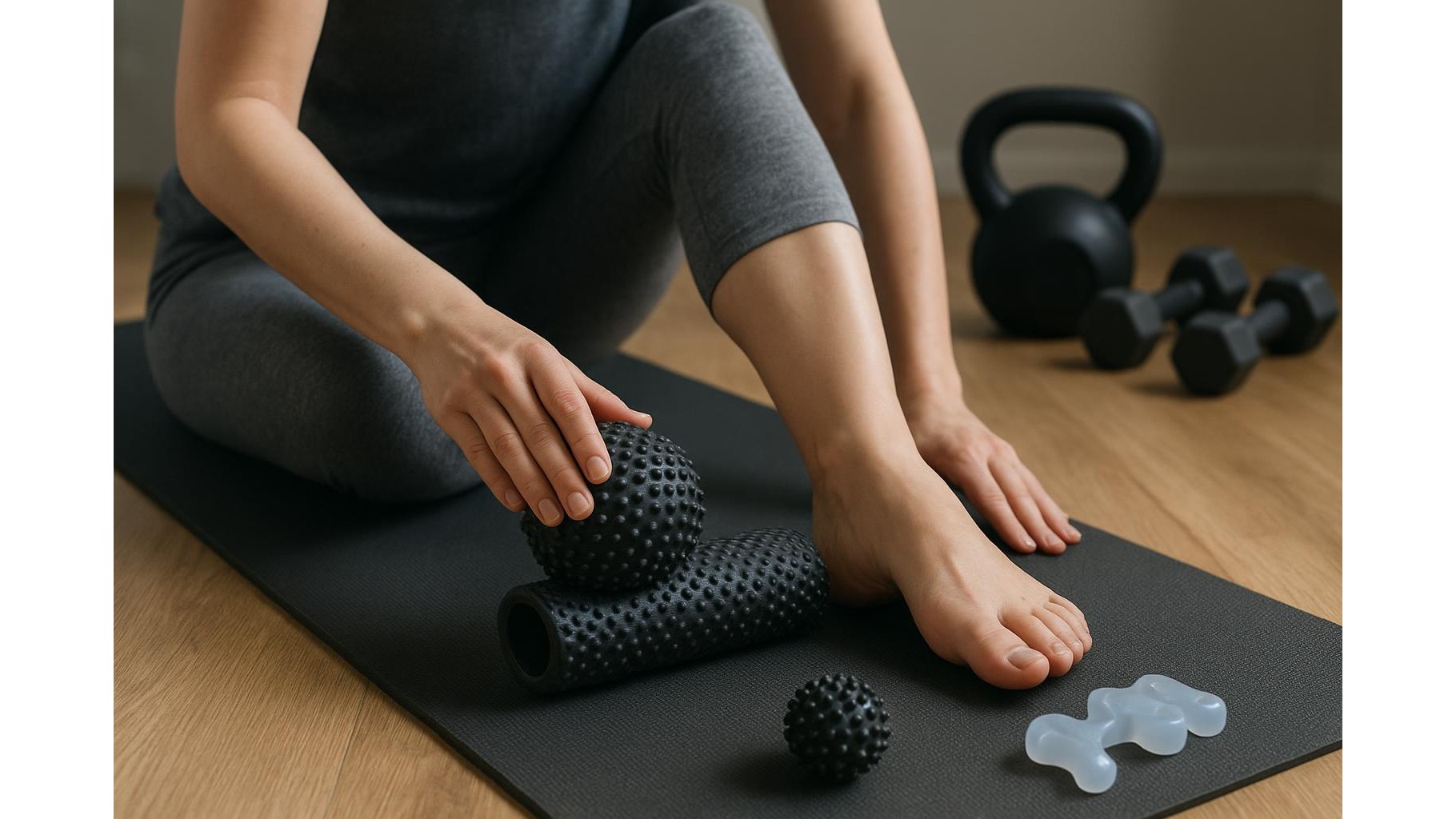
Strong, pain-free feet are a hidden superpower for anyone training in a home gym or walking long distances. Every squat, deadlift and lunge starts from the ground up, so stiff arches, cramped toes and sore heels quickly limit performance. Simple tools like foot rollers, massage balls and toe spacers can improve mobility, reduce tension and support better balance without leaving your living room. With a few minutes of focused work each week, you can build more resilient feet that support heavier lifts and more comfortable daily movement.
Why lifters should care about foot health
For lifters and walkers, the feet act as the body’s foundation. Limited foot mobility can force the knees, hips and lower back to compensate, leading to aches and plateaus in training. Tight plantar fascia under the arch, compressed toes from narrow shoes and reduced ankle range all work against stable lifting technique. By investing in basic foot care tools and a simple routine, you improve how your feet spread, grip and transfer force. That means more stable squats, safer deadlifts and less fatigue after long walks or standing days.
Using foot rollers for arch release
Foot rollers are designed to target the plantar fascia and small muscles under the arch. A typical routine: sit or stand, place the roller under your bare foot, and slowly roll from heel to toes for 1–2 minutes per side. Adjust pressure so it feels intense but not sharp. This helps break up stiffness, improve circulation and restore elasticity to tissues that get overloaded by running, heavy lifting or long hours in shoes. Use a roller before lower-body sessions to prime the feet, or in the evening to relieve tension built up throughout the day.
Massage balls for targeted pressure
Massage balls are perfect when you need more precise pressure than a roller can provide. Place the ball under the foot and hunt for tight spots around the heel, arch and the base of the toes. Pause on each trigger point for 20–30 seconds, breathing deeply until the discomfort eases. This kind of self-massage supports better proprioception (your sense of where your foot is in space), which is crucial for balance-heavy movements like single-leg RDLs or split squats. Start with a slightly softer ball if you are very sensitive, then progress to firmer textures as your tolerance improves.
Toe spacers to restore natural alignment
Modern shoes often squeeze the toes together, which can reduce toe splay and weaken the small stabilising muscles of the foot. Toe spacers gently separate the toes to encourage a more natural, fan-shaped position. At home, you can wear them while relaxing, doing light chores or even during low-intensity training like mobility work. Begin with 10–20 minutes per day and gradually extend the time as your feet adapt. Over weeks, many people notice better balance, improved comfort in wide-stance lifts and reduced tension in the forefoot. Combine toe spacers with barefoot balance drills for the best effect.
Building an easy at-home foot routine
A simple weekly routine can keep your feet strong without stealing time from your main workouts. Two to three times per week, start with 1–2 minutes of foot rolling per side, followed by 1–2 minutes of massage ball work on any hot spots. Then, practice basic foot-strength drills: short bouts of barefoot calf raises, towel scrunches with the toes, or standing balance on one leg. Finally, slip on toe spacers for 10–30 minutes while you cool down, stretch or do house tasks. Consistency matters more than intensity: light, frequent work will outperform an occasional, painful session.
Maintaining healthy feet is one of the simplest upgrades you can make to your home training. With inexpensive tools like foot rollers, massage balls and toe spacers, you can relieve tension, improve mobility and support more stable, powerful lifts. Treat your feet as seriously as you treat your barbell work, and you will likely notice better technique, less discomfort and more confidence from the ground up.









