Building a home gym is not just about weights and machines. Adding simple self‑massage tools like foam rollers and massage balls can transform your recovery routine, ease muscle tension and support better performance. Both tools work through self‑myofascial release, but they feel and behave very differently on the body. Understanding how they differ, which muscles they suit best and how to apply safe pressure helps you choose the right tool for your space and your goals.
Table of contents
Foam rollers: broad, beginner‑friendly pressure
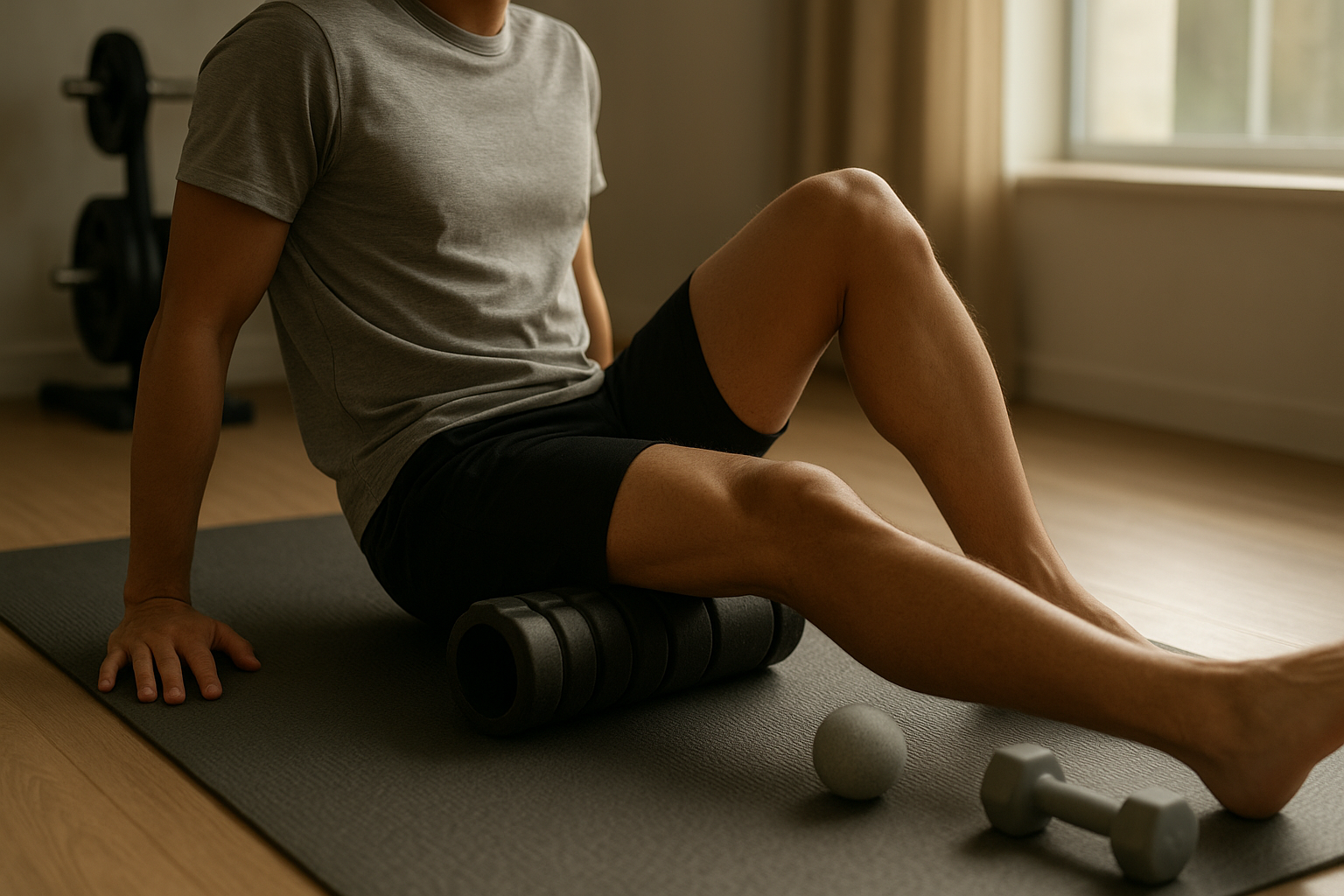
Classic foam rollers provide a larger contact area, making them ideal for beginners or anyone who prefers gentler, more even pressure. A typical example you might find on Amazon UK is a medium‑density 90 cm roller used for IT band, quadriceps, hamstrings and upper back. The long shape keeps your body stable and allows you to roll bigger muscle groups smoothly. For recovery, start with slow passes of 20–30 seconds per area, focusing on the thighs, calves and mid‑back. Avoid rolling directly on joints or the lower back, and keep your breathing steady to help the muscles relax instead of tensing against the pressure.
Massage balls: targeted work for stubborn knots
Massage balls are compact and designed to dig into precise trigger points that a roller often misses. A standard firm rubber or textured ball is well suited to the glutes, hips, feet and the small muscles between the shoulder blades. Because the contact point is much smaller, the pressure feels more intense even with less body weight. In a home gym, you can place the ball between your body and a wall to fine‑tune how hard you press, making it easier to treat sensitive areas like the shoulders and pecs. Short holds of 20–40 seconds on a tight spot, followed by gentle movement, are usually enough to reduce discomfort without overdoing it.
Which tool for which muscle group?
Choosing between foam roller vs massage ball comes down to the muscle you are targeting and how much intensity you can tolerate. For large chains of muscle such as the quads, hamstrings, lats and calves, a foam roller is often the best first choice because it covers more area and encourages smooth, flowing movements. For deep tension in the glute medius, the small muscles around the shoulder blade or the plantar fascia under the foot, a massage ball shines. Many home athletes end up using both: a roller for general, daily maintenance after training, and a ball for occasional, more focused sessions on stubborn knots or long‑standing tight spots.
How to apply safe pressure and avoid injury
Whether you choose a foam roller or a massage ball, technique and intensity matter more than the tool itself. Aim for a sensation of mild to moderate discomfort, never sharp pain or numbness. Slowly lower your weight onto the tool and use your arms or opposite leg to off‑load pressure if it feels too strong. Keep each area to 1–2 minutes and avoid rolling directly on bones, joints or the front of the neck. If you feel your body bracing and your breath becoming shallow, reduce the pressure. In a home gym setting, it is better to perform short, frequent sessions several times a week than to do rare, overly aggressive sessions that leave you sore for days.
Integrating recovery tools into your home gym routine
To get the most from your recovery tools, treat foam rolling and ball work as part of your training plan rather than an afterthought. Many people use a foam roller for 5–10 minutes as a dynamic warm‑up, focusing on tight areas before strength or cardio sessions. Massage balls fit easily into short movement breaks during the workday or at the end of an evening workout. Store your tools where you see them – next to your mat, rack or dumbbells – to build the habit. Over time, you will notice patterns in where you feel tight or tender, helping you decide when to reach for the roller, when to grab the ball and when a gentler stretching or mobility session might be more appropriate.
In summary, foam rollers deliver broad, stable pressure that suits larger muscles and beginners, while massage balls specialise in precise, high‑intensity work on smaller or stubborn areas. Both can be powerful additions to a home gym recovery routine when used with moderate pressure, controlled breathing and consistent practice. Choose the tool that matches the area you are targeting and your sensitivity, start gently, and let gradual habit, rather than force, drive better mobility, less tension and a more resilient body.