
Working out at home is convenient, but it can also highlight how stiff and tight your back really is. Many lifters start looking at two main options to ease that tension: simple floor traction drills and dedicated inversion tables. Both aim to decompress the spine and reduce discomfort, but they differ a lot in cost, risk and how they fit into a regular home training routine. Understanding what each method actually does will help you protect your back without sacrificing your gains.
What back stiffness really is when you train at home
When you stack up squats, deadlifts and long desk hours, your spine and surrounding tissues can feel chronically tight. Often, this is a mix of muscular tension, joint compression and simple fatigue, not a serious structural injury. Home gym athletes tend to respond by adding more stretching or chasing a magic device. Before buying anything, it’s worth recognising that most stiff backs benefit from a combination of movement, load management and short bouts of decompression. Both floor traction and inversion tables can provide that decompression, but they should sit alongside smart programming and proper warm‑ups, not replace them.
How floor traction drills work and how to use them safely
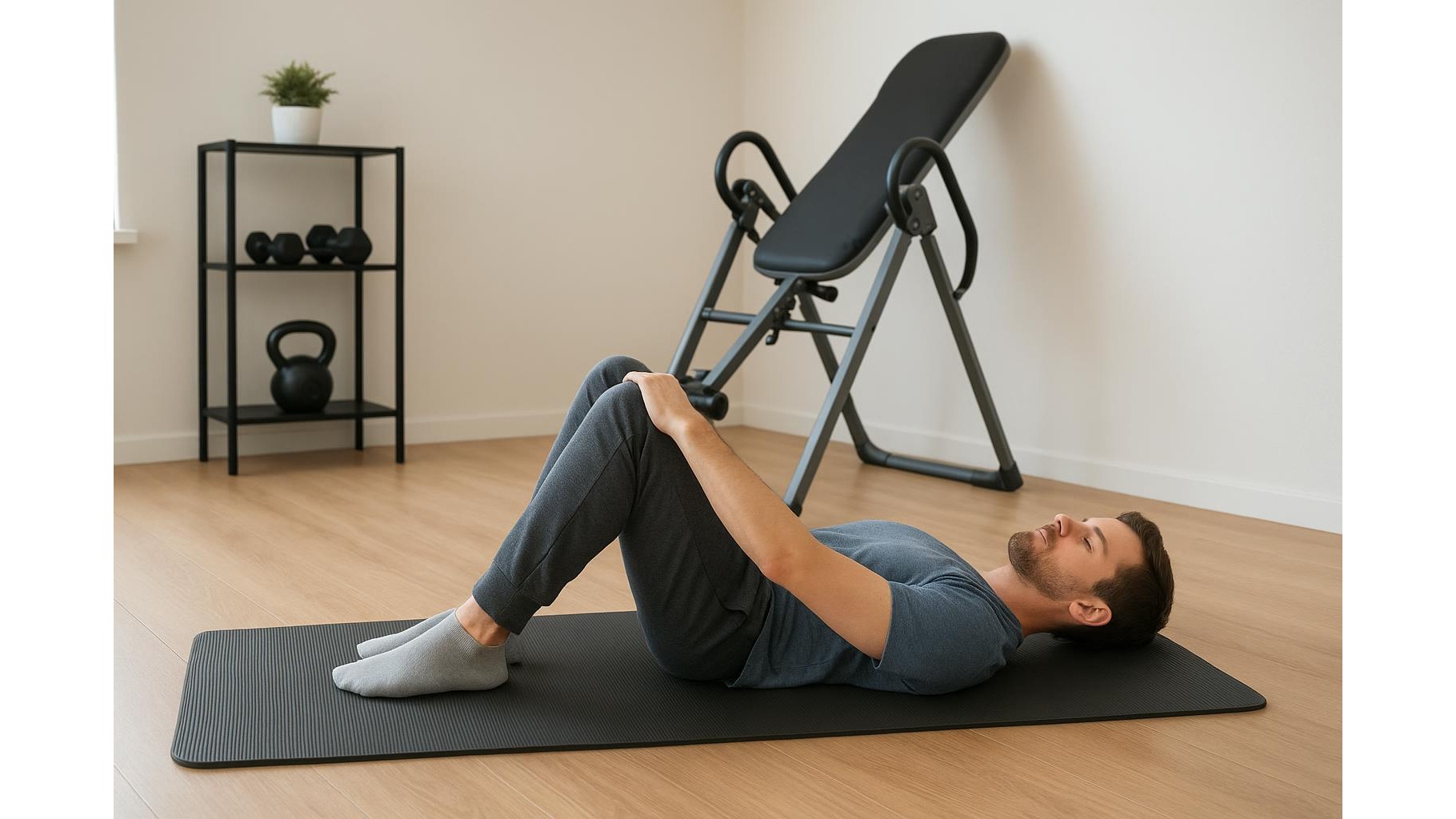
Floor traction is the simplest way to create gentle space through your spine using only bodyweight and gravity. Classic drills include lying on your back with your calves on a bench, doing controlled posterior pelvic tilts, or using a basic floor back stretcher to guide your lumbar curve. Because you stay close to neutral positions, the forces on your joints are relatively low and easy to tolerate. The key is to move slowly, avoid forcing range of motion and treat these drills as short, frequent resets of 3–5 minutes rather than a single long session. If you feel numbness, sharp pain or symptoms that travel down a leg, you should stop and speak to a professional instead of pushing through.
Inversion tables at home: benefits, risks and who they suit
Home inversion tables allow you to tilt your body head‑down so gravity gently pulls your spine apart. This can give a strong sensation of decompression and temporary relief for some people with mechanical back tightness. However, going fully inverted also increases pressure in the eyes and head, and can stress the cardiovascular system. That makes inversion tables a higher‑risk tool for anyone with high blood pressure, glaucoma, heart issues or a history of stroke. Even in healthy lifters, staying inverted too long or moving too fast in and out of the position can cause dizziness and increase fall risk. For that reason, inversion should never be your first‑line solution, and sessions should be short, controlled and supervised if possible.
Practical safety rules before choosing traction or inversion
Whether you prefer floor traction or are considering an inversion table, a few safety guidelines protect both your spine and your training. First, treat any decompression method as a supplement, not a cure for persistent or severe back pain. If your symptoms include tingling, weakness or pain that worsens with load, you need a medical assessment before experimenting. Second, respect gradual progression: start with mild floor drills, then, if cleared by a professional, move to partial inversion angles and short holds (30–60 seconds) rather than full upside‑down hangs. Finally, avoid heavy lifting immediately after aggressive traction; give your body at least 10–15 minutes to stabilise before loading the spine again.
Integrating decompression into an effective home training plan
The goal is not just to feel looser, but to keep training consistently. That means pairing decompression with smart exercise selection. Use floor traction drills in your warm‑up to restore comfortable movement before squats, hinges and loaded carries, and sprinkle them between sets on days when your back feels particularly tight. If you do use an inversion table, keep it for short, occasional sessions, ideally after your main lifts, and focus on breathing and relaxation rather than extreme angles. Combine this with progressive strength work for your glutes, hamstrings and core so your back doesn’t have to do all the stabilising alone. Over time, this blend of mobility, strength and sensible decompression will usually outperform any single gadget or stretch.
For most people training at home, simple floor traction drills are the first and safest choice to ease a stiff back while keeping sessions productive. They cost nothing, fit neatly into warm‑ups and recovery blocks, and carry relatively low risk when done with control. Inversion tables can offer more intense decompression, but they also come with more medical caveats and demand stricter safety rules. If your back tightness is mild and training‑related, start on the floor and build better movement and strength. If your symptoms are more complex or persistent, get assessed before hanging upside down. Your spine, and your long‑term progress in the home gym, will benefit from the cautious approach.









