Parents who lift, crawl and play on the floor with their children often feel a unique mix of hip tightness, knee strain and lower back fatigue. This gentle floor-time recovery routine is designed to support your home workouts while also respecting the physical demands of parenting. All you need is a little space on the floor and a few minutes to reconnect with your body so you can keep training, keep playing and feel good doing both.
Why floor-time recovery matters for active parents
Spending long stretches on the floor with kids, then jumping into strength training or HIIT sessions, can overload the hips, knees and lumbar spine. Repeatedly lifting and carrying children mimics high-rep deadlifts and squats, often with rushed form. Without a simple mobility routine, tension builds up around the hip flexors, glutes, hamstrings and lower back, leading to stiffness and nagging pain. Dedicating 10–15 minutes after play or workouts to purposeful recovery helps restore joint range of motion, calm the nervous system and make your next training session more efficient and safer.
Gentle hip reset after crawling and lifting
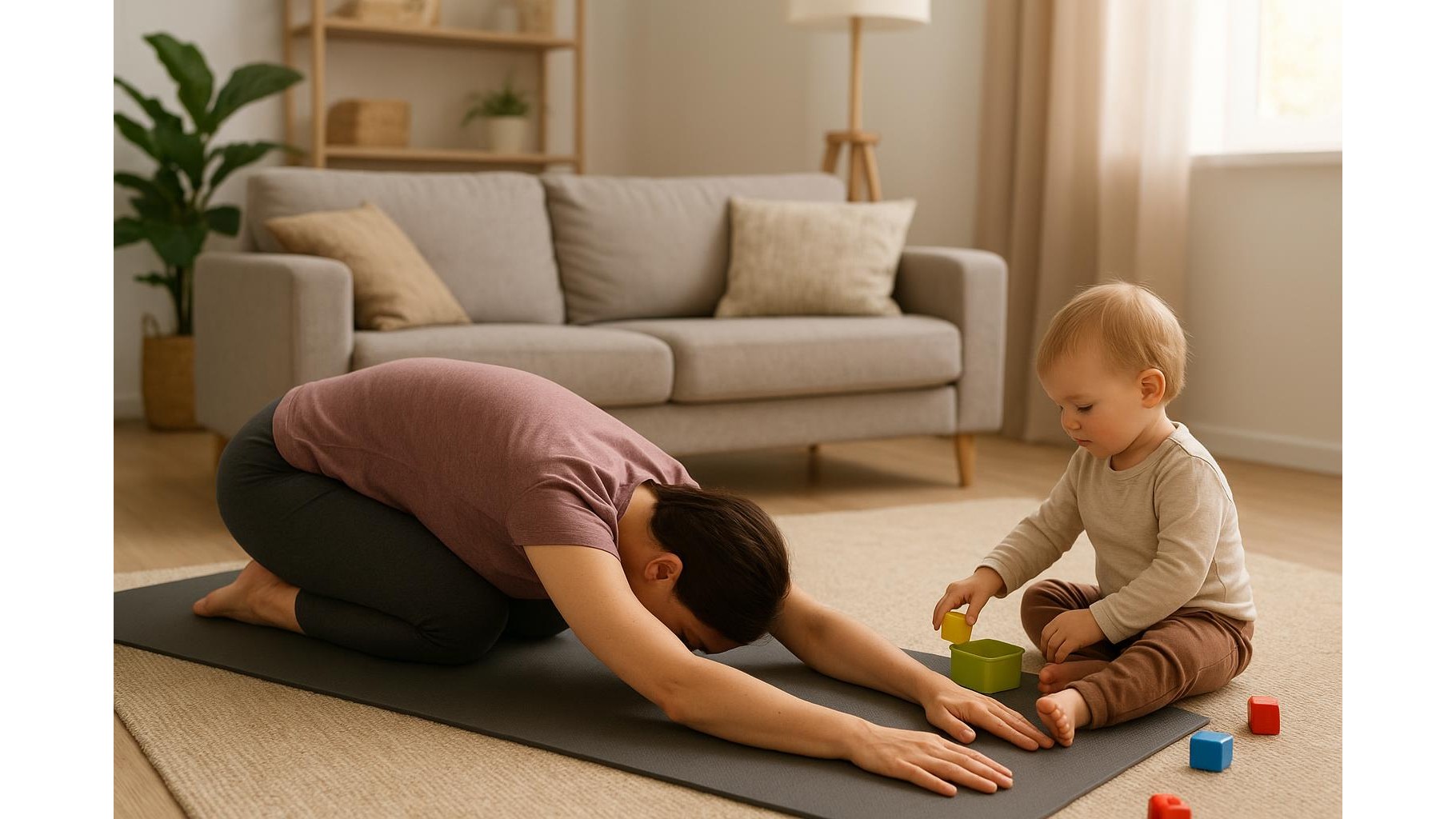
Begin with a slow child’s pose, knees wide and big toes together, to lengthen the lower back and open the hips. Breathe deeply into the sides of your ribcage for 6–8 slow breaths. Transition into a half-kneeling hip flexor stretch: one knee on the floor, the other foot in front, gently tucking the pelvis and squeezing the glute of the back leg. This targets tight hip flexors from sitting, squats and repeatedly picking up your child. Hold 30–40 seconds each side, staying relaxed through the shoulders. Finish with 90/90 hip rotations seated on the floor, moving slowly between sides to lubricate the hip joint and improve internal and external rotation—crucial for pain-free squats, lunges and getting up and down from the floor.
Safe knee-friendly mobility on busy days
When you spend a lot of time kneeling, squatting and rising while playing, your knees can quickly become irritated if the surrounding muscles are tight. Start on your back with heel slides: slowly bend and straighten one leg at a time, letting the heel glide along the floor. This keeps the knee moving without loading it. Follow with short-range glute bridges, lifting your hips just a few centimetres to teach the hips and glutes to share the load with the knees. Finish with gentle quad stretching in side-lying—holding your ankle and drawing the heel toward the glute—keeping your spine neutral. These simple actions reduce tension around the knee joint and make everyday tasks like getting off the floor or climbing stairs feel smoother.
Lower back relief for lifting and carrying kids
Parents often feel lower back tightness from awkward, one-sided lifting and carrying. To unwind this, lie on your back and perform pelvic tilts, slowly rocking your pelvis to alternately flatten and release your lower back on the floor. Combine this with supine windshield wipers, gently dropping bent knees from side to side to mobilise the lumbar spine without forcing rotation. Then move into a slow cat–cow position on hands and knees, coordinating movement with your breath to create space between each vertebra. Think of these drills as a reset for your spine, counteracting the compressed, twisted positions of daily parenting while supporting your home strength work.
Integrating recovery into real-life home routines
The most effective mobility routine for parents is the one you can realistically maintain. Instead of treating recovery as a separate, time-consuming block, weave it into your day. After a home workout, pick 3–4 of the stretches above and run through them for 8–10 minutes. After an intense floor-play session, spend just 5 minutes on child’s pose, half-kneeling hip flexor stretch and pelvic tilts. You can even turn some positions into a calm, shared ritual with your child—inviting them to copy the movements when appropriate. Over time, this consistent, low-friction approach will leave your hips, knees and lower back better prepared for both training and playful, active parenting.
Building a sustainable, floor-friendly recovery routine is one of the best investments you can make as an active parent. By regularly addressing hip mobility, knee health and lower back comfort, you protect your capacity to lift, carry and play with your children while still pursuing your fitness goals. Keep the sequence gentle, listen to your body and adjust duration as needed. With just a few mindful minutes on the floor each day, you can move out of stiffness and into stronger, more resilient movement—for both your workouts and your life at home.