Heavy home strength sessions fire up your whole system: heart rate, breathing, muscle tension and mental focus all ramp up. If you jump straight from your last set to a screen or a shower, your body can stay stuck in “go mode”, making it harder to relax and sleep. A short, floor-based reset routine using gentle rocking and slow breathing helps your nervous system downshift, improves recovery and turns your home gym into a place of restoration as well as hard work.
Why your nervous system needs a post-lifting downshift
Strength training activates the sympathetic nervous system, the part responsible for fight-or-flight. That’s great for heavy squats and presses, but not ideal when you’re trying to unwind for the evening. A deliberate cool-down that focuses on floor-based positions, slow exhalations and small, rhythmic movements nudges you back toward the parasympathetic state, associated with rest, digestion and sleep. This isn’t just about feeling “zen”: lowering muscle tone, heart rate and breath rate can reduce next-day soreness, improve perceived recovery and make it easier to fall asleep on training days.
Setting up your space for floor resets
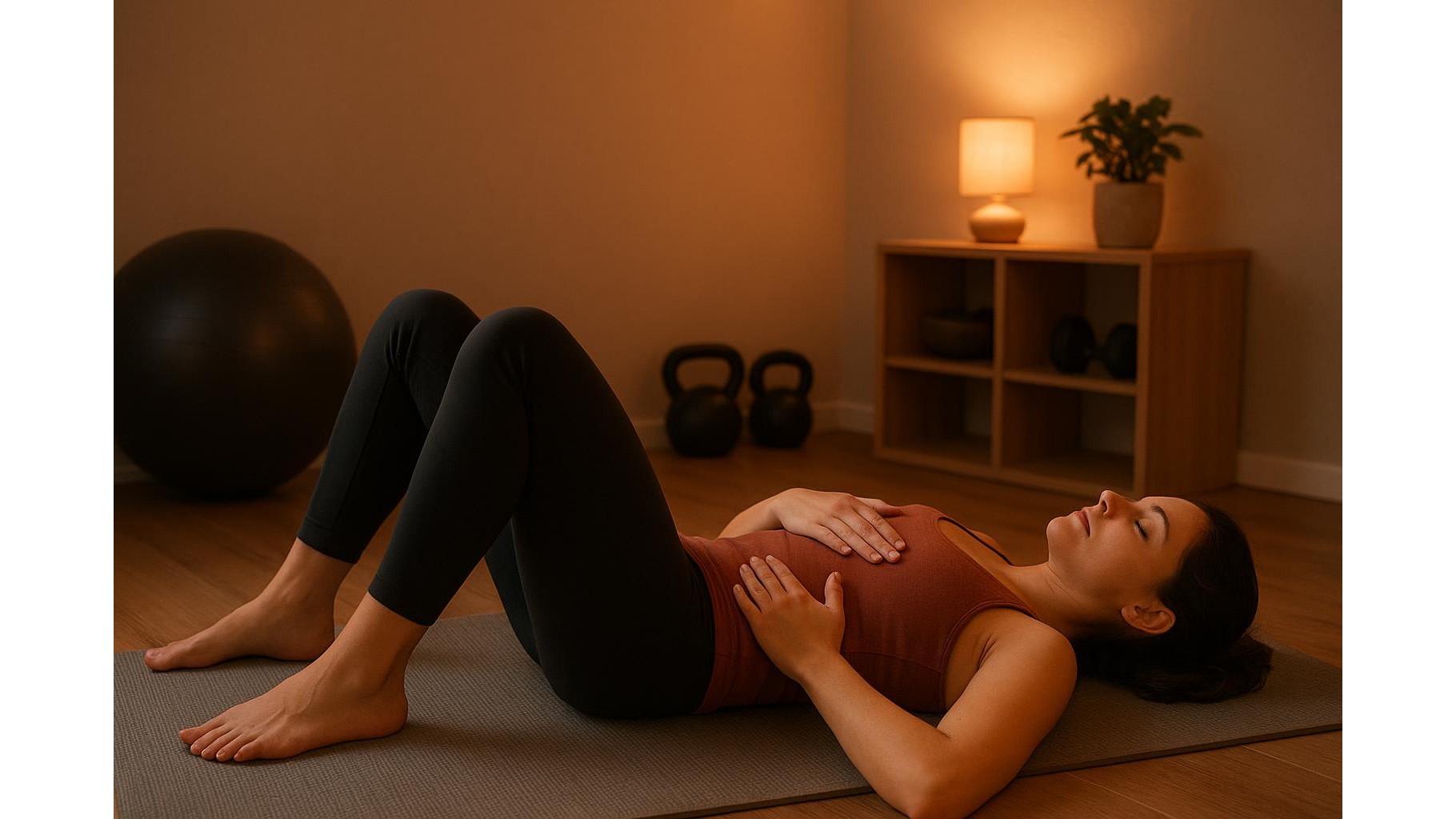
To make this routine inviting, dedicate a small corner of your home gym to recovery work. Lay down a comfortable exercise surface, dim the lights if possible and put your phone on silent. A thick mat or folded rug cushions your back and joints so you can fully relax into the floor. Keep a light blanket or hoodie nearby so you don’t get chilled as your body cools down. The goal is to create a strong contrast with your intense lifting environment: where your training area feels bright and energising, your reset space should feel calm, warm and safe, encouraging your nervous system to let go of tension.
A simple breathing and rocking sequence
After your last set and any quick mobility work, lie on your back with knees bent and feet flat. Place one hand on your chest and one on your belly. Inhale gently through your nose for about four seconds, then exhale for six to eight seconds, feeling your ribs soften into the floor. After 6–10 breaths, bring your knees toward your chest and wrap your arms around your shins. Begin a slow side-to-side rocking motion, as if massaging your lower back into the ground. Keep your breath smooth and quiet. Then place your feet back down, let your knees fall together and lightly sway them from side to side, allowing your spine to follow. These small, rhythmic movements send your brain a powerful “it’s safe to relax” signal.
Adding gentle patterns: rolling, crawling and reaching
Once your breathing has slowed, you can add a few minutes of playful, low-effort movement. From your back, roll to one side and then to your belly, guided by your eyes and hands, not by force. Pause and breathe, then roll back. Try a short bout of slow “baby crawl” patterns: from hands and knees, move opposite hand and knee forward a few times, keeping your head relaxed and your gaze soft. Finish lying on your back or side, reaching one arm overhead with a long exhale, then let it fall back down. These gentle floor-based patterns help your nervous system integrate the heavy loading you just did, improve body awareness and ease residual stiffness without adding fatigue.
Making it a habit that supports better sleep
A reset only works if you actually do it, so keep the routine short and repeatable. Aim for 5–10 minutes after each home strength workout, ideally in the same sequence so your brain starts to associate it with “training is done”. Pair it with an evening ritual—such as preparing tomorrow’s clothes or making a herbal tea—so it naturally fits into your schedule. Over time, you may notice that your mind races less at bedtime, your muscles feel less wired and your overall training week feels more sustainable. Treat this floor-based rocking and breathing routine as the final “set” of your workout: it’s where your nervous system learns to shift from performance back to recovery, setting you up for better results session after session.
This gentle post-workout sequence is easy to maintain, requires no equipment and delivers outsized benefits for recovery, relaxation and sleep. By consistently ending your home strength sessions on the floor—breathing slowly, moving softly and letting tension drain away—you teach your body that hard work and deep rest can coexist. In time, these floor-based resets become as essential to your progress as the weight on the bar, helping you train harder, feel better and live calmer on and off the gym floor.