
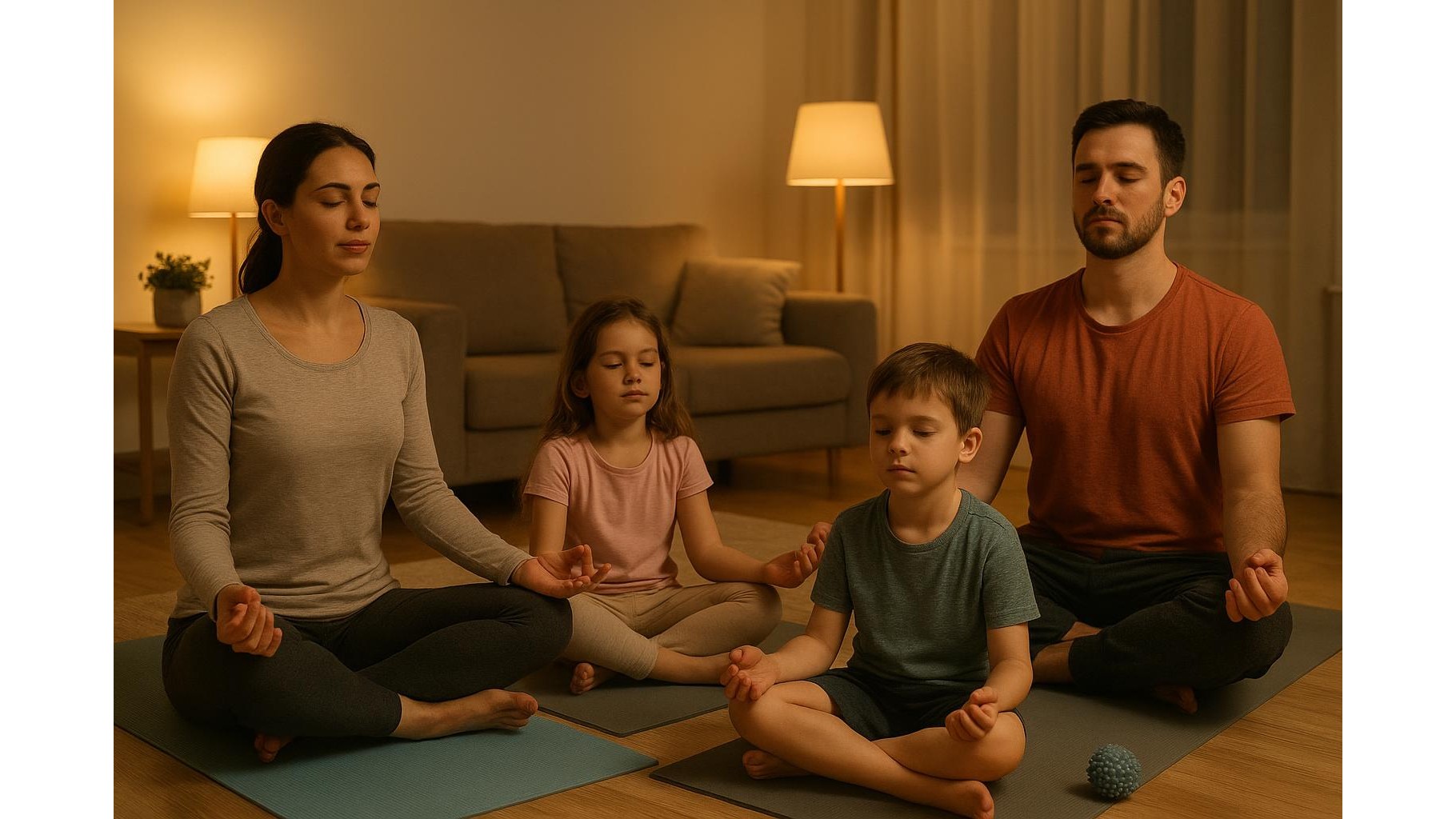
Turning your living room into a mini gym is a fantastic way to keep everyone active, but intense home play sessions can leave both kids and adults feeling sore and wired. A short, playful family-friendly recovery routine helps muscles relax, calms the nervous system and sets everybody up for better sleep. Below you’ll find simple, equipment-light ideas you can mix and match after any home workout or high-energy play session.
Gentle breathing to switch off “play mode”
Start your cool-down by helping the whole family shift from high energy to calm. Sit or lie on the floor together, one hand on the belly and one on the chest. Ask everyone to breathe in through the nose for a slow count of four, feeling the belly rise, then breathe out through the mouth for a count of six. Repeat for 8–10 breaths. For younger kids, turn it into a game: pretend you are blowing up a balloon on the inhale and slowly letting the air out on the exhale. This simple breathing exercise lowers heart rate, reduces post-play excitement and prepares the body for stretching and sleep.
Playful stretches for kids and adults
Once breathing has slowed, move into gentle family stretches. Keep everything short and light: the aim is to relax, not to push flexibility. Try a “copy-cat” game where one person leads and the others mirror their stretch: reach for the ceiling, then touch toes, then gently twist side to side. Hold each position for about 15–20 seconds while breathing slowly. Add fun names like “sleepy giraffe” for overhead reaches and “tired turtle” for rounding the back. Involving everyone makes it easier to build a consistent recovery routine and teaches kids healthy habits around cooling down after exercise.
Light mobility and joint circles
After stretching the big muscle groups, use simple mobility exercises to keep joints happy. Standing in a circle, roll shoulders forward and back, then draw gentle circles with wrists and ankles. March on the spot slowly, lifting knees to hip height to ease tight hips after jumping and running. You can turn it into a counting game, doing five circles in each direction for every joint. These low-impact moves increase blood flow, help clear waste products like lactic acid and reduce next-day muscle soreness. For adults who sit at a desk all day, this is also a great chance to undo some stiffness and improve posture.
Using simple tools for relaxing massage
If you have basic recovery tools at home, you can add a few minutes of gentle self-massage. For example, a soft foam roller or a smooth massage ball can be rolled under the feet or along the calves while seated on the floor. Keep pressure light, especially for children, and move slowly over any tight spots. Encourage everyone to rate discomfort on a scale from 1 to 10 and stay in the easy 3–4 range so the body relaxes instead of tensing up. Even without equipment, you can use your hands to lightly massage forearms, thighs and shoulders, always checking in with kids to make sure it feels comfortable and soothing.
Wind-down rituals to promote better sleep
Finish your family recovery routine with a short wind-down ritual that signals bedtime is coming. Turn down the lights, ask everyone to lie on their backs and do one more minute of belly breathing. You can guide a mini body scan, asking the family to “notice your toes relaxing, your legs getting heavy, your shoulders melting into the floor.” Keep voices quiet and movements slow. This gentle transition from activity to stillness helps regulate the nervous system, reduces restlessness and can lead to deeper, more refreshing sleep after active play. With just 10–15 minutes of consistent cool-down, you’ll build stronger bodies and calmer evenings for the whole family.









