
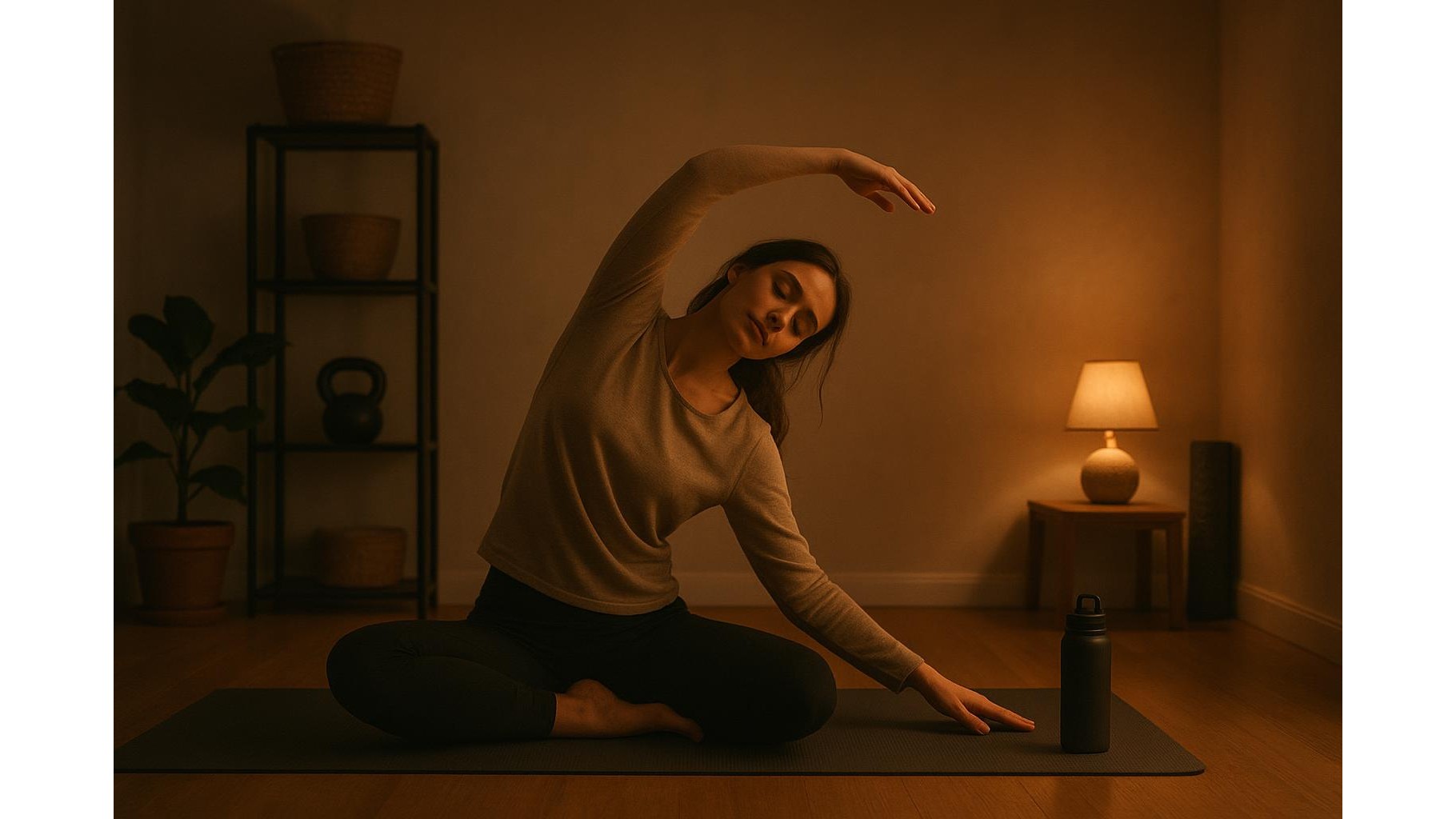
After a late home workout, it’s easy to feel wired instead of ready for bed. Your nervous system is still fired up, your muscles are buzzing, and blue light from screens can keep your brain on high alert. A simple, consistent evening wind-down routine helps you move from high-intensity training into genuine recovery, so you fall asleep faster and wake up fresher for your next session.
Shift from workout mode to recovery mode
The first step after your session is to deliberately switch from “go hard” to “slow down.” Start by dimming any harsh ceiling lights and putting your phone on silent or airplane mode. Sit or lie on a mat, and spend two to three minutes simply noticing your breath. Inhale through the nose for four counts, exhale for six to eight counts, and let your heart rate drop. This small pause signals your body that the workout is over and that it’s time for relaxation and recovery. From here, you can flow into gentle stretching, soothing lighting and calming rituals that prepare you for sleep instead of another adrenaline spike.
Simple stretching flows for tight, tired muscles
Post-workout, your goal is not to chase extreme flexibility but to release tension and restore normal muscle length. Focus on big chains that were involved in your training: calves, quads, hip flexors, glutes, chest and lats. Move through a slow sequence: low lunge for hip flexors, hamstring stretch, figure‑four glute stretch, then a doorway chest opener. Hold each position for 30–45 seconds while breathing steadily. Keep the intensity at around 5 out of 10: you should feel a strong but comfortable stretch, never pain. Regular evening stretching like this reduces next‑day soreness and helps your body switch from sympathetic “fight or flight” into parasympathetic “rest and digest.”
Breathing drills that actually calm you
To truly unwind your nervous system, pair your stretches with structured breathing exercises. Two accessible options are 4‑6 breathing and box breathing. For 4‑6 breathing, inhale through your nose for four seconds, then exhale gently for six; repeat for five to ten rounds, letting your exhale become soft and unforced. For box breathing, inhale for four, hold for four, exhale for four, hold for four. These patterns nudge your heart rate down and quiet mental chatter after intense home training. Aim to keep your shoulders relaxed and your jaw unclenched; the quality of relaxation matters more than the exact count.
Lighting and screen habits that support sleep
Light is one of the strongest signals for your internal clock. After an evening workout, bright white light and screens will trick your brain into thinking it’s still daytime. About an hour before bed, dim all overhead lights and use only warm, low‑intensity lamps. If you need screens, switch on blue‑light filters and lower brightness to the minimum comfortable level, and avoid stimulating content. Pair this with a tech‑free final 20–30 minutes where you stretch, read a physical book or journal. These small sleep hygiene tweaks make it easier for your body to release melatonin so you drift off instead of tossing and turning.
Small recovery habits that add up
An effective evening wind-down is built from repeatable habits, not complicated rituals. After training, rehydrate with water or an electrolyte drink, then take a lukewarm—not blazing hot—shower to help your body temperature start its natural nighttime drop. Lay out your gear for the next day so you’re not thinking about logistics in bed. Keep a short, consistent sequence: five minutes of stretching, five minutes of breathing, a few minutes of quiet reflection or gratitude. Over time, this routine becomes a cue: as soon as you start it, your body anticipates that sleep is coming. Consistency, more than perfection, is what transforms your home workout nights into genuinely restorative evenings.
By combining gentle stretching, calming breathwork, softer lighting and a handful of simple recovery habits, you can turn post‑workout evenings at home into a powerful tool for better sleep. Instead of lying awake feeling wired, you’ll slide into rest with a body that’s relaxed, a mind that’s quieter and a nervous system ready to rebuild. Treat your wind‑down as the final phase of your training, and your performance—as well as your overall wellbeing—will benefit with every session.









