
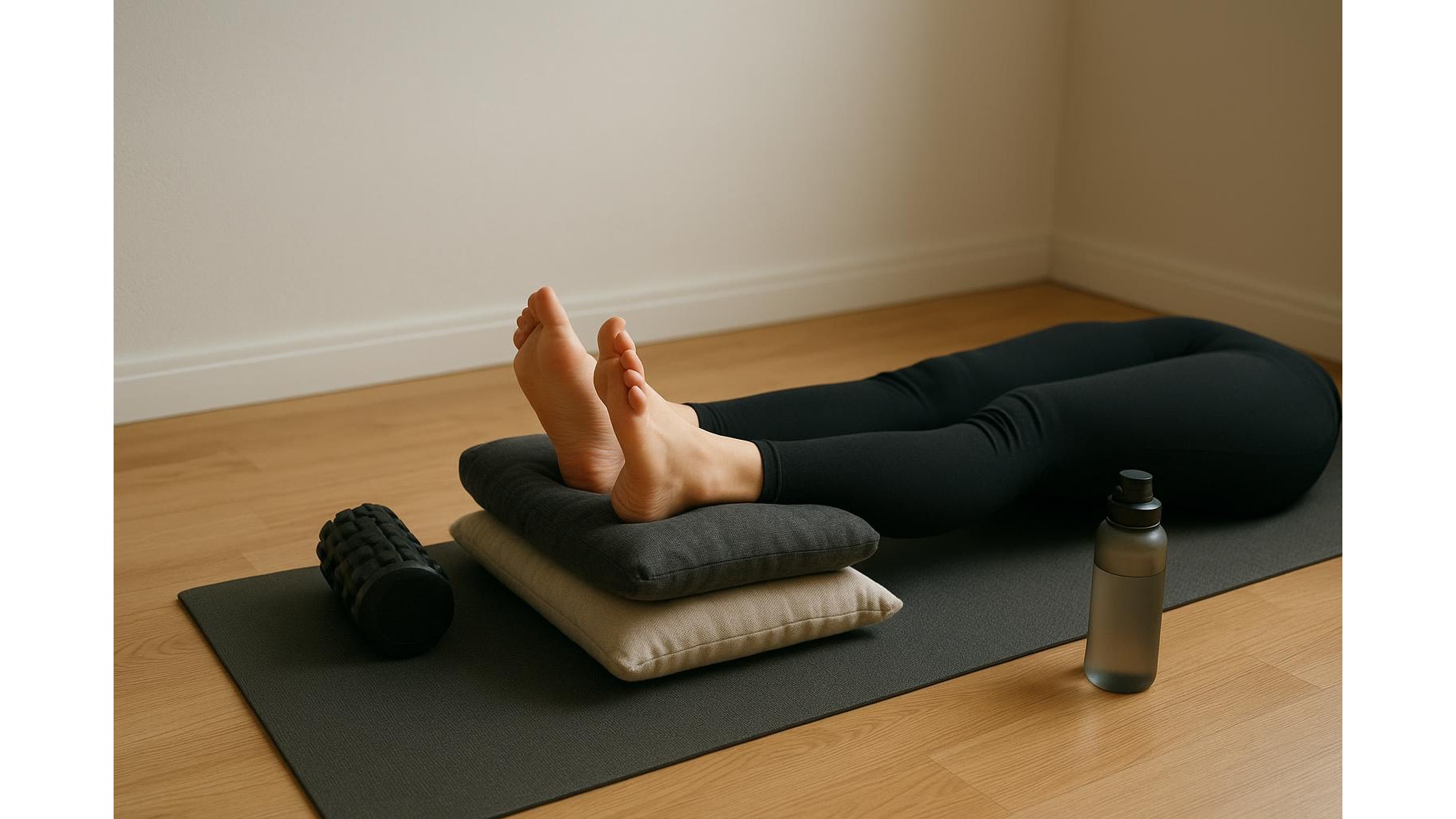
Long home workouts, heavy leg days and hours at a standing desk can all leave your ankles and calves feeling heavy and swollen. Creating a small, dedicated leg elevation corner at home makes it far easier to recover consistently, protect your joints and return stronger to your next training session. With the right mix of cushions, benches and simple wall positions, you can build an effective recovery setup even in a very small space.
Why elevating your legs matters after training
When you spend long periods standing or pushing through intense lower body workouts, fluid tends to pool in the feet, ankles and calves. Elevating your legs above heart level uses gravity to support venous return and lymphatic drainage, helping to reduce swelling, tightness and that throbbing “heavy legs” feeling. Just 15–20 minutes of comfortable leg elevation can ease post‑workout discomfort, support recovery after HIIT or strength sessions, and even make long standing‑desk days more sustainable. The key is making elevation easy to do every day, so your setup needs to be comfortable, stable and always ready.
Building a cushion‑based leg elevation corner
The simplest way to start is with a stack of firm cushions or yoga bolsters near your sofa or training area. Aim to raise your heels 15–30 cm above your hips while lying on your back. Use a denser cushion under your calves and a slightly softer one under your heels to avoid pressure points on the Achilles. Add a small folded towel under the knees if you struggle with hyper‑extended joints. To keep it hygienic after sweaty sessions, choose cushions with removable, washable covers and dedicate them specifically to your recovery corner. A nearby basket can hold extras like a light blanket or a small foam roller for quick calf massages while you are elevated.
Using a bench or ottoman for multi‑purpose elevation
If you already have a sturdy workout bench or ottoman in your home gym, it can double as a reliable leg elevation platform. Position the bench lengthways in front of a mat, lie on your back and rest your calves and heels flat on the bench so that your knees form roughly a 90‑degree angle. This “legs on bench” pose unloads the lower back as well as the legs, which is ideal after heavy squats or deadlifts. Add a folded mat under your hips if you feel any pull in the hip flexors. Because benches are typically firmer than cushions, consider placing a thin pillow or towel on top to avoid compressing the Achilles tendon while still keeping your legs well supported.
Wall‑based setups when space is limited
For very tight spaces, a simple wall‑supported leg elevation is often the most practical option. Lie on your back with your hips close to the wall and extend your legs vertically so your heels rest lightly against it. This position, inspired by yoga’s “legs up the wall” pose, encourages gentle drainage from the feet and ankles without needing any extra equipment. You can place a folded blanket under your pelvis for comfort or slide slightly away from the wall if your hamstrings feel tight. Even 10 minutes in this posture after a long standing‑desk day can noticeably reduce foot swelling. Keep a timer on your phone nearby so you can relax without watching the clock.
Extra comforts: massage, cold packs and routines
Once you have your elevation corner set, layering in small extras can enhance the effect. A basic foam roller or massage ball lets you target trigger points in the calves before or after elevating your legs, which may improve comfort. Lightweight cold packs wrapped in a towel can be placed gently over the ankles for short intervals to calm warmth and puffiness after particularly intense sessions. Build a consistent routine by pairing leg elevation with something you enjoy, such as an audiobook or breathing exercises, so it becomes a regular part of your recovery strategy rather than an occasional fix when things feel really sore.
When leg swelling needs medical attention
While occasional leg and ankle swelling after tough workouts or long standing periods is common, it should improve with rest, elevation and movement. Seek medical advice promptly if swelling appears suddenly without clear cause, affects only one leg, is accompanied by pain, redness, warmth, shortness of breath, chest pain or unexplained fatigue. Persistent or worsening swelling, even with regular elevation and active recovery, can indicate circulation issues, joint problems or other underlying conditions that need professional assessment. Use your home leg elevation corner as a helpful tool, but not a replacement for appropriate medical evaluation when symptoms are unusual or concerning.
Creating a simple, dedicated space to elevate your legs and feet at home can dramatically improve how you feel after demanding training blocks or long days on your feet. Whether you rely on a cushion stack, a solid bench or a wall‑based setup, the goal is the same: consistent, comfortable elevation that fits easily into your routine. Combined with gentle movement, adequate hydration and smart training loads, this habit supports circulation, reduces swelling and helps you walk into every session with lighter, more responsive legs.









