After a tough home cardio session, your feet, calves and knees can feel hot, swollen and sore. A simple DIY ice massage at home using frozen water bottles and cold packs can help reduce discomfort, calm inflammation and speed up recovery. With a bit of planning and the right technique, you can enjoy safe, effective local cooling without expensive equipment or risk to your skin.
Why use cold therapy after hard cardio?
Intense home cardio workouts increase blood flow and stress on the lower legs. This can lead to micro‑inflammation in the plantar fascia, calf muscles and knee joints. Applying local cold therapy helps by narrowing blood vessels, slowing nerve signals and reducing swelling. That means less throbbing and a faster return to pain‑free training. For most people, short sessions of ice massage after workouts are enough to feel immediate relief. The key is to apply cold in a controlled, time‑limited way and avoid using ice directly on bare skin.
How to use frozen water bottles for feet and arches
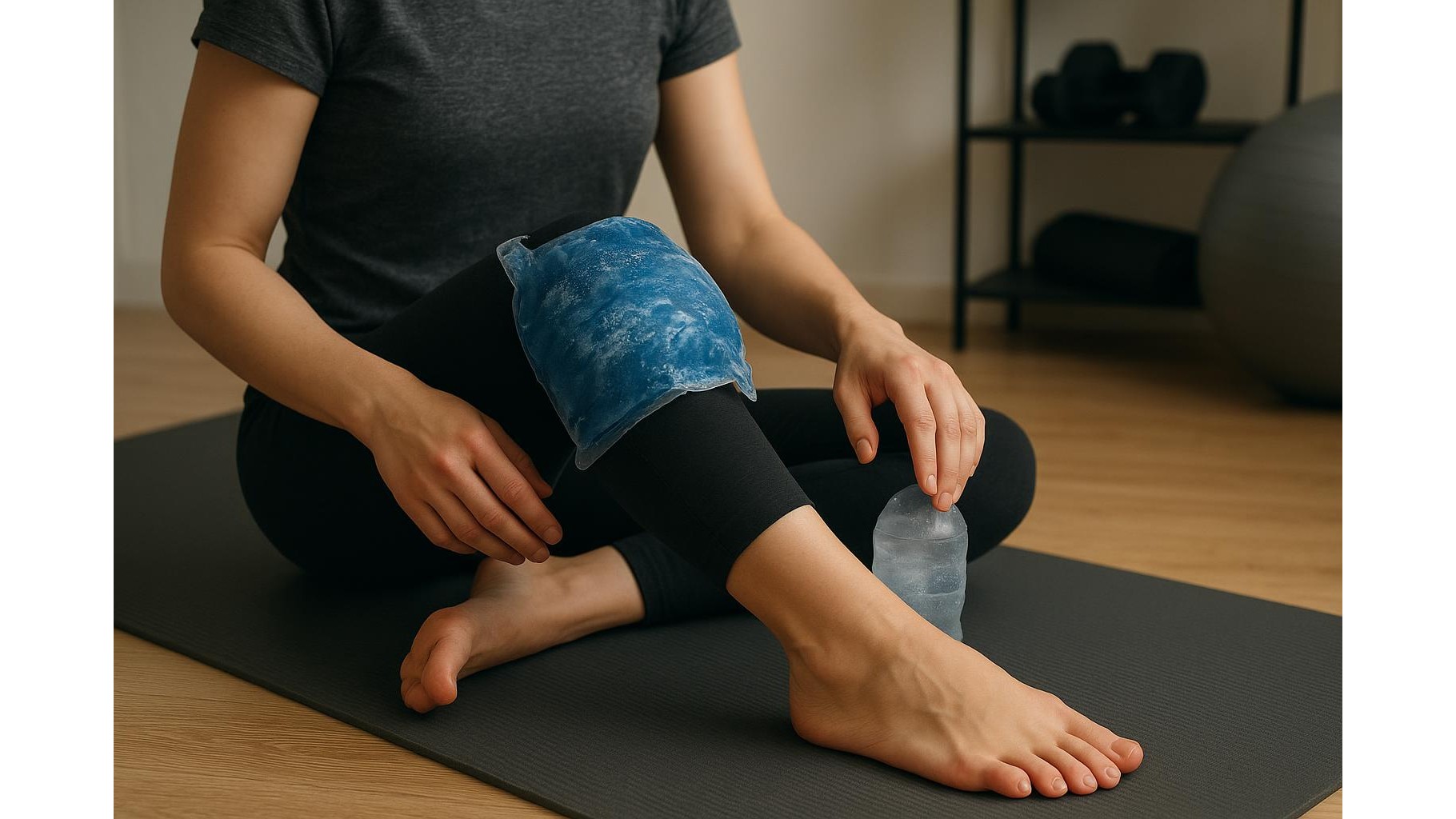
A simple frozen plastic water bottle is one of the best tools for DIY foot ice massage. Fill a small bottle three‑quarters full, leave the cap slightly loose while freezing to allow expansion, then tighten it when solid. Sit in a chair, place a thin sock on your foot for skin protection and roll the frozen bottle under your arch from heel to toes for 5–10 minutes per foot. Focus on tender spots on the plantar fascia, adjusting pressure by how much you lean. Aim for a cool, numbing sensation, never burning cold or sharp pain. Limit each total foot session to about 15 minutes and always let the skin return fully to normal temperature before repeating.
Using flexible cold packs for calves and knees
For calves and knees, a flat or flexible gel cold pack works better than a bottle because it molds around the joint and muscles. Wrap the pack in a thin towel or cloth to prevent frostbite, then apply to the sore area for 10–15 minutes. For calves, you can sit with your leg elevated and gently move your ankle up and down to combine cold with light mobilization. For knees, position the pack around the front or sides where you feel the most post‑cardio soreness, and avoid pressing directly on the kneecap. Stop immediately if your skin becomes very pale, hard, or painful, and never fall asleep with a cold pack on your body.
Timing, frequency and skin safety rules
For routine post‑workout recovery, applying cold therapy within the first hour after your cardio session is usually the most effective. Use cycles of 10–15 minutes on, followed by at least 30 minutes off to let your tissues re‑warm. Always place a barrier—thin sock, T‑shirt or kitchen towel—between skin and frozen surface, and regularly check your skin for redness, extreme paleness or numb patches. People with circulation problems, diabetes or known cold sensitivity should be especially cautious and may need medical advice before using ice. If in doubt, shorten sessions to 5–8 minutes and rely on gentle cool rather than deep, intense cold.
When to avoid ice and choose other recovery methods
Despite its benefits, ice massage is not always the right choice. Avoid cold therapy if you suspect a serious injury such as a fracture, if you have open wounds, or if swelling is severe and sudden after trauma—these situations require urgent medical assessment. People with conditions like Raynaud’s phenomenon or severe peripheral vascular disease should not use intense local cold at home. If you experience persistent pain, tingling, or weakness in your feet, calves or knees, switch to gentler methods like active recovery, light stretching, elevation and compression, and speak to a health professional. Used thoughtfully, a frozen bottle or gel pack can be a powerful tool; misused, it can delay healing.
In summary, a DIY ice massage at home with frozen water bottles and cold packs is an accessible way to cool down feet, calves and knees after demanding home cardio. By respecting basic rules—short sessions, protective layers, careful timing and an awareness of when to avoid cold—you can reduce post‑workout soreness while keeping your skin and joints safe. Listen to your body, adapt the protocol to your own tolerance and, if symptoms persist or worsen, consult a professional for tailored guidance.