After a tough home cardio session on the treadmill, bike or stepper, your lower legs often send you a clear message: tight calves and sore shins. Ignoring that post‑workout stiffness is one of the fastest ways to drift towards shin splints, Achilles issues or recurring calf strains. The good news is that you do not need a full physio kit to look after your lower legs. With nothing more than a wall, a step and a simple water bottle, you can build an effective at‑home recovery sequence that keeps your muscles supple and your cardio consistent.
Table of contents
Wall stretches to lengthen tight calves
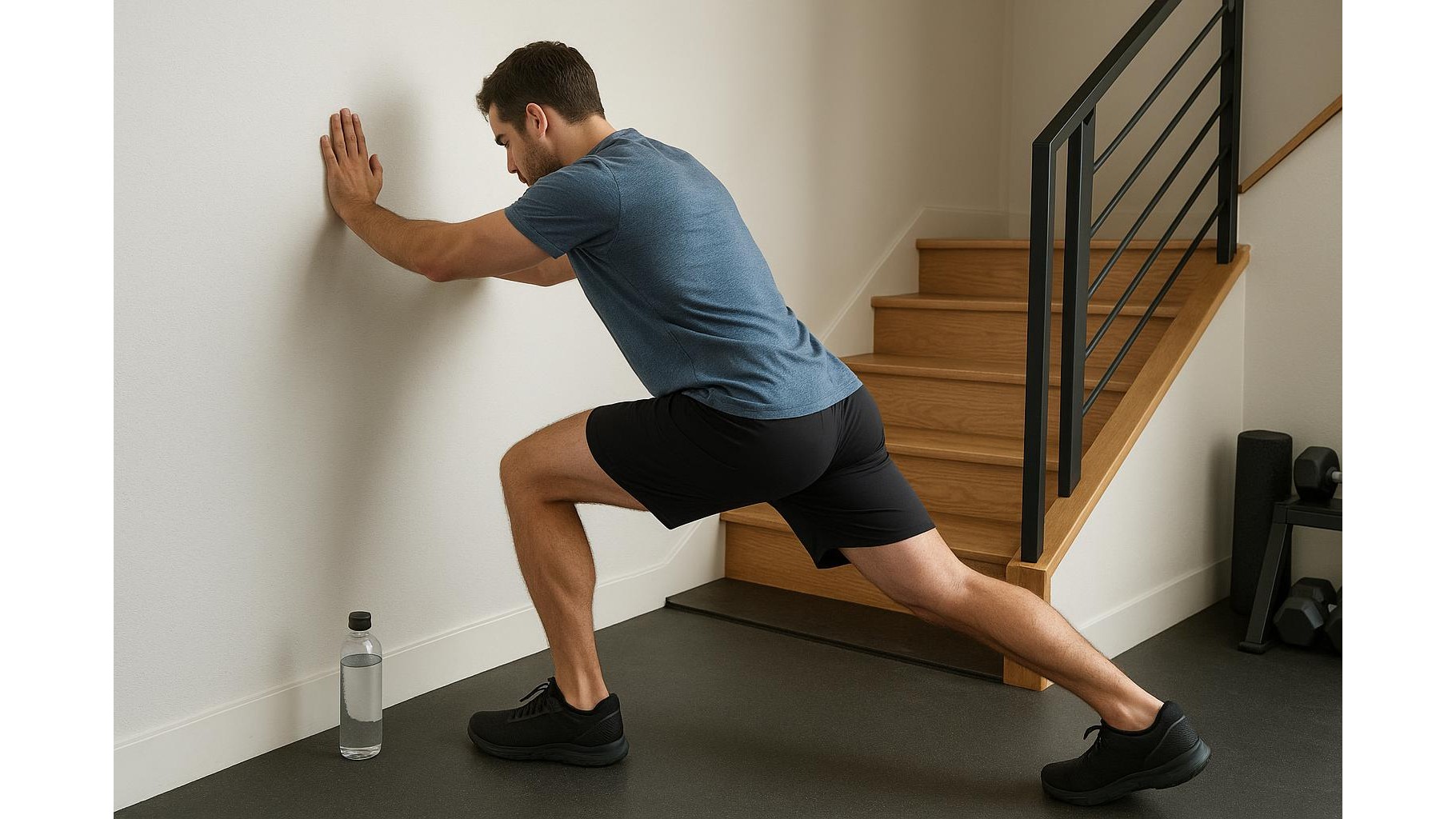
The wall is your best free tool for classic calf stretching right after your workout. Stand facing a wall, place your hands against it at shoulder height and step one foot back. Keep the back leg straight, heel pressed firmly into the floor, and lean your body weight towards the wall until you feel a strong but comfortable stretch down the back of the calf. Hold for 30–45 seconds, breathing slowly, then switch legs. To reach the deeper soleus muscle, bring the back foot a little closer, bend both knees and sink your hips gently towards the wall while keeping the back heel grounded. This two‑step wall routine helps restore length to the muscle fibres that have been repeatedly shortening with every treadmill push‑off or step‑up.
Step work for calf and shin mobility
If you have stairs or any sturdy step at home, you also have a simple mobility station for your calves and shins. Stand on the edge of a step with the balls of your feet planted and heels hanging off. Holding a rail or wall for balance, slowly drop both heels below step height to feel a lengthening stretch along the calves, then rise up onto your toes. Move with control for 10–15 repetitions. This pumps fresh blood through the lower leg and gently mobilises the ankle joint. To involve the shins, perform slow “toe lifts” on flat ground: sit or stand tall and repeatedly pull your toes towards your shins while keeping your heels down. This targets the tibialis anterior, the key muscle along the front of the shin that often gets irritated by repetitive impact.
Using a water bottle as a mini massage roller
You do not need a dedicated massage roller to release tight calves after home cardio. A simple plastic water bottle, filled and securely capped, works as a budget‑friendly self‑massage tool. Sit on the floor with one leg straight and place the bottle under your calf. Using your hands behind you for support, slowly roll the calf over the bottle from just above the ankle to just below the knee, pausing on tender spots and gently adding a little pressure. You can also place the bottle under the arch of your foot and roll from heel to toes to relax the plantar fascia, which indirectly reduces tension in the calf. This light, targeted pressure helps break up muscle tightness and supports better circulation without needing any specialised massage equipment.
Shin‑friendly cool‑down for high‑impact cardio
If your favourite home sessions involve brisk treadmill runs, high‑impact step workouts or intense skipping, your shins absorb a lot of repeated stress. A consistent cool‑down sequence can make the difference between healthy conditioning and nagging pain along the front of the lower leg. After every cardio session, walk slowly for 3–5 minutes to let your heart rate drop, then move into your wall calf stretches. Follow with seated toe circles—drawing big circles with your toes in both directions—to lubricate the ankle joint. Finish with 1–2 minutes of gentle water bottle rolling on each calf. Keeping this order—light movement, stretching, then soft tissue work—helps your muscles relax gradually and supports long‑term injury prevention.
Building a simple weekly lower‑leg routine
To really protect your calves and shins, treat recovery as part of your home training plan, not an optional extra. Aim to include these wall, step and bottle exercises after at least three cardio sessions per week. On rest or light days, spend five extra minutes exploring slightly longer stretches and slower bottle rolling to work on stubborn tight spots. Listen to your body: a mild, easing discomfort during stretching is fine, but sharp pain is a sign to stop and, if needed, consult a professional. Over time, you should notice less morning stiffness, smoother stride mechanics and more confidence to progress your treadmill, bike or step workouts without fearing the familiar burn in the shins.
Looking after your calf and shin health does not require fancy gadgets or a full gym set‑up. With a wall, a stable step and a simple water bottle, you can build an effective recovery ritual that fits your home routine and supports consistent cardio training. By combining smart stretching, controlled mobility and gentle self‑massage, you give your lower legs the care they need to stay resilient, reduce the risk of overuse injuries and keep you moving strong in every home workout.