After a tough home workout it’s tempting to skip the cooldown, but guided relaxation and breathing can be the difference between feeling wired and feeling restored. The good news: you don’t need an app or studio gear. With a basic smartphone and a simple script, you can record your own post-workout cooldown audio and reuse it every time you train. This tutorial walks you through scripting, pacing, voice tips, background sound ideas and how to build 5, 10 and 15‑minute versions tailored to your home sessions.
Why post‑workout audio cooldowns help home athletes
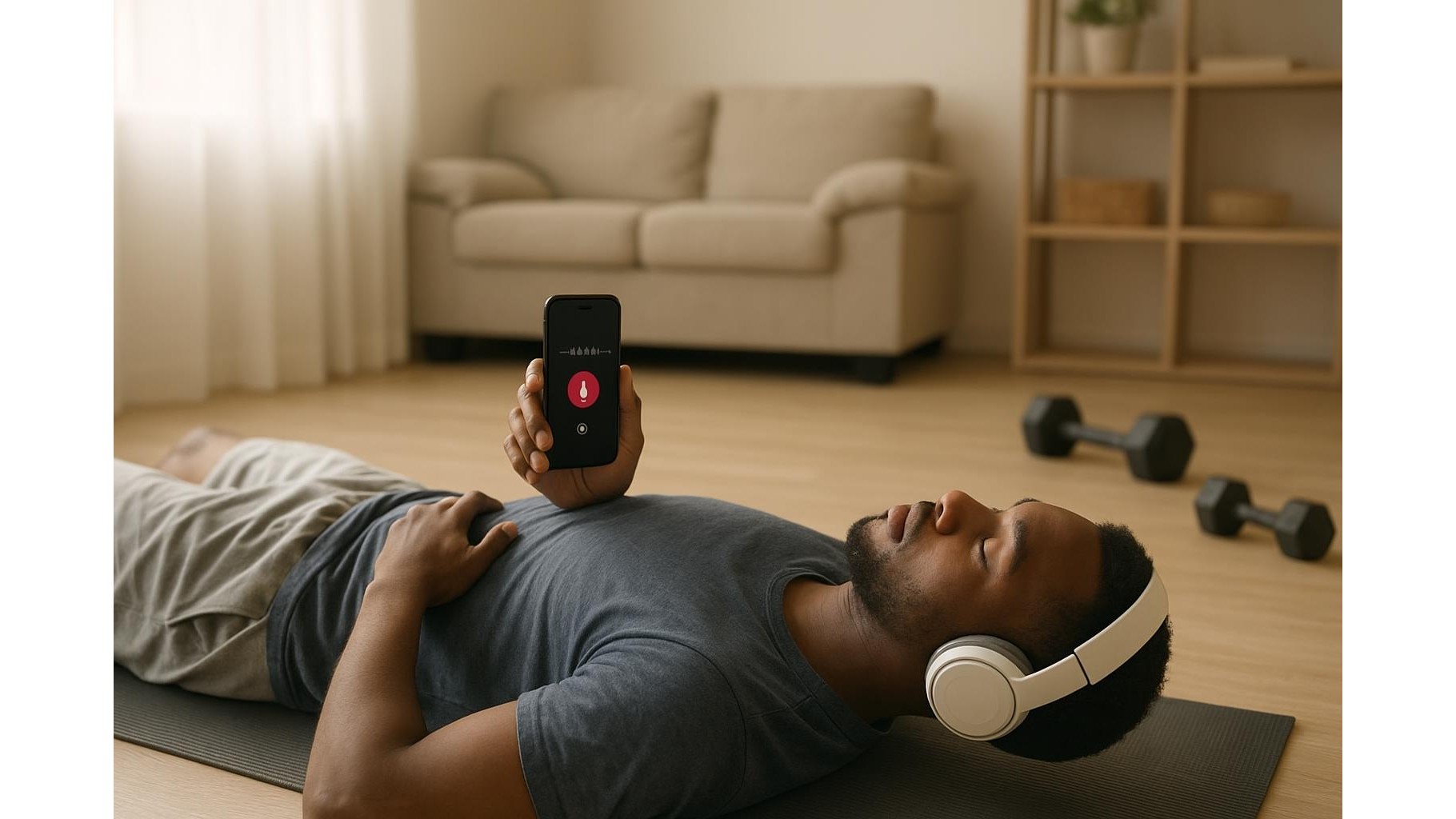
When you finish a workout, your heart rate, breathing and nervous system are still in “go” mode. A short, structured audio cooldown gives your body permission to switch into recovery. By focusing on slow breathing, relaxing muscle groups and gently scanning your body, you stimulate the parasympathetic nervous system, lower tension and improve sleep quality. For home athletes who train in small spaces or late at night, having a personal relaxation track ready on your phone removes friction: you just hit play, lie on a mat and follow your own calm voice instead of fighting distractions or scrolling through apps to find the perfect track.
How to script your first relaxation and breathing track
Start by choosing a simple structure: arrival (30–60 seconds of settling), breathing (2–5 minutes), body scan (2–8 minutes) and a short closing (30–60 seconds). Write in the second person, as if you’re guiding a friend: “Let your shoulders soften”, “Notice the weight of your body on the floor”. Keep sentences short and concrete, avoiding complex imagery at first. Build in silence by literally writing pauses: “(pause 5 seconds)”. Read the script aloud and time it with a stopwatch; most people speak around 120–140 words per minute in a relaxed tone. Trim anything that feels rushed and add reminders like “If your mind wanders, gently come back to your breath” to keep the track welcoming, not demanding.
Recording on your phone: voice, pacing and basic setup
You don’t need professional gear to get a clean voice recording. Use your phone’s built‑in voice recorder, switch on airplane mode and record in the quietest room you have—often a bedroom with soft furnishings. Sit or lie comfortably so your breathing stays steady. Speak slightly slower than normal conversation, and keep your voice warm and low without whispering (whispers create harsh, breathy noise). Smile a little while you talk; it naturally softens the tone. Leave real gaps after each instruction so listeners can actually follow them. Aim to record the whole script in one take, but don’t stress over tiny imperfections—authentic, calm guidance is worth more than studio‑perfect sound for a home cooldown audio.
Background sounds: when to add them and when to skip
Many athletes love gentle background sound behind their relaxation tracks, but it’s easy to overdo it. If your room is quiet, consider a very soft ambient track like white noise, rainfall or distant ocean waves played on another device while you record, or added afterward with a simple editing app. Keep the background much quieter than your voice so instructions remain clear, and avoid anything with lyrics or strong rhythms that pull attention away from breathing. In noisier homes, your priority is minimizing distractions: record at times when traffic, washing machines and household noise are lowest, or re‑record shorter sections if an interruption slips in. Simplicity helps your brain associate this audio with winding down after training.
Building 5, 10 and 15‑minute versions
Once you have a base script, create three length variations so you always have a cooldown that fits your workout. For a 5‑minute track, keep one minute of arrival, two minutes of focused breathing (for example, in for four counts, out for six) and a quick head‑to‑toe body scan. For a 10‑minute version, extend each body part by a few breaths and add more space between cues. For a 15‑minute track, slow everything further and include extra prompts such as relaxing the jaw, tongue and eyes, plus longer silent sections. Save each file with clear names like “Cooldown‑5‑post‑HIIT” so in your home gym routine you can instantly choose the right one and end every session with consistent, high‑quality relaxation.
A personal post‑workout cooldown audio is a simple DIY tool that makes your home gym feel more complete. By crafting a clear script, recording with attention to pacing and room sound, and offering yourself flexible 5, 10 and 15‑minute versions, you turn cooldowns from an afterthought into a habit. Over time, pressing play on your own voice becomes a powerful cue: training is done, recovery has started, and your body can shift into a calmer state ready for the rest of your day.