
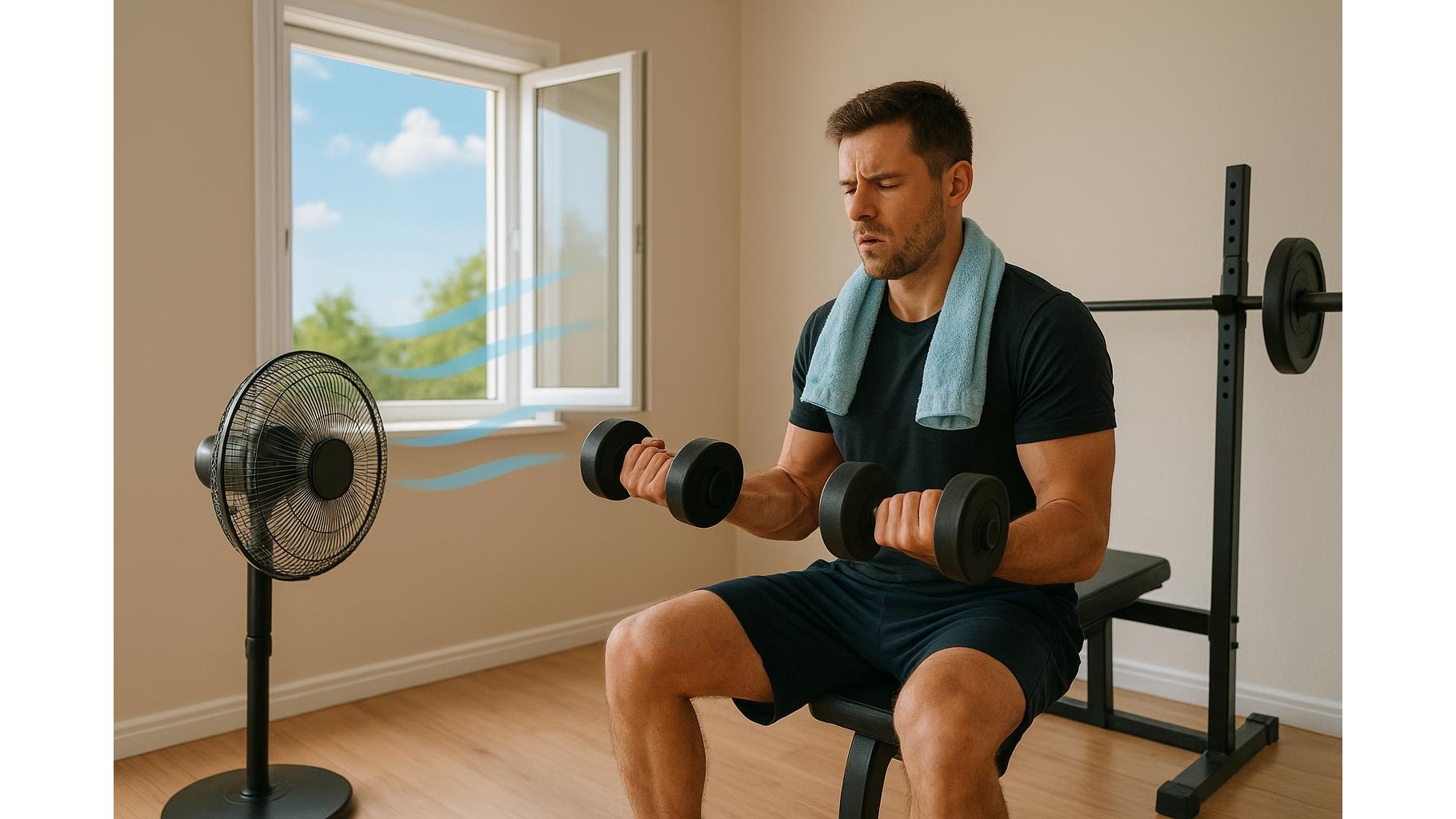
Training in a small, stuffy home gym can quickly turn from energising to exhausting when the temperature rises. Without air conditioning or good airflow, your heart rate spikes faster, sweat drips everywhere and performance drops. The good news is that you do not need expensive gadgets to stay comfortable. With simple tools like household fans, cooling towels, smart hydration and better session planning, you can keep your body temperature under control, protect recovery and still enjoy intense workouts even in the hottest months.
Use fans to move air, not just blow heat around
A basic oscillating fan can make a huge difference in a compact home gym if you position it correctly. Instead of pointing a fan straight at your face on maximum power, angle it so that it blows across your entire body from the side, helping sweat evaporate more efficiently. Place the fan about one to two metres away, roughly chest height when you are standing, and let it sweep the space. Combining a standing fan with a smaller desk fan aimed at your back during bike or rowing sessions can create a strong cooling effect without blasting your eyes. Remember that air movement does not lower room temperature, but by speeding up evaporation it helps your body dump heat faster and feel less fatigued.
Cold towels and cloths as simple body coolers
One of the most effective low-tech tools for staying cool is a cold towel. Soak a small microfibre towel in cold water, wring it out and keep it in a bowl or container in your gym area. Apply it to high-blood-flow areas like the back of the neck, wrists, inner elbows and forehead during rest periods. This supports cooling from the outside while your fan helps from the air side. For longer sessions, rotate two towels: keep one in the fridge before training if possible and swap them every 10–15 minutes. Avoid placing ice directly on your skin for too long, as it can be uncomfortable and limit blood flow; a slightly chilled, damp towel is often enough to bring your temperature and perceived exertion down between sets.
Hydration habits that actually support cooling
Staying cool is not only about what you put on your skin but also what you put in your bottle. Start your session already well hydrated by drinking a glass of water 30–45 minutes beforehand. During training, sip small amounts regularly rather than chugging a full bottle at once, which can sit heavily in your stomach. In very hot, humid rooms, you lose more fluid and electrolytes through sweat, so adding a pinch of salt or a light electrolyte tab to your water can help maintain fluid balance and reduce headaches or post-workout dizziness. Use a reusable, insulated bottle to keep drinks cool and keep it within arm’s reach of your main training area so you do not skip sips during supersets and circuits.
Smart breaks, pacing and workout design
Good session structure is a powerful cooling tool. On hot days, reduce continuous high-intensity blocks and build deliberate rest into your plan. For example, alternate heavier strength sets with low-intensity mobility, or use every third set as an extended rest where you walk slowly, use your fan and apply the cold towel. Shorten high-intensity intervals slightly and increase rest periods so your heart rate can drop properly. Train the most demanding exercises, like squats and deadlifts, earlier in the session when you are fresher and the room is slightly cooler. If you can, schedule your workouts for early morning or late evening when outside temperatures are lower, and keep session length reasonable to avoid prolonged exposure to heat stress.
Optimising the room: airflow, layout and clothing
Even a tiny home gym can feel cooler with a few layout changes. Whenever possible, open opposite windows or a door and a window to create a cross-breeze, using your fan to pull cooler air in and push warm air out. Keep equipment slightly away from walls to allow air to circulate and avoid stacking foam mats, boxes or storage units in corners where heat tends to build. Wear light, breathable training clothes made from moisture-wicking fabrics rather than heavy cotton, which stays wet and traps heat. Train with a small, dry towel nearby to manage sweat on your hands and equipment, reducing the risk of slipping while also supporting evaporation from your skin across a larger surface area.
Cooling down effectively in a small home gym does not require advanced technology or major renovations. By combining well-placed fans, simple cold towels, consistent hydration, smarter workout pacing and basic room optimisation, you can stay safer and more comfortable while still pushing for progress. These strategies help control perceived effort, protect performance and speed up recovery, so your home workouts remain sustainable even through the hottest days of the year.









