If you finish your home workouts by slamming your laptop shut and heading straight to the shower, you are not alone. Many people dislike traditional stretching, yet skipping any sort of cooldown can leave you wired, sore and stiff the next day. A short, breath-first cooldown done in 5–10 minutes can quietly lower your heart rate, calm your nervous system and reduce tightness without a single hamstring stretch. All you need is your body, a bit of floor space and a willingness to slow down.
Why a breath-first cooldown beats “no cooldown”
After a tough session in your home gym, your body is still in a high-alert mode: heart rate elevated, breathing shallow, nervous system revved up. If you simply stop, that stress state lingers. A breathing-centered cooldown gives your body a clear signal that the work is over. By focusing on slow, deep exhales, you recruit the parasympathetic nervous system – the “rest and digest” side – which helps lower heart rate, decrease tension and support recovery. Even if you hate stretching, you can commit to lying on the floor and breathing for a few minutes. This simple shift can reduce next‑day soreness and make your next workout feel easier.
The 5–10 minute breath-first cooldown routine
This at-home cooldown is designed for people who want maximum benefit with minimal fuss. Aim for 6–10 slow breaths per minute and move through each position without forcing any stretch.
- Minute 1–2: Floor reset – Lie on your back, knees bent, feet flat. Place one hand on your chest and one on your belly. Inhale quietly through the nose, exhale slowly through the mouth like you are fogging a mirror. Try to make the exhale longer than the inhale.
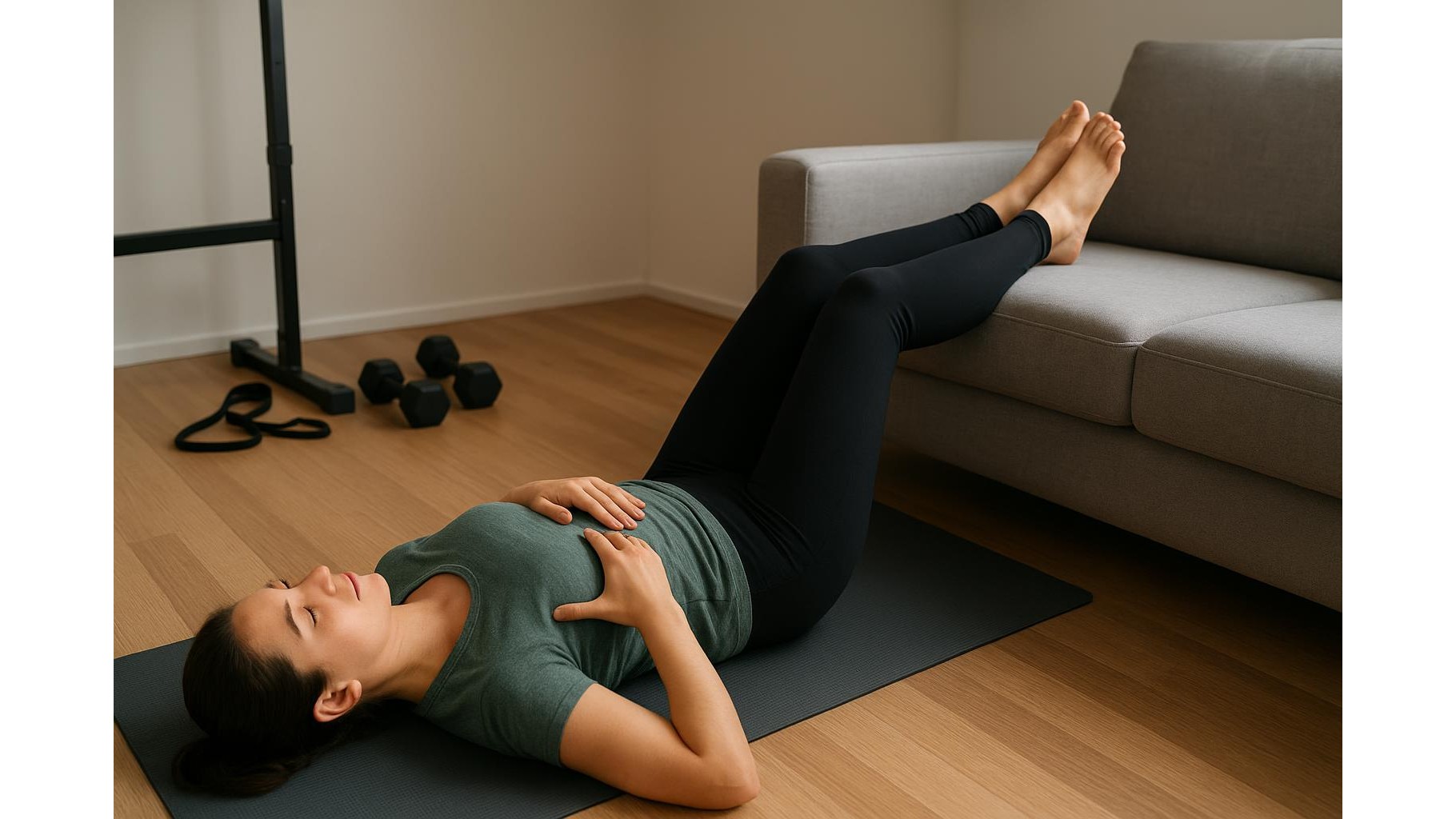
- Minute 3–4: 90–90 wall breathing – Lie on your back with your calves on a chair or sofa, hips and knees at 90 degrees. Lightly press your heels down and feel your lower back gently settle into the floor. Keep breathing slowly, emphasising soft, complete exhales.
- Minute 5–6: Side-lying decompression – Lie on your side with knees slightly bent, head supported by a cushion. Hug your top arm across your body and breathe into the back of your ribcage, letting your shoulders melt towards the floor.
- Minute 7–8: Supported child’s pose – Kneel and sit back towards your heels, chest resting on a cushion or folded blanket. Reach your arms forward or let them rest by your sides. Breathe gently, letting your ribs expand into the cushion.
- Minute 9–10: Seated box breathing (optional) – Sit comfortably on a chair or on the floor. Inhale for 4 seconds, hold for 4, exhale for 4, hold empty for 4. Repeat, keeping shoulders relaxed and jaw soft.
How breath work reduces stiffness without stretching
Most people think reduced stiffness only comes from pulling on muscles with long static stretches. In reality, breath control changes how your entire system experiences tension. Long, easy exhales reduce sympathetic drive, which lowers baseline muscle tone – in other words, muscles are less “switched on” and guarding. Breathing into different positions, like 90–90 or supported child’s pose, subtly shifts your ribcage and pelvis, improving movement quality in your hips, spine and shoulders without forcing range of motion. Over time, consistent breath-first cooldowns can make your regular movements – squats, presses, even walking up stairs – feel smoother and more comfortable, all with far less discomfort than classic stretching routines.
Simple gear that makes cooldowns easier to stick to
One advantage of a breath-focused cooldown is that it requires almost no equipment, which suits small home gyms and busy schedules. A yoga mat or soft rug makes floor positions more comfortable. A firm cushion or folded blanket can support your head or chest so you can completely relax. If you like a sense of ritual, keep a dedicated “recovery corner” in your workout space: mat rolled out, cushion ready, maybe a small timer so your 5–10 minutes do not run away from you. The less friction you have between finishing your last rep and lying down to breathe, the more likely you are to actually do it after every session.
Making breath-first cooldowns a habit you actually enjoy
For people who dislike stretching, the goal is not perfection but consistency. Start by committing to just 3 minutes of post-workout breathing at the end of any home session: bodyweight circuits, bike intervals, resistance bands, it all counts. Pair your cooldown with something you enjoy – a favourite playlist, dimmer lights, or simply the quiet after your workout. Track how you feel the next morning: less wired, fewer random aches, better sleep. Those small wins build motivation. Over a few weeks, you will likely find that this short, breathing-centered routine becomes a non‑negotiable part of training, helping you recover better, train more consistently and stay active without ever forcing a toe touch.
In summary, you do not need to love stretching to finish your workouts well. A simple, breath-first cooldown done at home in 5–10 minutes can lower your heart rate, calm your nervous system and reduce next‑day stiffness with minimal effort. By lying down, breathing slowly and using a few comfortable positions, you give your body the recovery signal it needs so you can keep showing up strong for your next session.