Post-workout recovery is not only about protein shakes and stretching. Your breathing is one of the fastest levers you can pull to shift your body from a high-intensity, fight-or-flight mode into a calmer, recovery-focused state. Two evidence-based techniques, box breathing and cyclic sighs, are simple, quiet and perfectly suited to a home gym environment. With just a mat and a comfortable position, you can lower your heart rate, relax your muscles and even prime yourself for better sleep after late training sessions.
Why breathing matters for home workout recovery
Hard training ramps up your sympathetic nervous system: heart rate increases, breathing becomes shallow and fast, and stress hormones spike. Recovery, however, depends on activating the parasympathetic nervous system, the “rest and digest” branch that slows the heart and relaxes tissues. Intentional breathing drills are one of the most direct ways to flip this switch. By slowing your breath and controlling exhales, you stimulate the vagus nerve, which tells your body it is safe to downshift. This can help reduce post-workout jitters, loosen tight muscles and support better recovery overnight, especially if you train at home in the evening.
How to do box breathing step by step
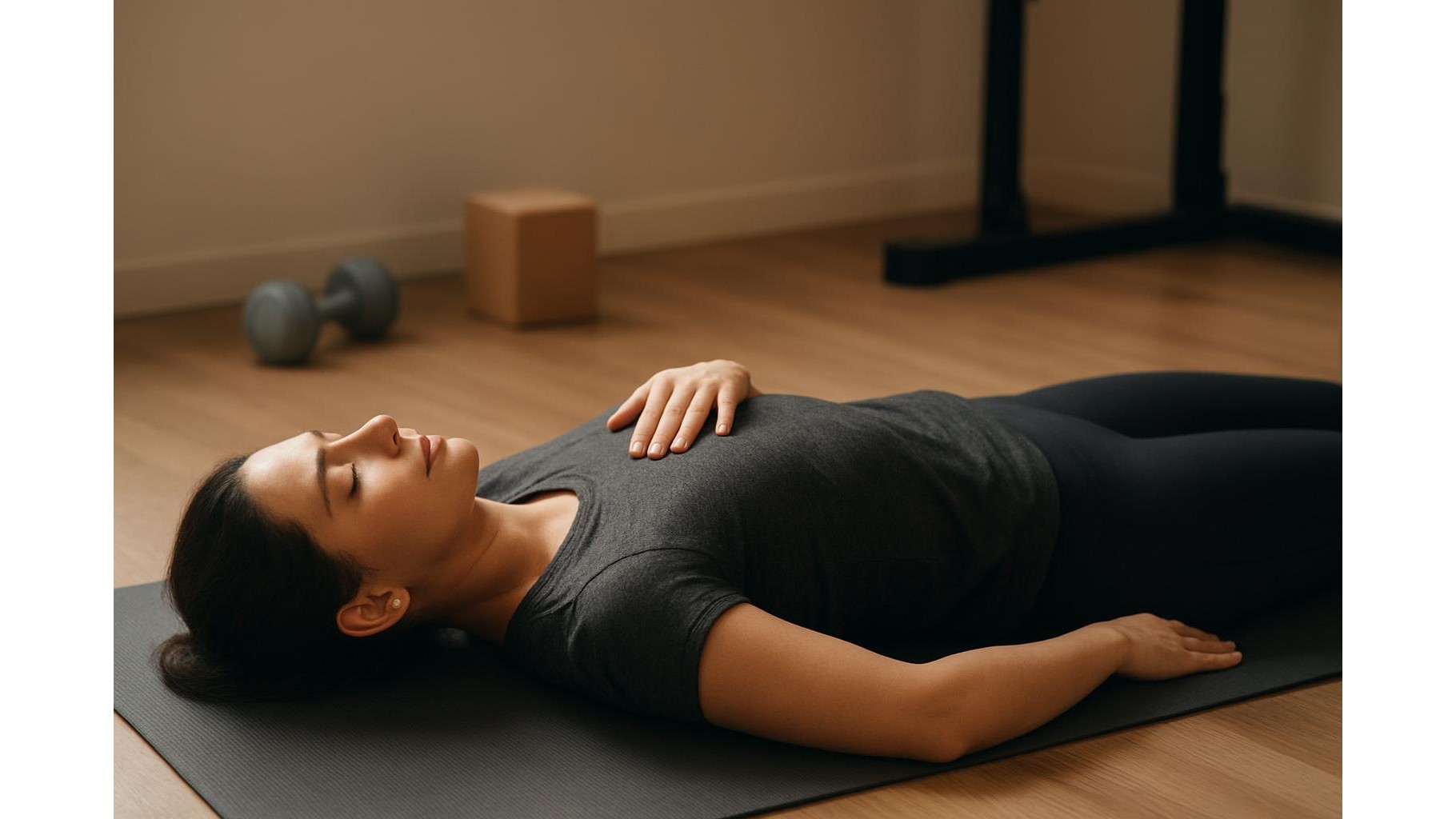
Box breathing is a four-part pattern: inhale, hold, exhale, hold, all for the same count. After your workout, lie on a yoga mat or sit upright on a firm cushion. Breathe in through your nose for a slow count of four, feeling your ribs and belly expand. Hold that breath gently for four, then exhale through your nose for four, emptying fully. Pause with empty lungs for four before starting the next cycle. Aim for 3–5 minutes, keeping the breath smooth and quiet. This regular rhythm sends a strong signal of safety to the brain, helping lower heart rate variability after intense sets and easing you into a more relaxed recovery state.
Using cyclic sighs to rapidly reduce stress
Cyclic sighs are a powerful, science-backed way to quickly calm the nervous system. To perform one, take a deep nasal inhale, then add a second, shorter inhale on top to completely fill the lungs. Follow with a long, unforced exhale through the mouth, as if fogging a mirror, allowing the chest to deflate. This double inhale followed by an extended exhale helps offload carbon dioxide and reset your breathing chemistry. Try 5–10 cyclic sighs immediately after your final set or before your post-workout stretching. Many people notice a rapid drop in internal tension, softer shoulders and a quieter mind, which together support faster recovery and smoother transition into the rest of your day.
Practical tips: when and how often to breathe
To get the most from these techniques, integrate them into your existing home gym routine rather than treating them as an optional extra. After resistance training or HIIT, start with 2–3 minutes of cyclic sighs to quickly bring your arousal down, then follow with 5 minutes of box breathing. If you train at night, this combo can act as a bridge into your evening wind-down, helping you fall asleep more easily. On rest days, use box breathing in the morning to reduce baseline stress and in the evening to improve sleep quality. Consistency is key: brief, daily sessions will do more for your recovery and performance than occasional marathon sessions.
Common mistakes and how to avoid them
Because these drills feel simple, it is easy to rush or overdo them. One common mistake is breathing too forcefully, which can actually increase tension. Keep every inhale and exhale quiet and controlled. Another error is holding your breath so long that you feel panicky or dizzy; shorten the counts if needed and never push to discomfort. Avoid slumping on the sofa with your head kinked forward; instead, lie flat or sit upright so your diaphragm can move freely. Finally, expect gradual change: while some people feel calmer after just a few breaths, the real benefits for recovery, muscle relaxation and sleep build up when you practice these techniques after most workouts.
From breathing drills to better performance
Box breathing and cyclic sighs are minimalist tools, but they have a disproportionate impact on how quickly you bounce back from training. By consciously shifting your body into a recovery-focused state, you support better muscle repair, steadier mood and more restorative sleep, all without adding complex gadgets to your home gym. Treat these drills like any other skill: start small, track how you feel and refine your technique over time. As your breathing becomes calmer and more efficient, you will likely notice improved performance in your next sessions and a more sustainable, enjoyable approach to home fitness.