After an intense home cardio workout, it is common to feel tightness in the neck, jaw and upper traps. Shallow breathing, shoulder shrugging and jaw clenching all increase tension and can contribute to headaches and lingering stiffness. A short, gentle mobility and breathing routine done right after training can calm your nervous system, release tight muscles and make recovery smoother, especially if you train in a home gym and spend many hours at a desk.
Set up your breathing and posture for release
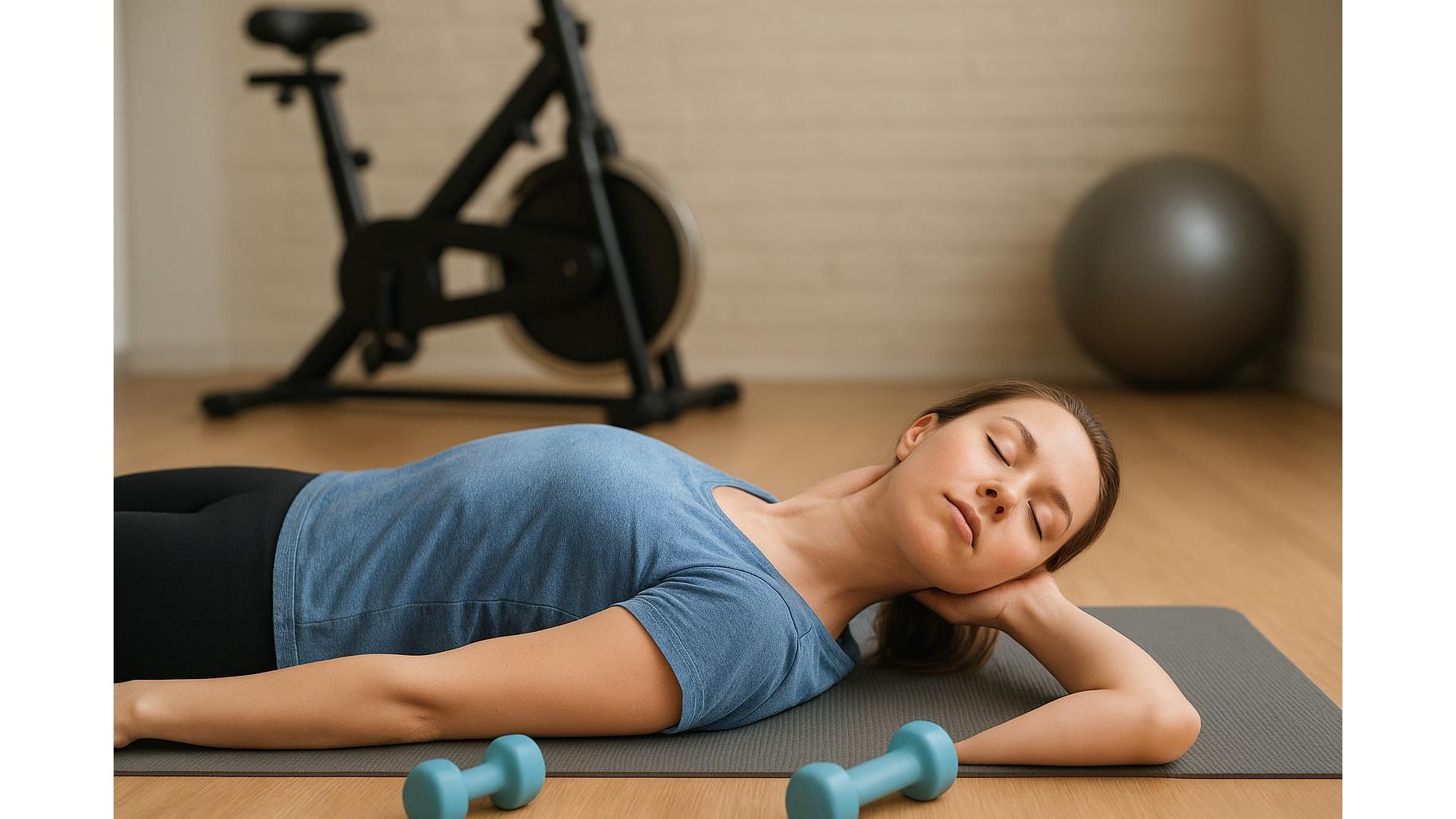
Start by lying on the floor or on a firm mat with your knees bent and feet flat. Place one hand on your chest and the other on your belly. Close your eyes and take 8–10 slow breaths through the nose, focusing on expanding the lower ribs and belly instead of lifting the chest. This diaphragmatic breathing reduces over‑activity in the neck muscles that often work too hard during cardio. Lightly press the back of your head into the floor for three seconds, then relax for three seconds, repeating 5 times. This gentle activation helps reset neck alignment without aggressive stretching and prepares your muscles for the rest of the routine.
Gentle neck mobility: slow arcs and nods
From the same lying position, perform small, slow movements with the head. First, imagine drawing a tiny “yes” nod, bringing the chin slightly towards the throat and then back to neutral, for 8–10 repetitions. Keep the range of motion pain‑free and smooth. Next, draw a tiny “no” motion, turning the head a few centimetres to the right and left, as if moving on a very well‑oiled hinge. These neck mobility drills hydrate the joints and release superficial tension without forcing end‑range stretches that can irritate sensitive tissues after high‑intensity exercise. Always move with the breath: exhale as you move, inhale as you return to centre.
Jaw relaxation and tongue placement
Jaw clenching is a hidden source of post‑cardio headache. Sit upright on a chair, feet grounded. First, gently massage the cheeks and the area in front of your ears with your fingertips, making small circles for 30–60 seconds. Then place the tip of your tongue on the roof of your mouth just behind the front teeth, letting your molars slightly separate. Breathe in through the nose and out through the mouth with a soft “ha” sound, 6–8 times. On each exhale, consciously soften the jaw, lips and forehead. You can also say a quiet “mmm” hum on the exhale to create a vibration that encourages jaw relaxation and down‑regulates tension around the temples.
Upper trap and shoulder release
To relieve the upper traps and shoulders after burpees, mountain climbers or kettlebell swings, move to a seated or standing position. Let your arms hang heavy. On an exhale, drop your shoulders down and slightly back, as if sliding them into your back pockets. Hold for three seconds, then relax. Repeat 10 times. Follow with slow, controlled shoulder rolls, 8 forward and 8 backward. Finally, gently bring your right ear towards your right shoulder without lifting the shoulder, hold for 3 slow breaths, then switch sides. Instead of pulling on the head with your hand, think of lengthening the opposite side of the neck away from the shoulder. This keeps the stretch gentle and joint‑friendly while effectively reducing tightness.
Integrating the routine into your home workouts
This neck and jaw relaxation routine works best when integrated consistently at the end of your home cardio sessions. Aim for 5–8 minutes after each workout, before you check your phone or sit back at your desk. You can also use parts of it on rest days, especially the breathing and jaw release sections, to manage stress‑related tension. Over time, you may notice fewer post‑workout headaches, improved posture and a calmer transition from intense effort back to daily life. Treat this routine as a non‑negotiable part of your training, just like your warm‑up: it is a small investment that keeps your neck, jaw and shoulders comfortable so you can keep progressing in your home fitness journey.
In summary, combining slow diaphragmatic breathing, controlled neck mobility and targeted jaw and upper trap relaxation creates a simple, equipment‑free recovery ritual you can do in any home gym. By consistently practising these gentle drills right after high‑intensity sessions, you help your body switch from “go” mode to recovery, reduce accumulated tension and support long‑term joint health and comfort.