
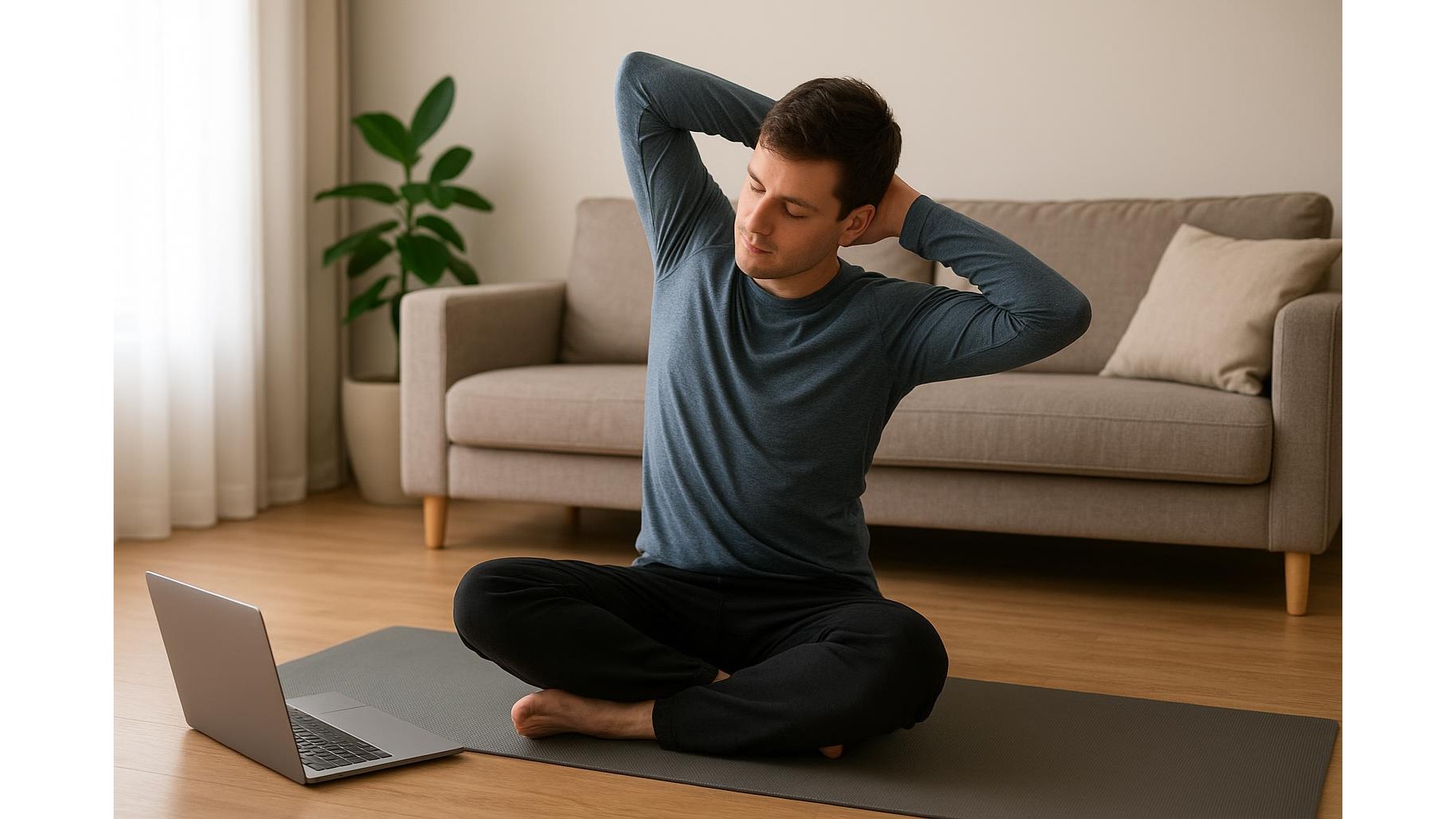
Long days sunk into the sofa or hunched over a laptop can leave your shoulders and upper back feeling tight, achy and tired. The good news is that you do not need a full gym or a professional massage to start feeling better. With a mix of simple mobility drills, light strength work and basic self‑massage, you can undo a lot of the stiffness created by poor sitting posture, all in your living room and in just a few minutes per day.
Reset your posture with easy mobility
Before you think about strength, give your joints room to move. Start with gentle thoracic spine mobility: sit tall on the edge of a chair, cross your arms over your chest and slowly rotate to the left, then to the right, taking 8–10 smooth reps per side. Follow this with shoulder circles, rolling your shoulders up, back and down in big, slow loops. Add a simple chest opener: clasp your hands behind your back (or grab a towel) and gently lift your knuckles away from your body while keeping your ribs down. These moves help reverse the rounded, slouched position that long sofa or home office sessions create, and they prepare your muscles and joints for the next drills.
Wake up weak muscles with light strength work
Stiffness is often a sign that some muscles are overworking while others are underused. Focus on lightly strengthening the upper back and scapular stabilisers. Try a simple wall slide: stand with your back against a wall, elbows and wrists touching the wall if possible, then slide your arms up and down like a goalpost for 10–12 reps. Add a prone Y‑raise on the floor or sofa: lie face down, arms overhead in a Y shape, thumbs up, and gently lift your arms a few centimetres, holding for 2–3 seconds. Two or three sets of these exercises, three times per week, can improve posture, reduce shoulder fatigue and make sitting feel less taxing on your body.
Use simple self-massage to release tension
Self‑massage can complement mobility and strength work by relieving trigger points and encouraging blood flow. If you have a basic massage ball or even a tennis ball, place it between your upper back and a wall, then slowly roll over the tight areas around your shoulder blades, pausing on tender spots for 20–30 seconds while breathing deeply. You can do a similar drill seated, placing the ball between your upper back and the backrest of a firm chair. Keep the pressure moderate rather than aggressive; the aim is to ease tension, not to bruise the tissue. Spend 3–5 minutes on each side to finish your routine feeling looser and more relaxed.
Build a quick living-room recovery routine
To make at‑home recovery stick, create a short, repeatable routine you can perform daily. A simple structure could be: 3 minutes of mobility (rotations, shoulder circles, chest openers), 5 minutes of light strength (wall slides and Y‑raises), and 5 minutes of self‑massage with a ball. You can break this up during your workday as movement snacks—for example, one block mid‑morning and one mid‑afternoon—to interrupt long bouts of sitting. Aim to move with control and focus on quality rather than intensity. Over time, this small investment pays off in less pain, better posture and more energy at the end of the day.
Healthy habits beyond the exercise mat
Recovery for your shoulders and upper back does not end when your routine is over. Small changes in your daily habits make a big difference. Try to support your lower back with a cushion instead of slumping into the sofa, raise your laptop closer to eye level, and set a timer to stand up and walk every 30–45 minutes. When you sit, think “tall and relaxed”: feet flat on the floor, chest gently lifted, shoulders soft, chin slightly tucked. Combining these habits with regular mobility, light strengthening and self‑massage creates a sustainable at‑home strategy to keep your upper body comfortable, even during long days at the sofa or in your home office.
With just a few targeted drills and simple tools, you can turn your living room into an effective recovery space for tight shoulders and a stiff upper back. Consistent mobility work, light strengthening and gentle self‑massage help undo the damage of slouching and laptop work, so you move more freely and feel better in your body throughout the day.









