At-home myofascial release with foam rollers and massage balls can be a game changer for easing tight muscles, improving mobility and supporting recovery between workouts. Used correctly, these simple tools help you target sore spots, undo desk-posture stiffness and keep your home training sustainable. Used incorrectly, they can irritate tissues, aggravate pain or delay recovery. This guide walks you through safe techniques, how much pressure to use and practical routines you can follow in your home gym.
Table of contents
Benefits of at-home myofascial release
Myofascial release focuses on the fascia, the web of connective tissue that surrounds muscles. Long hours at a desk, intense training or poor posture can make these tissues feel stiff and achy. Regular sessions with a foam roller or massage ball can reduce perceived muscle tension, improve short-term range of motion and support recovery after strength or cardio sessions. While it is not a cure-all, integrating short bouts of self-massage into your weekly routine can help you move more freely, get into better lifting positions and feel more comfortable before and after workouts at home.
Choosing the right tools for your body
For most home users, a medium-density foam roller around 90 cm is a safe and versatile choice, offering enough firmness to stimulate tissues without feeling brutally hard on sensitive areas. A softer roller suits beginners or very sore athletes, while textured, extra-firm rollers are better left to experienced users who already tolerate pressure well. Massage balls (lacrosse-style or rubber) are ideal for pinpoint work on the glutes, hip rotators, upper back and feet, where a roller cannot reach. Start with a ball that has a little give rather than a rock-hard surface, so you can explore pressure levels gradually and keep your nervous system relaxed instead of bracing against pain.
Safe technique and pressure guidelines
When you roll at home, aim for mild to moderate discomfort—never sharp, burning or electric pain. Place the muscle you want to target on the roller or ball, support your weight with your hands or opposite leg, and slowly roll an area of about 10–15 cm. Spend 30–60 seconds per spot, breathing slowly through your nose. If you find a tender point, pause and hold gentle pressure while taking 5–10 slow breaths, then move on. Avoid rolling directly over joints, the lower back without support, or recent injuries. A useful rule: the day after a session you should feel looser, not bruised or more restricted. If you do, reduce the pressure, duration or frequency.
Foam roller routine for lower body and back
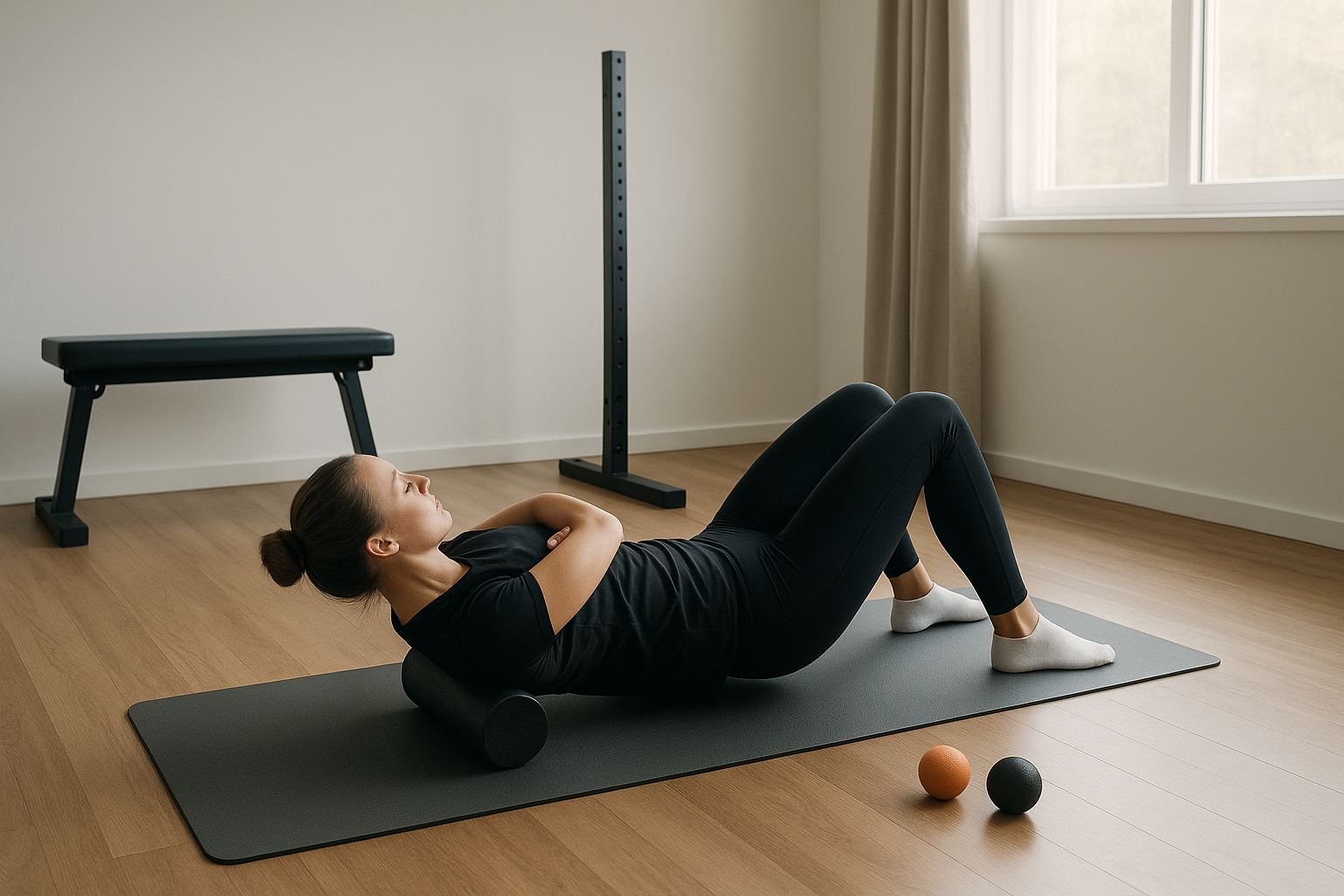
For a balanced lower-body foam rolling routine, start with the calves, placing one leg on the roller and using your arms to move your body forward and back. Progress to the hamstrings, glutes and hip rotators, gently shifting side to side to find tight bands. For the quads, lie face down with the roller under the front of your thighs, supporting your weight with forearms. Finish with the upper back: lie with the roller across your mid-back, hands supporting your head, and roll from mid-back to just below the shoulders, avoiding the neck and lower back. This sequence takes about 8–10 minutes and works well after strength training or on recovery days to ease DOMS and improve mobility.
Massage ball routine for targeted tension
A massage ball shines when you need targeted myofascial release. For the glutes, sit on the ball, place it under one side and gently shift your weight until you find a tight spot, then hold and breathe. To address upper-back tension from desk work, place the ball between your shoulder blade and a wall, then slowly move your torso to massage knots around the shoulder blade, steering clear of the spine itself. You can also roll the soles of your feet while standing with one hand on a wall for balance, which can ease plantar tightness and indirectly relax the posterior chain. Keep each area to 1–2 minutes and stop if you feel numbness, tingling or sharp pain.
Programming, frequency and when to avoid it
For most people, 10–15 minutes of self-myofascial release two to four times per week is enough to feel benefits without overdoing it. Use shorter bouts (3–5 minutes) as part of your warm-up to loosen specific areas before mobility drills or strength work, and slightly longer sessions after training or on rest days. Avoid heavy pressure on days of intense soreness, directly before maximal strength attempts, or on bruised, acutely injured or inflamed areas. If you have existing medical conditions—such as severe osteoporosis, blood clotting issues or unexplained pain—consult a healthcare professional before starting any aggressive rolling routine.
Integrating foam rolling and massage ball work into your home gym habits can make your training more comfortable and sustainable. By choosing tools that suit your sensitivity, applying moderate pressure and following simple, repeatable routines, you can ease muscle tightness, move with better control and support recovery between sessions—without irritating tissues or wasting time. Treat myofascial release as one part of a smart plan that also includes strength work, mobility drills, good sleep and sensible training loads, and your body will reward you with more freedom of movement in every home workout.