Recovering from a sprained or weak ankle at home can feel intimidating, especially if you are worried about making things worse. The good news is that gentle, structured ankle rehab exercises can safely restore strength, stability and mobility using minimal equipment. This guide focuses on beginner-friendly, at-home routines designed to support weak or previously injured ankles after sprains or periods of inactivity.
Table of contents
Understanding weak and post‑injury ankles
After an ankle sprain or long break from activity, the ligaments, tendons and small stabilising muscles around the joint often become weaker and less responsive. This can leave you with stiffness, wobbliness on uneven ground and a higher risk of re‑injury. At-home ankle rehabilitation aims to gradually reload these tissues so they regain strength and coordination. For most beginners, the safest approach combines range-of-motion drills, light strength work and balance training, always staying below the level of sharp pain and following any advice from your medical professional.
Gentle mobility: waking the joint back up
The first step in home ankle rehab is restoring comfortable movement. Start seated with your foot off the floor and draw slow, controlled circles with your toes, 10 times each way, to lubricate the joint. Follow with ankle alphabet drills, “writing” A to Z in the air. These moves reduce stiffness and help you reconnect with the ankle after a sprain or inactivity. You can also use a folded towel under the calf and gently pull your toes towards you for a mild calf and Achilles stretch, holding 20–30 seconds. Keep all movements smooth and pain-free; think of this as switching the ankle back on rather than pushing for maximum stretch.
Strength basics without heavy equipment
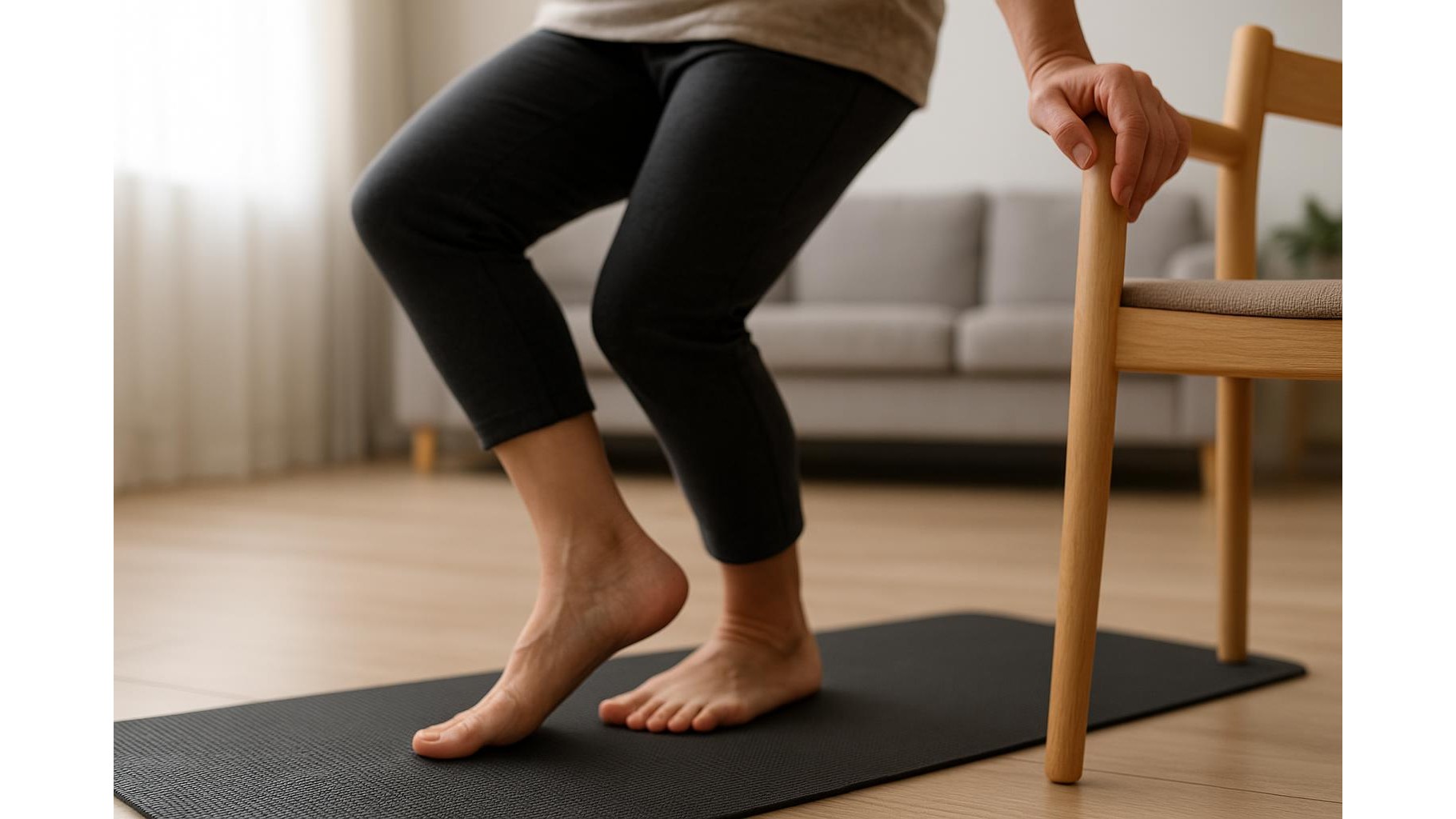
Once mobility feels easier, add simple strength exercises using just your body weight. Seated heel raises are a safe starting point: with feet flat, slowly lift your heels, pause, and lower under control for 2–3 sets of 10–15 reps. Progress to standing calf raises, first using a wall or chair for support. Next, practice toe raises by lifting your toes while keeping your heels down to strengthen the muscles in the front of the lower leg. These moves build the foundation for a more resilient ankle while putting minimal strain on healing tissues. Aim to feel gentle muscle fatigue, not joint pain, and increase repetitions gradually over several weeks.
Balance and proprioception: training your stabilisers
Even when strength returns, many people still feel “wobbly” after an ankle injury because their proprioception – the body’s sense of joint position – has been disrupted. Simple balance drills are essential. Begin by standing on both feet, then gently shift your weight onto the recovering side while holding a stable surface. As confidence grows, try standing on one leg for 15–30 seconds, focusing on keeping the arch lifted and the knee soft. When this feels easy, you can progress by closing your eyes or moving your arms slowly. Consistent balance training teaches the small stabiliser muscles around the ankle to react quickly, helping protect against future twists and rolls.
Building a safe weekly ankle rehab routine
A basic at-home ankle rehab routine might include daily mobility work, strength exercises three times per week and balance drills most days. For example, start each session with 5–10 minutes of circles and ankle alphabet. Follow with 2–3 sets each of seated or standing heel raises and toe raises, then finish with one-leg balance practice. Keep intensity low to moderate, especially early on, and monitor how your ankle feels over the next 24 hours. Mild aching in the muscles is normal; sharp pain, increasing swelling or a sense of instability are signs to ease back and, if needed, consult a professional. Consistency is more important than intensity: small, regular sessions lead to better, safer progress than occasional hard workouts.
Safety tips and when to seek professional help
While at-home ankle rehab is effective for many people, it must be done safely. Always warm up with gentle movement before loading the joint, and avoid high-impact activities such as jumping or running until you can walk briskly without pain or limping. If you notice persistent swelling, visible deformity, loss of sensation, or pain that worsens with light exercise, stop and seek medical advice. Those with conditions like diabetes or previous fractures should consult a physiotherapist before starting. Used wisely, home routines can complement professional care, but they are not a substitute for a proper diagnosis. Listen closely to your body, progress gradually and remember that rebuilding confidence in a previously injured ankle is a process measured in weeks and months, not days.
By focusing on controlled mobility, low-load strengthening and balance work, you can create a safe at-home plan that supports healing and long-term resilience. Combined with patience and good guidance, these ankle rehab basics will help you return to everyday activities – and eventually sport – with more stability, less fear of re-injury and stronger, more capable ankles.