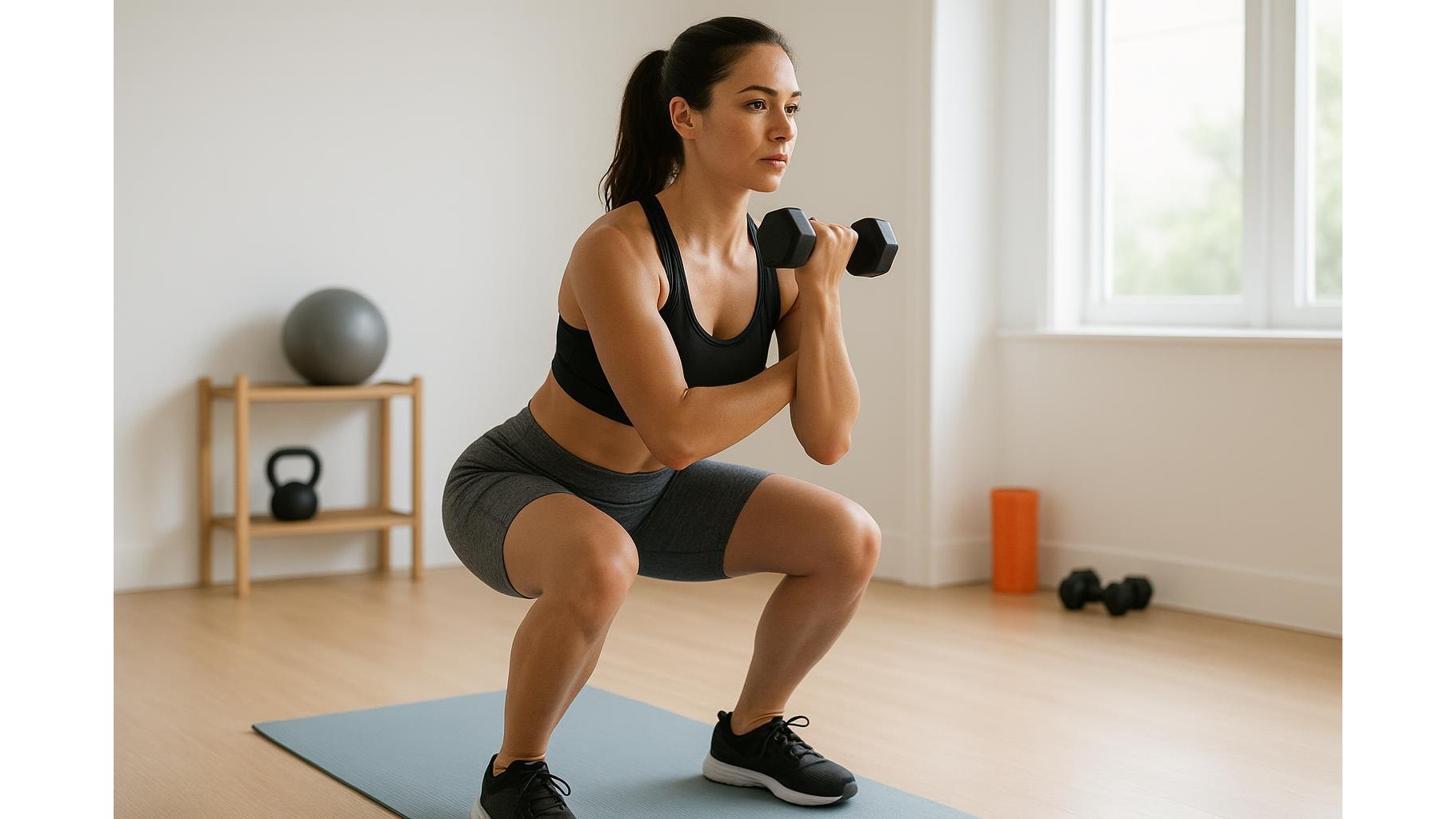
If you spend most of your day glued to a chair and then try to crush your home workouts, your body is probably sending you warning signals: tight hips, a stiff upper back and a cranky neck. Chronic sitting doesn’t just feel uncomfortable; it can also sabotage your performance, reduce strength gains and increase the risk of tweak‑type injuries. With a few smart at‑home recovery habits and targeted mobility work, you can offset desk time so your training feels smoother, stronger and safer.
Table of contents
Why chronic sitting wrecks your training (and what to do)
Long hours at a desk tend to shorten the hip flexors, weaken the glutes and lock up the thoracic spine (upper back). Add a forward‑head posture and your neck and shoulders are constantly under low‑grade stress. When you then jump into squats, deadlifts or push‑ups at home, your body is forced to compensate around these restrictions. Over time this can mean lower‑back irritation, knee pain or shoulder impingement. The fix is not to train less, but to pair your workouts with consistent mobility routines and movement “snacks” during the day. Think of every micro‑break as a deposit in your recovery bank: small on its own, but powerful when repeated.
Micro‑breaks: movement snacks at your desk
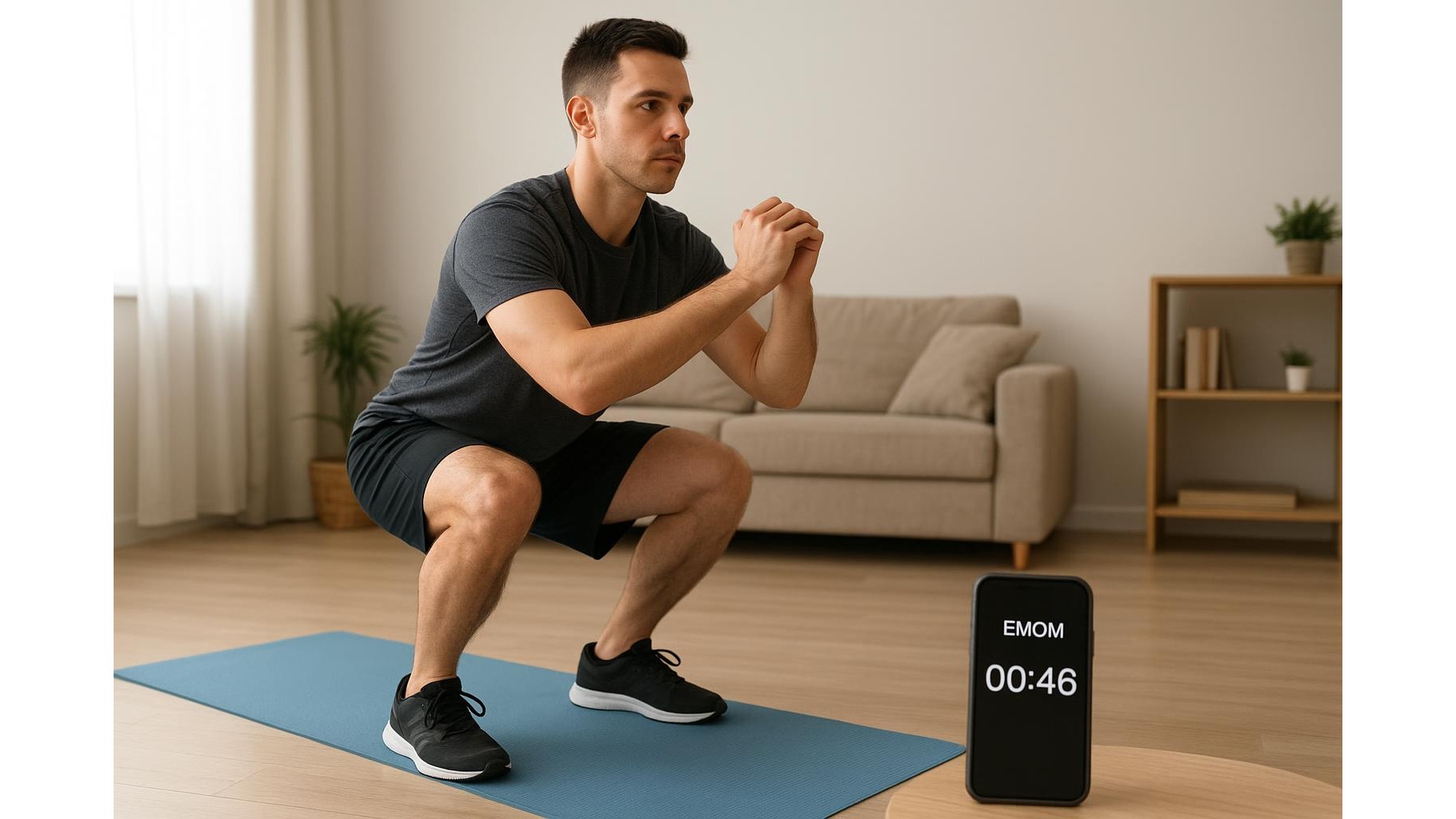
For chronic desk sitters, the most effective recovery tool is also the simplest: getting up often. Aim for a 1–2 minute micro‑break every 30–45 minutes. Stand, walk to another room, or perform 10 bodyweight squats and 10 wall push‑ups. Add neck nods and gentle rotations to reset your posture. A short sequence might be: stand tall, interlace your fingers and reach overhead for 5 deep breaths, then perform 5–8 slow hip circles each way. These tiny breaks boost circulation, reduce stiffness and keep your nervous system from getting stuck in “chair mode”. If you train at home, try doing one or two of these movement snacks in the 60 minutes before your workout so your joints are already primed.
Hip‑saving mobility to protect your lower back
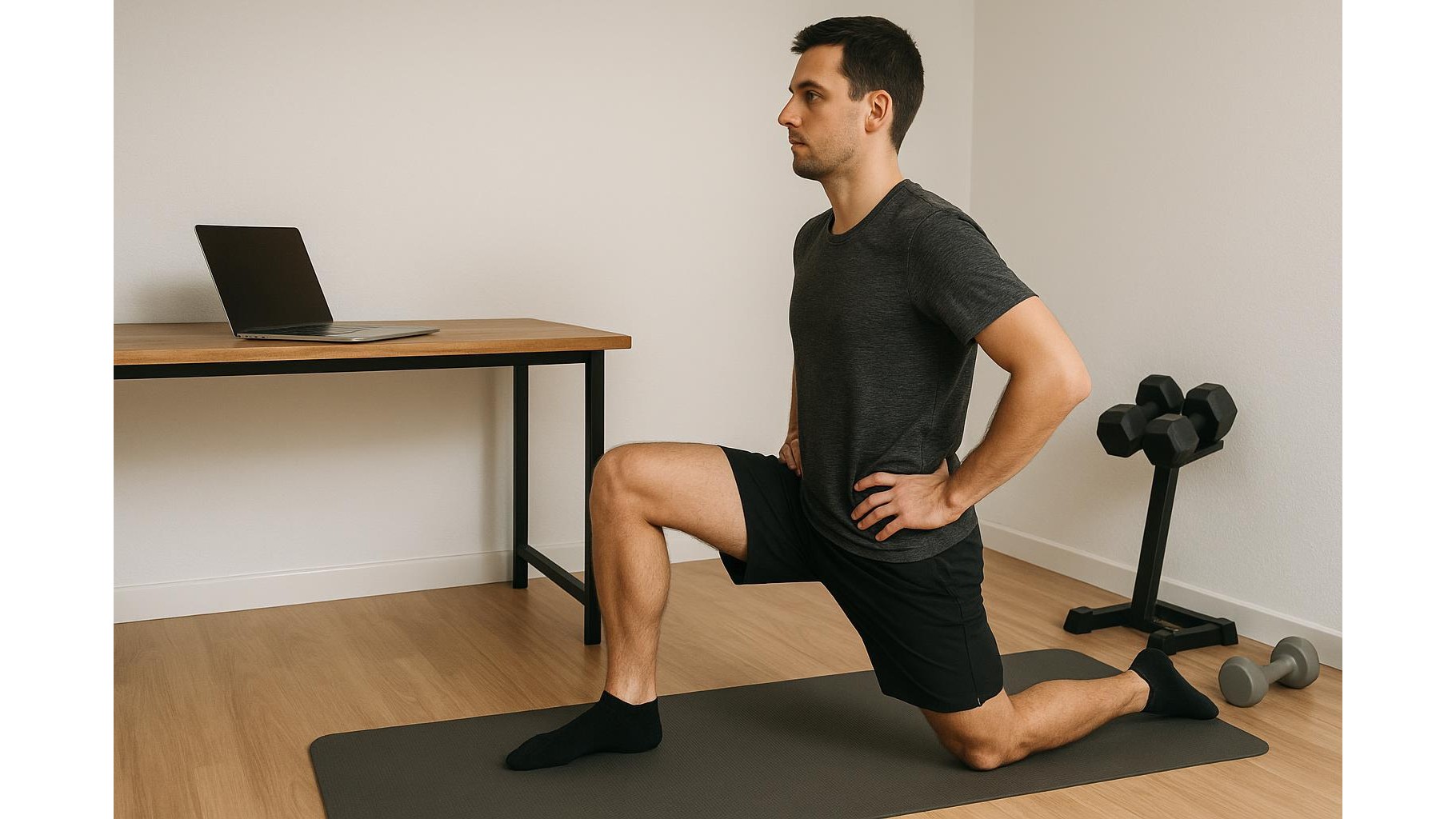
Desk sitting often means tight hip flexors and underactive glutes, a combination that dumps extra stress into your lower back. Start with a daily half‑kneeling hip flexor stretch: place one knee on the floor, the other foot in front, gently tuck your pelvis under and lean forward until you feel a stretch in the front of the hip. Hold 30–45 seconds per side, 2–3 rounds. Follow with glute bridges and deep 90/90 hip rotations on the floor to re‑train hip rotation and extension. Before squats or deadlifts in your home gym, spend 5 minutes on these drills; they help you access more hip range so your spine doesn’t have to do the heavy lifting. Over time, your hips will feel less rusty when you stand up from the desk, and your lifts will feel more stable.
Freeing the upper back for stronger pressing and rowing
A slouched desk posture makes the upper back round and the chest tight, which directly affects your ability to press and row safely during home workouts. Prioritise thoracic spine mobility: sit tall, cross your arms over your chest and perform slow thoracic rotations, turning gently side to side while keeping your hips facing forward. Add a wall angel variation: stand with your back and head lightly against a wall, elbows at 90 degrees, and slide your arms up and down while keeping contact with the wall as much as possible. These drills open the chest, wake up the mid‑back muscles and improve shoulder alignment. Do 1–2 sets between sets of push‑ups, rows or overhead presses in your home gym to “sneak in” recovery as you train.
Neck and shoulder relief for screen‑tired lifters
Hours of peering at screens encourage a forward‑head position that stresses the neck, traps and small stabilising muscles around the shoulders. Left unchecked, this can turn into headaches and shoulder niggles that derail your training. Build in short neck mobility resets: gentle chin tucks (sliding your head back as if making a double chin), slow side bends and rotations, always staying in pain‑free ranges. Pair these with scapular retraction work like band pull‑aparts or wall slides to strengthen the upper back. The goal is not to hold a “perfect posture” all day, but to teach your neck and shoulders to move often and share the load across more muscles. When you pick up dumbbells or a barbell at home, you’ll feel more stable and less pinchy around the shoulders.
Putting it all together in your home routine
To make these strategies stick, connect them directly to habits you already have. Do one hip and one upper‑back drill before your morning coffee, another pair at lunch, and a short sequence of neck resets during your afternoon break. Before each home workout, commit to a 5–10 minute mobility warm‑up focusing on hips, upper back and neck. Afterwards, wind down with 3–5 minutes of easy stretches and relaxed breathing. You don’t need complicated equipment or hour‑long recovery sessions: consistency beats intensity. With regular micro‑breaks and targeted mobility, you can turn a desk‑bound lifestyle into one that supports, rather than sabotages, your home training.
By treating mobility and active recovery as non‑negotiable parts of your day, you protect your joints, improve posture and unlock better performance in every home session. Chronic sitting may be part of your reality, but it doesn’t have to dictate how your body feels when you train; a few strategic micro‑breaks and focused drills can keep you lifting, moving and progressing with confidence.