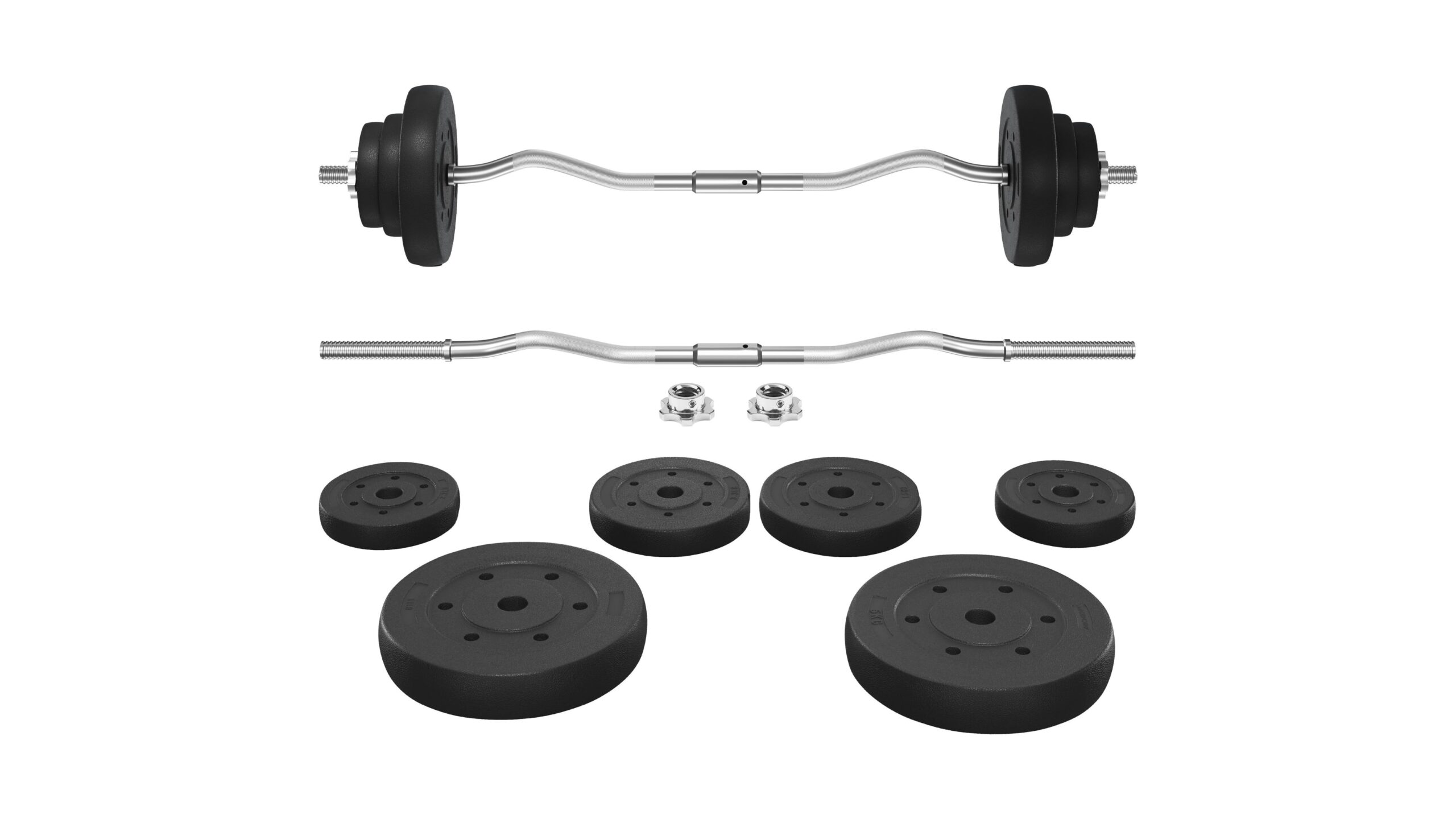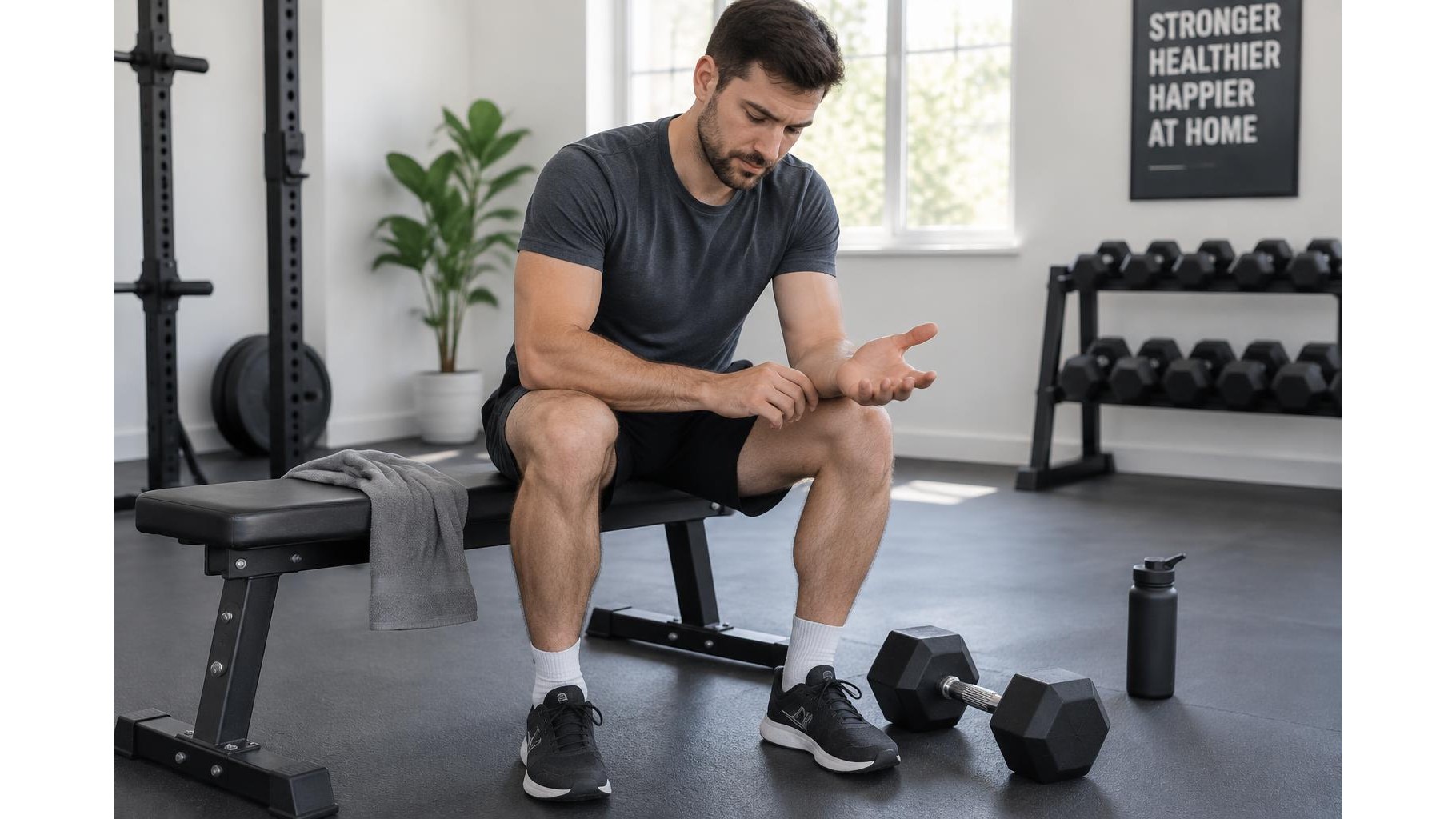
Your hands and wrists work hard every time you hold a barbell, dumbbell or pull-up bar. A few calm minutes after training can help you notice irritation early, restore comfortable movement and care for skin exposed to repeated friction. This routine is gentle, not a treatment for an injury: keep movements pain-free, and do not force a stretch or massage a sore area.
Start with a quick check-in
After your final set, put down the weights and check both hands. Notice any tenderness, unusual swelling, tingling, reduced sensation, redness or broken skin. Mild tiredness can happen after a demanding session, but sharp pain or symptoms that are getting worse are reasons to stop rather than push through. If your hands feel hot or irritated, rinse them with lukewarm water and dry carefully, including between the fingers. Take off rings if swelling is developing, provided they come off easily; never force a tight ring over a swollen finger.
Restore easy wrist movement
Keep your forearms supported and your shoulders relaxed. Slowly bend each wrist forward and back through a comfortable range, then move it gently from side to side. Make a loose fist and open your fingers wide several times. Finish with small, relaxed wrist circles in both directions. Try five to ten repetitions of each movement, without bouncing or pulling on the fingers. These are easy mobility movements, not a test of flexibility. Stop if they bring on pain, numbness or tingling, and do not use them to force a stiff or injured joint.
Ease your grip without aggressive massage
Let your hands rest open for a moment and gently shake them out. If the forearms feel generally tight, use light pressure to rub the muscles rather than pressing hard into the wrist joint, palm or any bruised spot. Keep the touch comfortable and brief. Avoid digging into calluses or rubbing a blister: friction can make damaged skin worse. There is no need for a special tool or an intense stretching session. If discomfort persists after training, rest the area instead of repeatedly testing it.
Care for friction-prone skin
Look at the base of the fingers and the palm for hot spots, cracks or blisters. Wash away chalk and sweat, then pat the skin dry. On dry, intact skin, apply a simple fragrance-free moisturiser; avoid putting lotion on an open blister or broken skin. Leave intact blisters alone where possible, keep them clean and protect them from further rubbing. If a blister opens, clean it gently and cover it with a clean dressing. Seek medical advice if the area becomes increasingly red, warm, swollen or painful, or develops discharge.
Adjust the next workout sensibly
If grip discomfort returns, reduce the load, sets or gripping volume for the next session and allow more recovery time. Check that your wrist stays in a comfortable, neutral position rather than bent sharply under load. Use a grip that feels secure without squeezing harder than necessary, and build training volume gradually. Do not train through persistent pain by simply changing to a heavier grip aid or adding more exercises. If a particular movement reliably triggers symptoms, pause or modify it until you can perform it comfortably.
A short check-in, gentle mobility, sensible skin care and a modest change in workload are usually a practical post-lifting routine. Persistent or worsening pain, swelling, weakness, numbness or tingling deserves assessment by a qualified healthcare professional, especially when it affects everyday tasks. Seek urgent care for severe symptoms, a significant injury, or a hand that changes colour or becomes cold. Let comfort—not a desire to finish the routine—guide your next step.