
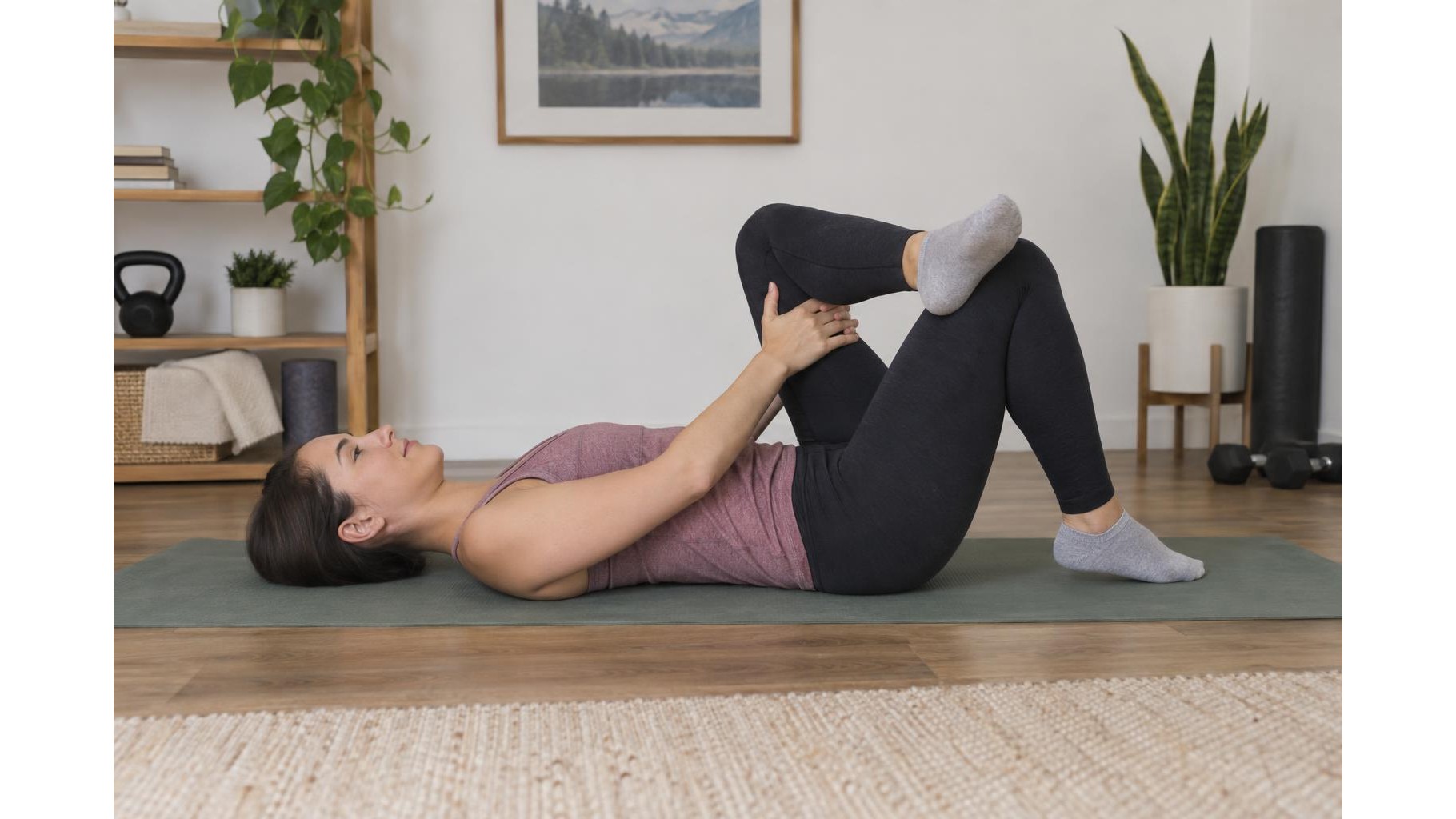
Tightness around the hips can show up after lower-body training or hours spent sitting. A few minutes of gentle movement and steady breathing may help you feel more comfortable, without turning recovery into another workout. This short routine is intended to be easy and pain-free; it is not a diagnosis or a substitute for professional care.
Start with calm breathing
Lie on your back with your knees bent and feet resting comfortably on the floor. Let your shoulders soften and take five slow breaths, breathing in through your nose and allowing your abdomen to rise. Breathe out gently for a little longer than you breathe in. Keep your jaw and hips relaxed rather than forcing a stretch. If lying down is uncomfortable, sit in a supportive chair and use the same unhurried breathing pattern.
Let the knees move side to side
Stay on your back with feet a little wider than hip-width apart. Keeping both feet grounded, slowly let your knees drift a small distance to one side, then return to centre and move to the other side. Do six easy repetitions per side. Keep the range comfortable and controlled; your pelvis can roll slightly, but avoid pushing into a pinch or pulling sensation. Make the movement smaller if you feel strain.
Try a supported figure-four position
With knees bent, place one ankle across the opposite thigh, above the knee rather than directly on it. Keep the crossed foot gently flexed, and pause to notice how the hip feels. If comfortable, draw the supporting thigh a little closer with your hands behind it; hold for two or three relaxed breaths, then release and switch sides. To modify, keep the supporting foot on the floor and simply rest the ankle on the opposite shin. There is no need to chase a deep stretch.
Explore a small seated hip hinge
Sit near the front of a stable chair with both feet planted. Keeping your back long, hinge forward a few centimetres from your hips, then return upright. Repeat five times at an easy pace, breathing out as you lean and in as you rise. This gentle movement can help you ease out of a prolonged sitting position. Skip it if it increases discomfort, or make the movement smaller and keep your hands resting on your thighs.
Finish with an easy walk and check-in
Stand up slowly and walk around your room for one or two minutes at a relaxed pace. Notice whether your steps feel natural and whether the hips are more comfortable, unchanged, or more irritated. The goal is ease, not intensity: stop rather than add extra stretches if symptoms worsen. Repeat this sequence after training or a long sitting spell only when it feels suitable for you.
Keep the routine brief, gentle, and within a comfortable range. Stop immediately for sharp, increasing, or unusual pain, numbness, tingling, weakness, dizziness, or symptoms that spread down the leg. Seek advice from a qualified healthcare professional if discomfort is severe, follows an injury, persists or keeps returning, or affects walking and everyday activities. A professional can help identify the cause and guide a safe recovery plan.









