
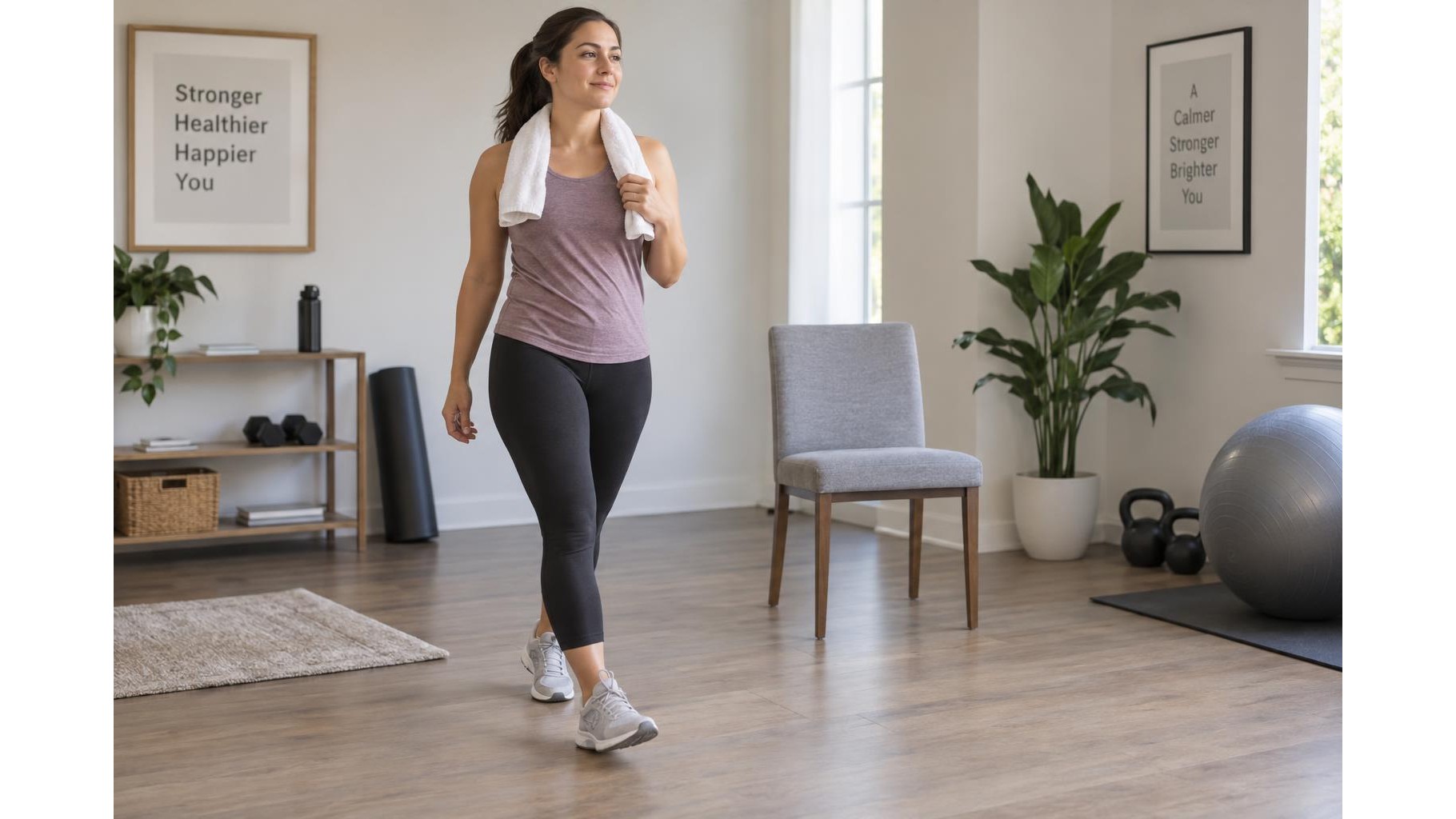
A demanding workout can leave your knees feeling tired, stiff or more noticeable than usual. A calm cooldown may help you transition out of training, but it should not be used to diagnose an injury or push through worsening pain. The aim is easy movement, comfortable pacing and close attention to how your body responds. Keep the routine flexible: skip anything that increases discomfort, and seek professional advice when symptoms are concerning or persistent.
Start with an easy transition
After your final set or interval, take a few minutes to wind down rather than dropping straight to the floor. Walk slowly around the room or march gently on the spot, keeping your steps short and relaxed. Let your breathing settle and avoid sharp turns, deep bends or sudden changes of direction. If walking feels uncomfortable, sit somewhere stable and allow your effort to come down before trying another movement. There is no need to complete a fixed number of minutes; finish this transition when you feel calm and steady. Comfort, not a workout target, sets the pace.
Choose gentle movement
If easy walking feels comfortable, try a few relaxed knee bends within a small, pain-free range, holding a counter or sturdy chair for balance if needed. You could also sit and slowly straighten one leg, then lower it without forcing the knee straight. Ankle pumps and gentle standing weight shifts can keep you moving without demanding deep knee flexion. Use a smooth, unhurried rhythm and stop if a movement brings on sharp pain, increasing discomfort or a sense that the knee may give way. These are optional cooldown ideas, not treatment exercises; choose only what feels appropriate today.
Keep the pace deliberately modest
Think of the cooldown as a gradual reduction in effort. Use a pace that lets you breathe easily and speak comfortably. Take breaks between movements, and do fewer repetitions than you think you need; there is no benefit in turning recovery into another challenge. Avoid bouncing, forcing a stretch or testing how far the knee will bend. If discomfort rises as you move, reduce the range or stop and rest. Notice how the knee feels later that day and the next morning, too. A response that keeps worsening is a reason to pause training and consider advice rather than repeatedly testing it.
Make the routine fit your day
There is no single cooldown that suits every athlete or every session. After a low-impact workout, a brief gentle walk may be enough; after longer training, you may prefer a longer, slower transition. If you feel tired, dizzy or unsteady, sit somewhere safe instead of attempting standing movements. Keep your surroundings clear and use a stable support when balance is uncertain. Do not use discomfort as a reason to add extra stretching, massage or self-treatment. If you have an existing knee condition, recent injury or specific guidance from a clinician, follow that advice and ask before changing your routine.
Know when to seek professional advice
Stop exercising and seek urgent medical assessment for severe pain, a major injury, a visibly deformed knee, inability to bear weight, or sudden substantial swelling. A hot, red knee with fever also needs prompt medical attention. Arrange assessment with a qualified healthcare professional if pain persists, repeatedly returns, limits everyday activities, or comes with locking, instability or swelling. Do not rely on a cooldown to explain these symptoms or delay care. A clinician can assess what is happening and advise on suitable next steps; this article cannot replace an individual evaluation.
A calm finish, with room to adapt
For tired knees, keep the post-workout routine simple: wind down gradually, choose only comfortable low-intensity movement, and let your response guide the pace. Stop if symptoms increase, and seek qualified advice for persistent, severe or concerning signs. The best cooldown is not the longest or most elaborate one; it is the one that leaves you feeling safe, settled and able to make a sensible decision about what your knees need next.









