
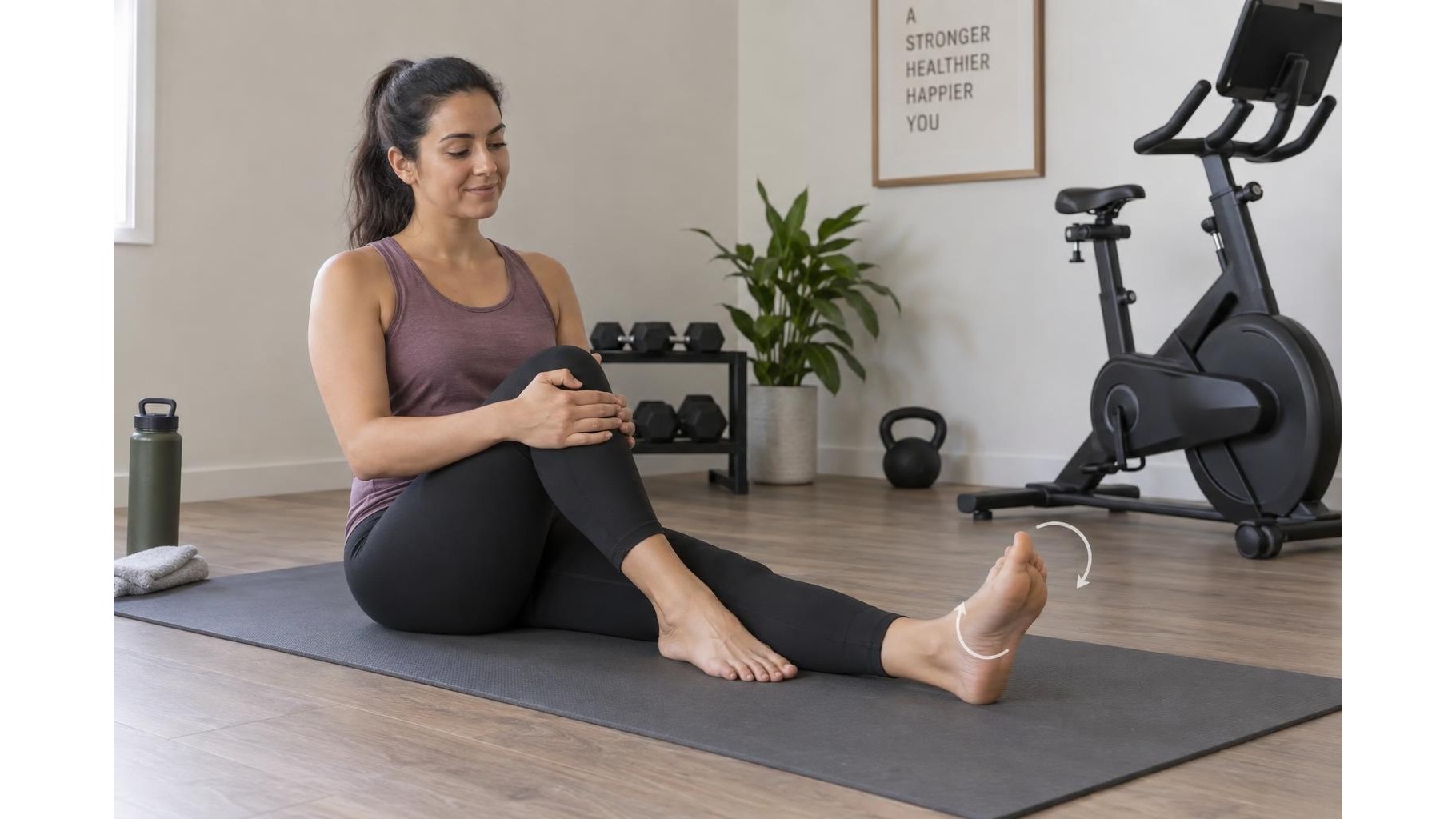
After a treadmill session, indoor cycling or a low-impact cardio video, your feet and ankles may appreciate a few quiet minutes before you move on with the day. This gentle foot and ankle reset is designed to feel comfortable, not strenuous. It uses small, unhurried movements to bring attention back to the feet and gradually wind down. It is not a treatment for an injury, and nothing here should require you to push through pain.
Settle and check in
Step off your equipment and sit somewhere stable, with your shoes loosened or removed if that feels comfortable. Take two or three relaxed breaths and notice how your feet feel. Mild warmth or general tiredness after exercise can be different from sharp, new or worsening pain. Keep the movements easy, and skip anything that feels uncomfortable. If you feel unsteady, stay seated throughout rather than balancing on one leg.
Slow ankle circles
With one foot lifted just off the floor, or resting lightly on the ground, slowly trace a small circle with your toes. Complete four circles in one direction and four in the other, then switch feet. Keep the circle within a comfortable range; there is no need to make it large or perfectly smooth. If lifting the foot feels tiring, slide your heel along the floor and make a smaller movement. Stop if a circle brings on pain, catching or pins and needles.
Easy toe points and flexes
Keep your heels supported and gently point your toes away from you, then draw them back towards your shins. Repeat six to eight times at an unhurried pace. Think of this as a small mobility check, not a stretch to intensify. Let your breathing stay easy and avoid gripping your toes. If one direction feels restricted, use a smaller range instead of pulling harder or holding at the end of the movement.
Spread, curl and relax
Rest both feet on the floor. Gently spread your toes, pause briefly, and let them soften. Next, curl them lightly as if gathering a towel, then release completely. Try five relaxed repetitions, without digging your toes into the floor or cramping the arches. If you cannot spread your toes independently, simply imagine the movement and allow the feet to relax. The aim is gentle control, not a strength challenge or a test of flexibility.
Finish with a seated foot press
With your feet flat and knees comfortable, press the front of one foot softly into the floor while keeping the heel down. Ease off, then gently press the heel while the front of the foot stays supported. Do this three times on each side, using only light effort. You can leave this out if pressure feels unpleasant. Finish by resting both feet and taking a slow breath. The whole sequence can take about three to five minutes; fewer repetitions are fine.
Scale the routine and know when to seek advice
Choose just one or two movements on a low-energy day, or shorten the range after a harder workout. You can also skip the reset if your feet feel settled already. Do not force a painful position or use this routine to test an injury. Seek advice from a qualified health professional if pain persists, repeatedly returns, worsens, or affects walking and everyday activities. New swelling, numbness, marked redness, difficulty bearing weight or symptoms after an injury also warrant professional assessment.
A short, comfortable cooldown can help mark the transition from home cardio to rest, without turning recovery into another workout. Keep each movement easy, adapt it to how you feel and stop if symptoms arise. Persistent or concerning problems deserve individual guidance from a health professional.









