Hours at a desk or a demanding home workout can leave the chest feeling tight and the upper back tired. This short, equipment-free reset uses relaxed breathing and comfortable shoulder movements to help you unwind. It is not a test of flexibility: keep every position easy, move slowly, and stop if anything feels painful.
Start with comfortable breathing
Sit upright on a chair or stand with your feet resting comfortably on the floor. Let your arms hang loosely and soften your jaw. Breathe in gently through your nose, allowing your ribs to expand without forcing a deep breath; breathe out slowly and let your shoulders settle. Continue for five to eight relaxed breaths. If sitting tall feels tiring, lean back against a supportive chair. The aim is to notice your breathing, not to hold a rigid posture or stretch through discomfort.
Let the shoulders move
With your arms relaxed, slowly lift your shoulders towards your ears, then let them drift down. Repeat five times, keeping the movement small and smooth. Next, draw easy circles with your shoulders: move them forward, up, back and down, then reverse direction. Try three or four circles each way. Keep your neck relaxed and avoid pushing your shoulders as far back as possible. If you feel stiff, make the circles smaller or do one shoulder at a time.
Try gentle shoulder-blade glides
Stand or sit with your hands resting on your thighs. Without arching your back, gently let your shoulder blades move a little towards one another, as though your chest is broadening. Release completely before repeating. Do five to eight repetitions at an unhurried pace. Keep your elbows soft and your ribs relaxed; do not squeeze hard or force the chest forward. If this feels uncomfortable, skip it and return to calm breathing.
Open the chest without forcing a stretch
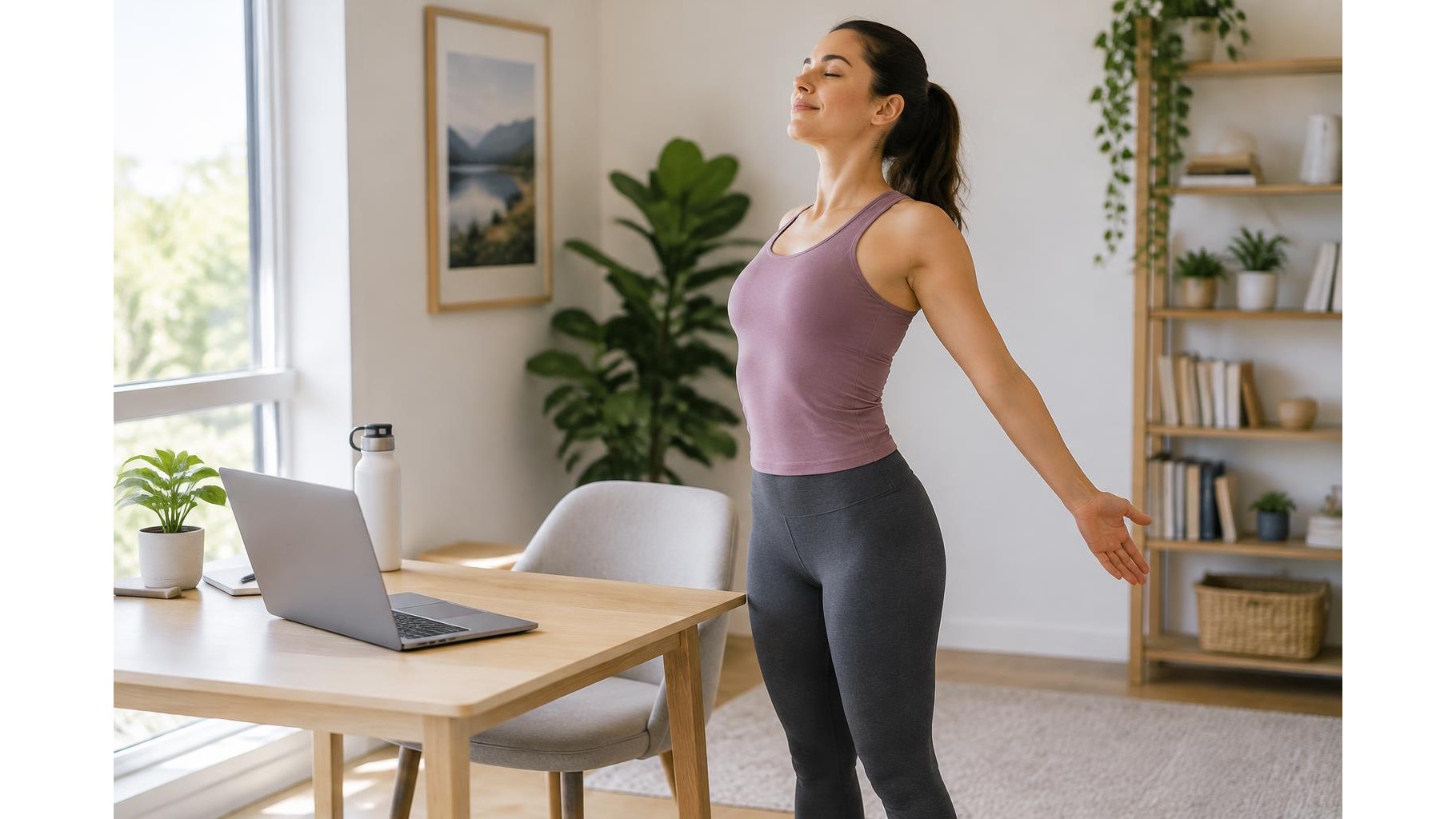
Stand beside a wall, or simply stay seated. Let your arms rest by your sides and turn your palms slightly forward. Notice a mild sense of openness across the front of the chest, without pulling your arms behind you. Hold for two or three easy breaths, then relax. Another option is to place your hands loosely behind your head, elbows pointing comfortably out, and breathe without tugging on your neck. Choose only a position that feels pleasant; a stretch should not pinch, burn or cause numbness.
Scale the reset to your day
After desk work, you might spend a little longer breathing and moving your shoulders. After lifting, keep the routine especially gentle and avoid stretching a sore or exhausted area. Use a chair, reduce the range of motion, or do just one movement if that suits you. There is no required number of repetitions: a few slow, comfortable minutes are enough. Keep breathing throughout rather than holding your breath, and avoid bouncing or trying to force a deeper stretch.
Know when to stop
Stop if a movement brings sharp or worsening pain, tingling, numbness, weakness, dizziness, or unusual shortness of breath. Seek advice from a qualified healthcare professional if symptoms persist, repeatedly return, or interfere with daily activities. Chest pain, especially with breathlessness, faintness, sweating or pain spreading to the arm, jaw or back, needs urgent medical attention. This reset is general wellbeing guidance, not a diagnosis or treatment plan.
Use this gentle chest and upper-back reset as a low-pressure pause between screen time and training, or at the end of the day. Comfortable breathing, easy shoulder movement and modest chest opening can help you check in with your body. Stay within a pain-free range, adapt the positions to your needs, and seek professional guidance when symptoms are concerning.